Let’s face it: the difference between winning and losing can be huge. It’s mostly about being organized. Think of your team’s gear as an army. You wouldn’t send an army out without a plan, right?
Our first rule is clear: inventory is not a suggestion; it’s a commandment. We’re not just counting bats and balls. We’re doing a detailed check of every item. This isn’t just about knowing what you have—it’s the foundation of our “move less, do more” approach.
Knowing your exact inventory helps you avoid moving unnecessary gear. It’s like the Marie Kondo method, but for sports equipment. As Boyd Moving experts say, a detailed plan and a thorough inventory are key to success.
This transport & storage system begins with a smart shed layout and a labeling system. We aim to create a home for every item, from the tallest gear cart to the smallest rosin bag. Our goal is to make your off-season storage as organized as your game plan.
Forget the chaos of the equipment bag. It’s time to create a system. A system where every piece of gear has a designated, labeled spot. This isn’t just storage; it’s a valuable asset.
Carts & Crates: Sizes, Wheels, and Stair Strategy
Choosing a gear cart is more than picking the shiniest one. It’s about understanding your environment. Just like professional movers, you need to assess your space before choosing. Your cart is key to moving your team’s most valuable assets safely.
Get it wrong, and you’ll face a logistical nightmare. It’s not just about moving gear; it’s about doing it right.
Sizes, Wheels, and Stair Strategy
Your gear cart is like a key infielder. It needs to be agile, strong, and reliable. The wrong cart can slow you down, cause injury, or damage your gear. We’ll look at the three main things to consider: size, wheels, and how it handles stairs.
Sizing Up Your Haul: Matching Cart to Cargo
Forget the “one size fits all” rule. The right cart size balances capacity with ease of movement. A cart that’s too small or too large is a problem. It should fit your standard haul perfectly for a single, stable trip.
Wheel Options: Terrain is Everything
Wheel choice is critical. It affects how your cart moves on different surfaces.
| Wheel Type | Best For | Terrain | Durability |
|---|---|---|---|
| Hard Rubber (Solid) | Indoor, smooth concrete | Gym floors, hallways | High (no flats) |
| Pneumatic (Air-Filled) | Grass, gravel, turf | Grass fields, uneven ground | Medium (risk of puncture) |
| Polyurethane (PU) | Mixed surfaces | Pavement, light turf | Very High |
| Stair-Climber Tracks | Multi-level transport | Stairs, bleachers, ramps | Specialized High-Duty |
Pneumatic wheels are great for all terrains. For smooth surfaces, polyurethane wheels are a durable, maintenance-free option.
The Stair Strategy: Apex Predator or Achilles’ Heel?
Stairs are the ultimate test. Moving a heavy L-screen up stairs can hurt your back and damage the screen. A mover wouldn’t move a grand piano down stairs without a plan. Your gear deserves the same care.
A cart that handles stairs well is essential. It makes moving heavy items safe and easy. It’s not just convenient; it’s necessary for your safety and the safety of your equipment.
Your cart is the first and last thing you use. It’s a hero if chosen right, but a villain if not. Choose wisely to protect your gear and your back.
Color-Code & Labeling for Fast Issue/Return
In the world of team equipment, a bin is just a bin until it’s labeled. Color-coding and smart labeling turn a storage area into a mission control center. It’s like the difference between a messy desk and a librarian’s catalog.
This system isn’t just about order. It’s about turning chaos into a repeatable, scalable system. Any volunteer, coach, or player can find or return gear in seconds.
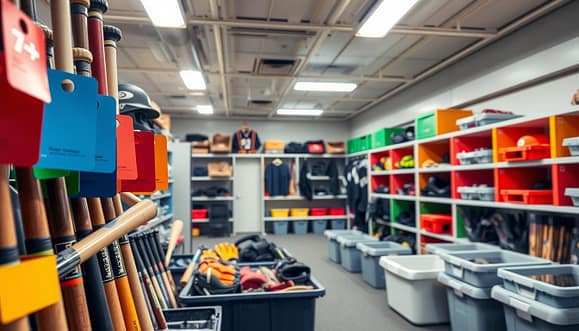
Think of the last time you moved houses. The unlabeled box marked “miscellaneous” is the last one you open. It’s filled with a confusing jumble of items.
Now, imagine every box was color-coded by room and numbered. That’s the system Boyd Moving’s pros swear by. It’s the same principle for team gear. A well-labeled, color-coded system isn’t just organized; it’s a logistical cheat code.
The System: More Than Just a Pretty Palette
This isn’t about making the equipment room look like a rainbow. It’s about creating a visual language. A color isn’t just a color; it’s a command.
For example, all catching gear is in blue, all infield gear is in green, and all outfield gear is in red. Within that, a number or letter code on a label can denote a specific player, a season, or a piece type.
We can learn from the pros at Boyd Moving. Their ultimate moving checklist isn’t just for furniture. The principle is identical: a box labeled “Kitchen – Utensils, Plates” is infinitely more useful than one marked “Kitchen Stuff.”
Translating this to baseball, a bin labeled “Player #7 – Batting Gloves, 34″ Bat” is a system. A bin labeled “gloves and stuff” is a time bomb of frustration.
For Fast Issue/Return
The magic happens during the post-practice gear dump. Without a system, this is where helmets, bats, and heart rates get lost. With a color-code and labeling system, it’s a 30-second transaction.
A player returns shin guards. They don’t think; they look for the bin with the matching color and player number. No questions. No lost gear. It’s the QR code on a shipping container principle: a scannable, instant identifier that tells you everything you need to know without opening the box.
This system turns a chore into a reflex. The return process is no longer a search-and-rescue mission. It’s a simple, color-matched drop. For the equipment manager, a glance at the color-coded wall of bins during inventory is a five-second audit. It’s logistics as a visual art form.
| Labeling Method | Best For | Durability | Ideal For Gear Type |
|---|---|---|---|
| Color-Coded Tape | Quick visual sorting, team/position | High (Vinyl) | Bats, Helmets, Large Equipment |
| QR Code Labels | Digital inventory & check-in/out | Moderate (Laminated) | High-Value Items (Mitts, Catcher’s Gear) |
| Laminated Hang Tags | Jerseys, Pinnies, Padded Gear | Moderate | Uniforms, Protective Gear |
| Color-Coded Bins & Bins | Bulk Storage, Team/Group Gear | High (Plastic) | Baseballs, Catcher’s Gear, Team Bags |
Ultimately, a great labeling system does more than organize; it creates a self-sustaining transport & storage baseball ecosystem. It transforms the equipment room from a passive storage space into an active, intelligent system. The time saved on the “hunt and search” is reinvested into practice, and the frustration of a missing piece of equipment—a common pain point in transport & storage baseball logistics—becomes a relic of the past. It’s not just about putting things away; it’s about building a system where everything, and everyone, has a place.
Shed/Locker Layout: Vertical Bat Racks, Screen Racks, Ball Bins
If your equipment shed looks like a post-earthquake garage sale, it’s time for a change. Don’t just stuff gear anywhere. A mover plans carefully, measuring and creating a customized plan. Your shed or locker needs the same careful transport & storage baseball approach.
This isn’t just cleaning up. It’s solving a 3D puzzle. The goal is to find any gear in under 30 seconds, not 30 minutes.
Start by doing a full audit. Pull everything out. Yes, everything. See that mountain of gear? That’s your scope.
The goal is to get everything off the floor and into a designated, accessible home. This isn’t just about saving space. It’s about preserving your investment. That $300 composite bat shouldn’t become a $300 doorstop.
Vertical Bat Racks, Screen Racks, and Ball Bins: A System, Not a Pile
Think of a mover’s truck: heavy items are in the back; essentials are up front. Your shed shed layout should follow the same logic. It’s a 3D chessboard where every piece has a strategic, logical home.
This systematic approach to transport & storage baseball equipment makes a big difference. It turns a chaotic space into a high-performance depot.
Going Vertical with Bat Racks
Bats are not meant to be javelins. A vertical bat rack is the answer. It turns a tangled pile of bats into a display-worthy arsenal.
This isn’t just about saving floor space. It’s about accessibility and safety. No more tripping over bats or hunting for a 33″ drop-8 in a pile. Each bat has a slot, like a tool on a pegboard.
This is the foundation of an efficient shed layout.
Screen Storage: More Than a Lean-To
Leaning a pitching screen against the wall can warp frames and tear nets. A dedicated screen rack is a game-changer. Think of it as a bookshelf for your screens.
A simple A-frame rack or wall-mounted brackets keeps screens upright, stable, and off the damp floor. This prevents nets from sagging and frames from twisting. It’s the difference between a screen that lasts one season and one that lasts five.
Ball Bin Tetris: Maximizing Cubic Inches
This is where the mover’s “customized plan” philosophy shines. Ball bins aren’t just buckets. They’re a logistics solution.
Use stackable, lidded containers for scuffed practice balls and clear, ventilated bins for new or game balls. Label them. Stack them. This isn’t hoarding; it’s inventory management.
A mover doesn’t just toss china in a box with a rock—they cushion, compartmentalize, and label. Your ball bin system should let you grab a bucket of practice balls in seconds, not minutes.
This organized transport & storage baseball system saves time and equipment. A mover’s “customized plan” for your shed isn’t a luxury; it’s essential for a team that practices more and searches less.
Moisture & Odor Control: Desiccants and Airflow
Your equipment locker is like a tiny ecosystem. The wrong humidity can turn a catcher’s mitt into a mold factory. A high-tech helmet can become a mildew haven. It’s not just about being tidy; it’s about keeping your gear in top shape.
Desiccants and airflow are your allies in this fight. They help control moisture and odors.
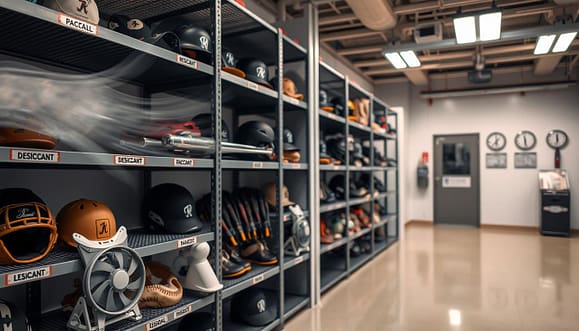
Storing a $500 glove in a damp place is a bad idea. Climate control and smart packing are key, just like for a family heirloom. Your transport & storage baseball system is about preserving assets, not just storing gear.
Desiccants and Airflow: Your Dynamic Duo
Moisture is the enemy of leather and synthetic materials. It causes that musty smell that’s hard to get rid of. The solution is to absorb moisture and prevent it from coming back.
The Desiccant Lowdown: Silica vs. Clay
Desiccants are like chemical sentinels that absorb moisture. But not all are the same. Here’s what you need to know:
| Type | How It Works | Best For | Pro Tip |
|---|---|---|---|
| Silica Gel | Absorbs up to 40% of its weight in moisture. Can be “recharged” in an oven. | Small, enclosed spaces: gear bags, helmet interiors, glove compartments. | Place a few beads in a ventilated pouch inside your glove or helmet. Recharge when the beads turn from blue to pink. |
| Clay Desiccant | Inexpensive and effective for larger, more open areas. Absorbs moisture and certain odors. | Larger, ventilated storage areas like team equipment trunks or locker rooms. | Use in bulk in a large gear bag or equipment trunk to create a drier micro-climate. |
Desiccants are a strong defense, but they’re not magic. They work best in sealed environments. A small silica gel pack can make a big difference in a gear bag. For a team’s equipment shed, a few pounds of clay desiccant can control humidity for the off-season.
Engineering Airflow: More Than Just a Fan
Desiccants are like commandos, and airflow is like the air force. Stagnant, humid air is bad news. Proper airflow is key to keeping your baseball equipment in top shape.
Good ventilation does two things: it removes moisture-laden air and prevents condensation. The layout of your storage space is critical. A simple fan is a start, but engineering airflow is about strategy.
- Strategic Ventilation: Don’t just push air around; move it through the space. Position a fan to create a cross-breeze, pulling fresh air in one side of a shed and pushing stale, moist air out the other.
- Strategic Storage: Don’t cram gear into lockers or bins. Use vertical space with wire racking and leave space between items. A vertical bat rack isn’t just for organization; it allows air to circulate around each bat, preventing the “sweat” that leads to rust and mildew.
- De-Funk Your Gear: After a game, don’t just toss sweaty, damp gear into a sealed bag. Use a dedicated gear dryer or a simple, high-velocity fan in a well-ventilated area to blast moisture away from the equipment, not just across it.
The winning transport & storage baseball strategy isn’t a choice between desiccants or airflow. It’s about using both together. Desiccants pull moisture from the air, while airflow ensures the desiccant can do its job on a fresh supply of air. This creates a climate-controlled environment, ensuring your gear stays in top condition.
Sanitizing Routine & Fabric Care
Sanitizing your team’s equipment is key, not just for a fresh smell. It’s about keeping your gear in top shape all season. Think of it as taking care of your transport & storage baseball system. Just like professional movers clean their gear, your team’s equipment needs the same care.
The Post-Game Ritual: More Than a Spray and a Prayer
Forget the “spray and pray” method. Good sanitizing is a detailed process, not just a quick spray. A simple spray won’t kill all germs and bacteria.
Start by cleaning helmets and catcher’s gear with a safe disinfectant. For fabric items, like jerseys and socks, act fast. Sweat and dirt can damage fabric quickly. A mix of water and white vinegar can help until a proper wash.
Most gear doesn’t die from one big problem. It’s the small issues that add up. Fabric’s ability to wick away sweat can actually harm it over time.
Fighting fabric damage and odors is a two-part battle. Never use regular fabric softener or bleach on athletic fabrics. Instead, use a sports detergent and cold water. Always air-dry to prevent damage from heat.
The table below shows a basic cleaning plan for different gear. Remember, regular cleaning is better than a big clean at the end.
| Gear Type | Primary Sanitizing Focus | Recommended Agent | Frequency | Pro-Tip |
|---|---|---|---|---|
| Hard Shells (Helmets, Catcher’s Gear) | Disinfectant spray or wipes safe for plastic/rubber | Non-bleach, sports-grade disinfectant spray | After every use | Remove all padding before spraying; never soak electronics in catchers’ masks. |
| Padded Fabrics (Batting Gloves, Sliding Pads) | Odor & Bacteria | Enzyme-based sports wash | After every use | Turn inside-out before washing to clean the side that touches skin. |
| Performance Jerseys/Uniforms | Bacteria & Stain Removal | Cold water, tech-fabric detergent | After every use | Wash inside-out on cold, hang to dry. Never use fabric softener. |
| Leather Goods (Gloves, Mitts) | Conditioning & Disinfection | Leather conditioner & isopropyl alcohol wipes | Bi-weekly in season | Condition after cleaning to prevent cracking. Never soak leather. |
This isn’t just about keeping things clean. It’s a way to make your gear last longer. A well-cared-for glove will be more flexible and last longer. A clean helmet will stay in better shape, too.
Off-Season Storage: Climate, Rodent, and Bug Prevention
When the game ends, the real challenge starts. Off-season storage is not just about hiding your gear. It’s about keeping it safe and sound, like a museum keeps its treasures.
Climate, Rodent, and Bug Prevention
It’s not just about finding a place to store your gear. It’s about making a space that pests don’t want to be in. You want your gear to rest, not rot.
Climate is King: Managing the Micro-Environment
Temperature and humidity can harm your gear. Leather dries out, metal rusts, and mildew grows. A climate-controlled space is essential. It’s like a spa for your equipment, not a dungeon.
Use desiccant packs to keep moisture away. For tips on storing big items, check out our guide on how to properly use and store baseball equipment. Aim for a space that feels like a museum, not a damp basement.
The Great Seal: Keeping Critters from Calling Your Gear Bag Home
To a mouse, your catcher’s chest protector is a luxury hotel. Start with a good seal. Use hard, sealed plastic bins with tight lids, not cardboard boxes. Keep these bins off the floor. Instead of mothballs, try cedar blocks or cotton balls with peppermint oil for a natural pest repellent.
Your transport & storage baseball plan should be as thorough as a professional mover’s. They control the climate and seal out pests. Treat your equipment like your team’s most precious heirloom. This way, you’ll avoid the disappointment of finding pests in your off-season storage.
QR Code Inventory & Checkout Sheet Templates
That old clipboard and sign-out sheet? They’re outdated in today’s digital world. Modern team equipment management has moved beyond them. Now, it’s all about precision and accountability.
From Clipboard to Cloud: The QR Revolution
Imagine a player needs a fungo bat. They don’t write on a sheet anymore. They just scan a QR code on the bat’s bin. Your inventory sheet updates instantly.
This isn’t magic; it’s what logistics firms do every day. Your gear shed becomes a distribution hub. The scan logs who took the bat and when. You know exactly where item #3 is and its history.
This is the new standard for transport & storage baseball operations. It makes managing gear easy and efficient.
Template Tactics: Beyond the Spreadsheet
Goodbye, static spreadsheets. Say hello to dynamic templates in Google Sheets or Airtable. They update in real-time, track usage, and send alerts for maintenance.
This system moves data to the cloud. It’s accessible anywhere, from the field to the office. Your gear shed becomes a hub of efficiency.
This is the final piece of a professional transport & storage baseball system. It ensures every piece of gear is tracked and accounted for.