Let’s call it what it is: the annual “clinic scramble.” You get an email, spend a Saturday, and get a certificate. Then, you hope something sticks before the season starts. It feels like a never-ending subscription you can’t cancel.
USA Football trains over 100,000 youth coaches every year. Special Olympics Texas has a big certification program. USA Hockey posts its clinic schedule in July, with a December deadline. We’re checking boxes fast.
But is it really about collecting certificates or growing your team’s skills? What if staff development was the key to your program’s success?
This isn’t just about finding a coaching clinic. It’s about creating a year-long plan for your staff. We’ll explore local and national resources, like USA Baseball, to make learning continuous. The goal is to improve your team, not just your paperwork.
Think about a comprehensive athletic performance clinic. It shows how to move from random learning to a lasting plan. Let’s stop scrambling and build something that lasts.
Map the Clinic Landscape: Local, State, National Options
Think of your annual clinic plan as a strategy for your team’s knowledge. It’s not just about sending coaches to a room. It’s about deploying them across a three-tiered battlefield of knowledge. Master this map, and you control the high ground for the entire season.
Your local association clinic is the grassroots movement. It’s essential, parochial, and hyper-focused on your league’s specific rules. This is where you learn the neighborhood rules of engagement.
State-level offerings, like those from the Texas Amateur Athletic Federation, act as the senate. They deal with broader rule interpretations, regional trends, and administrative frameworks. It’s policy wonk territory, and it’s critical for program directors.
Then come the national powers: the NFHS, USA Baseball, and USA Football. These are the super-PACs of coaching education. They flood the zone with standardized, research-driven content developed by the sport’s top minds. This is your source for cutting-edge theory.
The data proves this ecosystem is real and accessible. USA Hockey allows coaches to attend any clinic hosted by any District across the country, most being virtual. Special Olympics Texas structures its training from local to chapter levels. USA Football meticulously segments its courses by coach level and football type.
A savvy director doesn’t pick one tier. They create a coalition. You strategically register your pitching coach for a national USA Baseball pitching clinic to absorb the latest biomechanical research. Simultaneously, you send your hitting coach to a local hitting clinic laser-focused on the unique pitching styles your lineup will face all season. You round it out with a state-level administrative seminar for yourself.
This isn’t random attendance. It’s about building a diversified intellectual portfolio. The table below breaks down the strategic value of each tier.
| Clinic Tier | Scope & Focus | Key Providers/Examples | Strategic Value |
|---|---|---|---|
| Local | League-specific rules, local opponent tendencies, community networking. | Your city’s athletic association, rival club-hosted sessions. | Grassroots intelligence; immediate, tactical application. |
| State | Broader rulebooks, safety regulations, regional coaching trends, administrative best practices. | State athletic federations (e.g., TAAF), large regional nonprofits. | Operational knowledge; ensures program-wide compliance and standardization. |
| National | Sport-wide technical evolution, gold-standard methodologies, national certification pathways. | NFHS, USA Sport national bodies (Baseball, Football, Hockey). | Conceptual advantage; provides the “why” behind the “how” for long-term development. |
So, stop thinking in singular events. Your coaching staff’s development needs a campaign strategy. Allocate your resources across this landscape. The local clinic grounds you. The state clinic organizes you. The national clinic inspires you. A balanced attack wins the war for your athletes’ growth.
Core Competencies for Youth Staff (tech/tactics/safety)
Think of your staff’s core skills as a government. Safety is the absolute monarchy, the non-negotiable rule. Technical skill is the legislature, creating the laws of movement. Tactical acumen is the judiciary, applying those laws in real-time. Get this hierarchy wrong, and your program isn’t a democracy—it’s anarchy.
Forget the buzzwords. What are the bet-the-program-on-it skills? It’s this triad. Mastering them is what separates a seasonal volunteer from a culture building institution.
The monarchy of safety rules everything. This isn’t just CPR and first aid. It’s the constitutional framework from bodies like USA Football and Special Olympics Texas.
Their Youth Coach Course mandates modules in Abuse Prevention, Health & Safety, and Concussion in Sports. Special Olympics Texas doubles down with “Protective Behaviors.” These aren’t suggestions. They are the must that every other action depends upon.
Next, the legislature: technical skill. This is the *how* of teaching a two-seam fastball or a proper flag pull. USA Football’s Level 2 course builds here with Advanced Skills & Drills.
It’s about creating repeatable, correct laws of movement. Without this legislative body, you have no code for your athletes to follow.
Lastly, the judiciary: tactical acumen. This is the *when* to call a hit-and-run or adjust a zone defense. It’s applying the technical laws under game conditions.
This is where communication strategies and effective practice planning, from those same certification courses, get their courtroom debut.
| Governing Branch | Core Competency | Key Modules (USA Football & Special Olympics TX) | On-Field Manifestation |
|---|---|---|---|
| The Monarchy (Safety) | Non-negotiable protocols | Abuse Prevention, Concussion in Sports, Protective Behaviors, First Aid/CPR | A coach who stops practice instantly for a head injury check. |
| The Legislature (Technical) | Creating laws of movement | Foundation of Flag Safety, Principles of Safer Contact, Advanced Skills & Drills | Perfectly demonstrating a blocking stance, every single time. |
| The Judiciary (Tactical) | Applying laws in real-time | Practical Coaching & Team Management, Communication Strategies, Practice Planning | Calling a timeout to adjust to an opponent’s unexpected formation. |
So, the core competency isn’t just having these modules checked off. It’s the ability to transmit them under pressure. The light is fading on a Tuesday practice. Can your staff pivot from teaching technique to enforcing a safety protocol without missing a beat?
When they can, that’s where real culture building begins. A staff speaking this same fundamental language creates a unified, trustworthy environment. It’s the soil from which team identity grows.
The analytical twist? The hierarchy is fixed, but the application is fluid. Your staff’s mastery turns certification modules into a living, breathing system. That system is your program’s true foundation.
Creating a 12-Month Staff Development Calendar
A 12-month development calendar is more than just a plan for the year. It’s a blueprint for growth, a way to ensure your program keeps improving. It helps avoid the chaos that often comes in July.
USA Hockey and Special Olympics Texas show us the way. They plan their clinics and training for the whole year. USA Football also keeps its coaches learning with a program that starts every January. This shows that growth is a journey, not a one-time event.
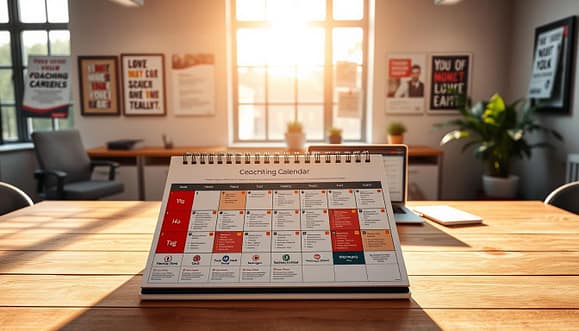
This isn’t just about scheduling. It’s about creating a plan that makes sense. A good plan helps your team grow in a smart way. Let’s look at how to make this plan work.
January-February: The Administrative Reset. Start the year by getting the basics right. This means making sure everyone is certified in CPR, First Aid, and other important skills. It’s like setting up your budget for the year.
March-May: Skill Acquisition Season. Once the basics are covered, focus on improving skills. This is the time for learning new techniques and studying videos. It’s a chance to learn without the pressure of the season.
June-July: Tactical Registration & Deep Dives. Now it’s time to sign up for big events and host your own workshops. This is when you plan your strategy for the season, using the latest ideas.
August-September: In-House Implementation. Now it’s time to put what you’ve learned into practice. Use workshops to teach your team new drills and strategies. This is when you turn plans into action.
October-December: Observation and Feedback. The season is your chance to see how well your plans work. This is for watching practices, giving feedback, and planning for next year. It makes sure learning continues all year.
| Phase | Timeframe | Primary Focus & Key Actions |
|---|---|---|
| Administrative Reset | January – February | Safety & compliance recertification. Renew CPR/First Aid, complete NFHS core courses, update staff records. |
| Skill Acquisition | March – May | Technical skill development. Attend/local pitching/hitting clinics, implement video analysis study groups. |
| Tactical Registration | June – July | Clinic registration & advanced strategy. Secure spots at national events, host local tactical deep-dive sessions. |
| In-House Implementation | August – September | Pre-season integration. Conduct staff workshops, adapt clinic learnings to program-specific drills and systems. |
| Observation & Planning | October – December | Season-long evaluation. Execute formal practice observations, provide individual feedback, draft next year’s calendar. |
A good calendar turns development into a valuable asset. It’s a plan that helps your team grow and improve all year. It’s time to move from a reactive approach to a proactive one.
In-House Clinics: Agenda, Drills, Film Study, Mentorship
The most valuable coaching education comes from real talks between experienced and new staff. This is where big ideas meet real action. Your weekly staff meeting becomes a place for growth.
Forget the usual lectures. A good in-house clinic is like a Socratic dialogue with action. It turns ideas into actions. We focus on three key areas: looking at film, practicing drills, and mentoring each other.
The Film Study: Your Own Zapruder Film
Stop watching other teams’ highlights. Your own practice footage is more instructive. It’s a deep dive into what works and what doesn’t.
Break down a drill like it’s a crime scene. Analyze why the secondary team shifted late. Did the line’s footwork cause the gap? This film study turns “we should have” into “here’s why we didn’t.”
The Drill Laboratory: Coaches as Participants
You can’t teach what you haven’t experienced. The drill laboratory gets your staff moving. They run drills they’ll teach later.
USA Football’s video library is a great resource. Don’t just watch their drills. Have your coaches do them. Critique their coaching, spacing, and tempo. Make learning hands-on.
The Mentorship Circle: Structured Wisdom Transfer
Sharing knowledge is key. The mentorship circle makes it official. It’s like the Special Olympics Texas model, where Level 4 coaches train newcomers.
Set up a time for your experienced coach to show your new coach a drill. It’s not a lecture. It’s a hands-on lesson. This is real learning.
So, what does a Tuesday afternoon look like? Here’s a plan.
| Segment | Focus | Activity Example | Resource/Tool |
|---|---|---|---|
| Film Study (20 min) | Defensive Gap Integrity | Analyze 3 plays from last practice where the run fit failed. Identify one coaching cue to fix. | Practice film, whiteboard for diagramming. |
| Drill Lab (30 min) | Teaching Tackling Form | Coaches pair up and physically run through 5 drills from USA Football’s “Advanced Tackling – 82 Videos & Drills” library. | Tablets with video access, helmets, pads. |
| Mentorship Circle (25 min) | Bullpen Management | Veteran pitching coach demonstrates his pre-bullpen routine. JV coach then leads it with a small group. | Catcher, bucket of balls, structured feedback form. |
| Q&A / Action Plan (15 min) | Clinic-to-Field Translation | Each coach states one drill or concept they will implement in tomorrow’s practice. | Shared notes document. |
This agenda turns knowledge into instinct. It makes your staff active builders of your program. The glossy brochure stays on the shelf. The real work gets done.
Practice Observation & Feedback Loops
Transferring knowledge from a quiet clinic room to a noisy field is a big challenge. USA Football data shows 93% of coaches feel they can apply what they learned. But feeling isn’t enough; we need proof.
Enter the observation audit. It’s like a fact-checker for coaching skills. The goal is to see if coaches are using their training correctly.
Forget generic praise. Our feedback is more detailed. It might say: “At the 3:15 mark, you fixed Player X’s tackling. You used the exact cue from clinic video 4.2. That’s a clear example of your training in action.”
Hard skills like CPR/First Aid are also tested. A baseball certification card shows a coach passed a test. But it doesn’t prove they can handle real emergencies. Your audit should include drills that test these skills.
Structured observation makes learning visible and trackable. Use your district’s professional development portal to log feedback. This way, you can see if coaches are really using what they learned.
Certification/Compliance: Backgrounds, CPR/First Aid
Certifications and background checks are like the immune system of your sports program. They are vital but often unseen. This includes background checks, CPR cards, and abuse prevention modules.
This paperwork is not just a formality. It’s the core of a program’s ethical culture building. Every form completed builds trust with everyone involved. Treating it as a strategic asset is key.
Major organizations provide our guide. Special Olympics Texas needs a Class A Volunteer form and background checks. USA Football requires Abuse Prevention and Health & Safety training. Team USA Football demands SafeSport training and an NCSI Background Check for elite levels.
This isn’t just about managing risks. It’s about building a strong culture building. It shows safety and ethics are non-negotiable. Below is a table that outlines these requirements.
| Organization | Key Certification/Compliance Requirements | Typical Renewal Cycle | Strategic Note |
|---|---|---|---|
| Special Olympics Texas | Class A Volunteer Form, Background Check, General Orientation, Protective Behaviors Training | Annual (for volunteer status) | Foundation for inclusive volunteer culture. Often the first touchpoint for new staff. |
| USA Football | Abuse Prevention Training, Health & Safety Training | Abuse Prevention: Every 2 years. Health & Safety: Every 4 years. | The staggered cycles are key. Missing one can invalidate the other. This is where tracking fails. |
| Team USA Football | SafeSport Training, NCSI Background Check | Annual SafeSport, NCSI as required. | The gold standard. Implementing elements of this (like annual refreshers) elevates any program’s credibility. |
Renewal cycles vary. Two years, four years, or annual. Relying on memory is a mistake. Your star coach’s CPR certification doesn’t expire during the offseason. It expires on a random Tuesday in March.
Creating a system is key, not just reminders. Use a digital calendar for compliance deadlines. Assign a “Compliance Captain” to manage this. Mastering this cycle shows professionalism and foresight.
Systematizing compliance does more than avoid liability. It makes safety compliance a celebrated part of your culture building. It’s the infrastructure that allows success without tragedy.
It’s the invisible trust that enables visible culture building on the field. Get the paperwork right, and you build the foundation for everything else.
Budgeting, CE Tracking, and Reimbursement Forms
Money matters in coaching development, but it’s often overlooked. Moving to a formal budget is key for your program’s success. It’s not just about numbers; it’s about making smart choices.
Deciding how much to spend on each coach is a strategic move. Special Olympics Texas won’t cover online course fees. USA Football’s Coach Training Program costs $49.50 with auto-renewal. These are planned expenses, not surprises.
When choosing between a Texas coaching clinic and online modules, think about ROI. Local clinics offer hands-on learning, while online modules provide consistent theory. Your budget should reflect which option is best for your program.
A simple tracking spreadsheet is your ally. It logs who learned what and when. It turns random spending into a documented history of professional growth. You’re not just buying a seat; you’re building knowledge.
The magic happens with the reimbursement form. It’s more than just attaching a receipt. Our model requires a brief report on how the coach will apply what they learned. They must explain: “What’s one drill, concept, or safety point you’re implementing next week based on this clinic?”
This approach makes an expense into an investment. It encourages reflection and immediate application. It turns passive attendees into active learners. This isn’t red tape; it’s quality control.
To understand the financial landscape, let’s compare different coaching clinic options. The table below shows the cost, format, and strategic value of various pathways for coaching clinics in Texas and beyond.
| Option | Estimated Cost (Per Coach) | Format | Best For | ROI & Notes |
|---|---|---|---|---|
| Premium Texas Coaching Clinic | $150 – $400+ | In-person, multi-day | Skill-specific mastery (e.g., hitting/pitching), networking | High contextual value, immediate feedback. Ideal for lead coaches. |
| National Online Module (e.g., USA Football) | $25 – $60 (often annual) | Digital, self-paced | Certification compliance, foundational safety training | Scalable, consistent. Watch for auto-renewal fees. |
| In-House Workshop | Primarily staff time & materials | Live, program-specific | Philosophy alignment, drill system implementation | Maximizes internal expertise. Low cash outlay. |
| Hybrid Approach | Variable (blends above) | Mixed | Comprehensive year-round development | Balances cost with impact. Requires careful tracking. |
Your budget for coaching clinics Texas style events should reflect this analysis. Is the local experience worth the premium? Sometimes, yes. For core certifications, the online route is a smart choice.
Don’t forget the calendar. A 12-month staff development plan needs a financial plan. Q1 for online safety certs, Q2 for a summer coaching clinic, Q3 for in-house materials, and Q4 for next year’s budget.
This systematic approach does more than balance books. It shows your staff that their growth is valued and planned. It turns a ledger into a legacy.
Sharing Learnings with the Program (clinic-to-field)
Imagine your star assistant returns from a top NFHS clinic, full of new ideas. But, these ideas often stay in their notebook. The real goal is to share these learnings with the team.
A USA Football survey showed 93% of coaches believe they can share their knowledge. The problem lies in how they do it. Special Olympics Texas emphasizes the importance of sharing new coaching methods. So, how can we make sure these ideas are put into action?
We create a detailed plan for sharing what was learned. This plan replaces casual talks with a structured approach. It makes everyone accountable.
Imagine a TED Talk at your staff meeting. The coach has 15 minutes to share. They must cover three key points.
- Three Key Takeaways: These are the main ideas that changed their view.
- Two Drills to Implement: These are activities ready for practice.
- One Philosophical Question: This sparks a team discussion, making everyone part of the new idea.
This plan does more than share information. It makes the team discuss and own the new ideas. The NFHS idea becomes *our* idea, *our* drill, *our* philosophy.
Without this step, learning is just a waste of money. But with it, every learning opportunity boosts the team’s knowledge. The coach becomes a key player in sharing and growing the team’s skills.
This system turns the 93% who think they can share their knowledge into 100% who actually do. It makes sure the best ideas from conferences become part of your team’s identity. This is how your team grows, learns, and wins together.
Evaluating Clinic ROI: What Changed?
Did that pricey pitching clinic really boost your team’s ERA, or just drain your budget? This is the moment of truth for your year-round development plan. We’re moving beyond just asking if you liked it. The real metric is transformation.
A USA Football survey showed 93% of coaches found clinic knowledge useful for their teams. Also, 94% found safety courses helpful. That’s the model. They didn’t just ask about the coffee; they checked if the lessons worked.
Your evaluation needs to be precise. This is the analytical heart of your operation. It’s about using data to find out what’s truly useful. It’s like a performance review for your entire staff development calendar.

The golden rule is simple: set a baseline before the clinic, then measure again after. This changes the conversation from “Was it cool?” to “What changed on the field?” It turns stories into facts.
What does this look like in practice? It’s very specific.
- For a pitching clinic: Track first-pitch strike percentage before and after. Also, monitor walk rates and ERA. Did the new mechanical cue improve command?
- For a culture-building workshop: Survey player satisfaction and team cohesion scores quarterly. Are conflicts resolved faster? Is practice energy higher?
- For a new tech system training: Count how often the new film breakdown tool is used in the first month post-clinic versus the old method.
This process turns a budget line into a line of scrimmage for improvement. That expensive clinic isn’t an expense if it lowers your ERA by half a run. It’s an investment with a clear return.
The goal is to create a feedback loop that proves value. When you can show your board that a specific clinic led to a 15% jump in first-pitch strikes, funding for next year’s plan isn’t a request. It’s a foregone conclusion. You’re not just sending coaches to learn; you’re engineering results.
Stop wondering if it worked. Start proving it.
Sample Agendas and Reflection Worksheets
Enough theory. Let’s get tactical. This is your appendix, the playbook that turns inspiration into execution.
Imagine a 90-minute in-house clinic agenda. Use the clear structures from USA Football or Special Olympics Texas as a guide. Start with 20 minutes of video review of a recent hitting clinic.
Break down the biomechanics during this time. Then, spend 40 minutes on live drill demonstrations. This helps translate film into muscle memory. Finish with 30 minutes of a brutal, honest Q&A session.
This agenda is a blueprint. It turns abstract concepts into a scheduled, actionable event for your staff.
The reflection worksheet is the next piece. It’s not just busywork. It’s the foundation of your coaching republic. Ask questions like, “What’s one thing I learned that contradicts my previous assumption about player contact?”
Or, “Identify the first practice period next week where you can implement a single technical cue from the hitting clinic.”
These tools bridge the gap between the seminar room and the field. They ensure your year-round development plan is more than just a calendar. It’s a catalyst.