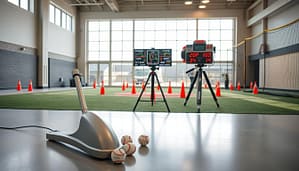
Forget the Lone Star-sized hype. An elite showcase in Texas isn’t just a casual event. It’s a data-driven gladiator arena where numbers speak louder than any coach’s promise. Scouts and college recruiters aren’t just watching; they’re scanning. They’re turning raw athleticism into a scholarship offer.
Let’s look at the numbers. That 60-yard dash isn’t just a sprint. It’s a narrative of explosiveness. A catcher’s pop time isn’t just a stopwatch reading; it’s a story of quick-twitch genius. Every throw and batted ball exit velocity tells a part of your athletic story.
Why does a fraction of a second matter so much? With the analytical precision of a sabermetrician, I’ll explain. In this state, the diamond is a religion, and these high-stakes evaluations are its holy days. This is your playbook for turning performance into opportunity.
Readiness Audit: Speed, Arm Strength, Hitting Metrics
Forget hoping for the best; we’re engineering it. We start with a detailed check of your speed, arm strength, and hitting power. It’s like a financial review for your athletic skills. We look at the hard data that scouts trust.
This is your pre-mortem. It’s the opposite of blind confidence. It’s a deep self-analysis to find issues before they become big problems. The goal is to strengthen your reality, not break your ego.
First, we look at your speed. The 60-yard dash tells a story. Does it show explosive power or panic? A fast time opens doors. A slow one raises questions.
Then, we examine your arm. Everyone talks about “a cannon.” But what does it really mean? We look at your throwing velocity as science, not just talk. The radar gun doesn’t lie. It shows if you have a good arm or a weapon.
Arm care is also key. A high throwing velo today is worthless if your elbow hurts tomorrow. We check if your power is sustainable, not just at its peak.
Next, we look at your batting. Batting practice is fun, but not professional. The real measure is exit velocity. We analyze your exit velocity data like the stock market, looking for trends. Is your power consistent?
This metric cuts through the noise. It shows if your swing has game power, not just noise. With your 60-yard dash time and throwing velo, we get a full picture of your physical tools.
The readiness audit is like a diagnostic and therapy session. It ensures you’re not just showing up to the showcase—you’re arriving with a plan for success. Know your numbers. Own your story. Then, go rewrite it.
4–6 Week Training Blocks for Speed/Power/Arm Care
Think of your 4-6 week training block as the director’s cut of your athletic montage—every scene is deliberate. You’re not just throwing weight around or mindlessly sprinting. This is architectural work. Building a body capable of showcase performance requires a blueprint that periodizes stress, recovery, and adaptation.
You can’t cram for a Texas Baseball Showcase like it’s a pop quiz. The body adapts on a schedule, not a whim. Our blueprint operates in micro-cycles, typically weekly phases that stack like intelligent Lego blocks.
The first block, let’s call it the Foundation Phase, is about waking up the system. We’re not chasing max velocity or one-rep maxes here. It’s controlled chaos. Drills focus on movement quality, establishing a baseline for arm care, and ingraining proper sprint mechanics. Think of it as tuning the instrument before the concert.
Next comes the Intensification Phase. This is where the magic—and the science—happens. Volume dips slightly as intensity spikes. Sprints get faster, weights get heavier, but the non-negotiable arm care protocols remain the bedrock. This phase stimulates the physiological adaptations you’re after: more fast-twitch fiber recruitment, increased power output, and robust connective tissue.
The final block is the Taper and Polish Phase. We’re not building new muscle; we’re letting the body super-compensate. Volume plummets while intensity is maintained at a sharp, peak level. The focus shifts to speed refinement, explosive reps, and neuromuscular priming. It’s the algorithmic sweet spot: all the gains, none of the fatigue.
Where does the art meet this algorithm? In the arm care. This isn’t an optional add-on; it’s the keystone. Your daily routine should look less like random stretching and more like a targeted physical therapy session for your shoulder and elbow. We blend old-school long-toss progressions with modern internal rotation strengthening. The goal is simple: a powerful, durable arm that doesn’t whisper warnings of injury.
Your weekly layout might look something like this:
- Day 1: Max Speed Development + Upper Body Power
- Day 2: Arm Care Priority + Low-Intensity Conditioning
- Day 3: Lower Body Power + Rotational Hitting Work
- Day 4: Active Recovery & Mobility
- Day 5: Speed-Endurance + Integrated Throwing
- Day 6: Skill-Specific Power (e.g., exit velocity drills)
- Day 7: Full Rest or Very Light Movement
This structure prevents overtraining by design. It balances pushing the limits with listening to them. The result? You arrive at those Texas Baseball Showcases & Combines not just hoping to perform, but knowing your body is primed to explode. You’ve done the montage. Now it’s showtime.
Testing Day Protocols and Warm-Ups
Think of testing day like your Broadway debut. The lights are on, and your warm-up is your final rehearsal. It’s time to follow a script you’ve practiced for weeks. The noise of the combine is just background for your performance.
Your warm-up should be a smooth progression, not random stretches. Begin with dynamic movements to get blood flowing and joints moving. Leg swings, torso twists, and light skipping are good. They prepare your body for explosive actions, not just sweat.
The mental part is key. Use your warm-up to focus on perfect throws and quick starts. This isn’t magic; it’s preparing your brain for action. You’re creating pathways for your muscles to follow.
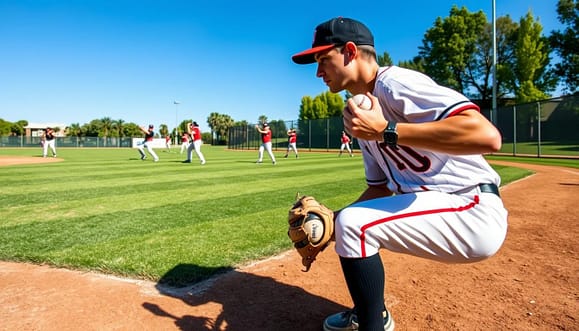
Flowing smoothly between stations is like playing chess. Don’t waste energy between tests. Include active recovery and mental resets in your plan. After a sprint, your next task might be throwing. Have a quick routine to get your muscles ready without getting tired.
For catchers, a technical warm-up before the pop time drill is essential. Start with soft throws to your partner, focusing on quick transfers. Increase speed and add footwork. The throws before the clock starts should be at game speed.
This warm-up sequence gets your arm ready, your feet active, and your mind focused. It makes the pop time test feel like just another rep.
Finish your warm-up 10-15 minutes before your first test. You should be ready, not tired or anxious. It’s the difference between being ready to hit and thinking about your swing.
By treating warm-up as a performance plan, you turn the combine into a showcase. Your body and mind are ready from the start. You’re not just participating; you’re showing off.
How to Capture Data and Video Correctly
Having a 95 mph fastball is great, but bad video is a letdown. Your scouting video is your digital audition. It’s the only chance to show your skills to recruiters. So, make sure it’s clear and professional.
Don’t just film from behind the fence. That’s like driving without steering. You need a clear view to show off your skills. It’s about the why behind your performance.
Start with angles. For pitchers, film from the third-base side and directly behind home plate. This shows arm slot and release point. For hitters, film from the side and rear-center to show swing and bat speed.
Good lighting is key. Avoid filming with the sun behind the player. Film with the sun at your back or on cloudy days. A dark fence or netting behind home plate helps show pitch rotation.
Getting footwork right is a geometry challenge. Film at the athlete’s hip level to avoid distortion. A tripod is essential for steady footage.
You don’t need expensive gear. A smartphone on a tripod and a free app for slo-mo work well. For better quality, add an external microphone and a second camera. Consistency is important.
This careful video capture is not just for show. It’s for analysis. Clear video lets you analyze your biomechanics and improve. Every pixel matters in today’s game.
Building Player Profiles and Communication Etiquette
All that data you’ve gathered? It’s useless if it’s not organized. Your stats, videos, and metrics need a proper place. That place is your recruiting profile.
A profile isn’t just for your mom. It’s a strategic marketing tool. It’s like your athletic resume on steroids. Coaches are searching for talent, not browsing for fun.
Your 60-time and GPA are the most important. Your favorite movie is not. Lead with your measurable strengths, not your trivia skills.
Your athletic summary is like an elevator pitch. In three to five sentences, tell coaches your primary position, secondary, and key strengths. Mention your baseball IQ or intangible edge.
An effective profile has:
- Front-Loaded Metrics: 60-yard dash, exit velocity, pop time, arm strength—clean, current, and impossible to miss.
- Academic Snapshot: GPA, test scores, intended major. This isn’t an afterthought; it’s a scholarship lever.
- Video Library: Not a bloated director’s cut. Hyperlinks to 2-3 crisp, recent clips: batting practice, game defense, pitching mechanics.
- The “About Me” Section: Keep it professional. Mention leadership roles, community service, or specific training regimens like those found in elite development programs. The goal is context, not character assassination by meme reference.
Now, let’s talk about communication. Your profile means nothing if you communicate poorly. Contacting a coach is a formal business inquiry, not a text to your buddy.
The way you communicate can make you stand out. It’s about presenting yourself as a recruitable professional, not just an athlete.
| Channel | Professional Approach | Amateur Move |
|---|---|---|
| Clear subject line (Name, Grad Year, Position). Brief intro, reference their program, attach profile link, express clear interest in next steps. | Vague subject (“Hello”), novel-length life story, attachments coaches can’t open, typos. | |
| Text | Only if given explicit permission. Confirm logistics, express thanks post-visit. Professional tone always. | Unsolicited texts, slang, emoji barrage, casual check-ins. |
| Call/Voicemail | Plan your talking points. Be concise. Leave a short, clear voicemail with your name, number, and purpose. | Rambling, calling during team hours or late evening, mumbling, no clear ask. |
Your profile is like a billboard. Your communication is like a handshake. Together, they show you’re ready for the next level, not just athletically but operationally.
Master this, and you’re not just another name in a database. You’re a solution a coach wants to hire.
Coach Roles: Positioning, Timing, Feedback, Hydration
Think of a Texas Baseball Showcase like a high-stakes heist movie. The player is the master thief, and you’re the getaway driver and tech wizard. Your role changes from instructor to mission control. You’re now a logistics coordinator and emotional anchor, impacting their performance.
This isn’t just about throwing BP. It’s about creating a calm, competent bubble. Your athlete should only focus on performing. You handle the rest.
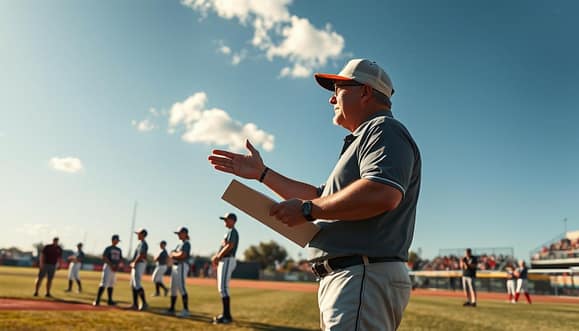
Positioning is your first tactical move. You’re not just a spectator. You’re a spotter and data collector. For the 60-yard dash, stand at the finish line for clear timing. During batting practice, find a spot that captures the swing and ball flight without obstruction.
For arm strength drills, position yourself perpendicular to the throw. This lets you judge velocity and trajectory accurately. Your view is key.
Timing and feedback operate on a tight, silent loop. The time between stations is just 90 seconds. This isn’t the time for detailed mechanical feedback. Your feedback should be brief, constructive, and focused on the future.
Use simple, clear language. Think of yourself as a NASCAR spotter, providing only essential information. Being an emotional anchor is more important than technical feedback.
Your most vital job is managing hydration and energy. This is a marathon of sprints. Dehydration can lower cognitive function and power output. You’re the pit crew, ready with water at every transition.
Offer easily digestible carbs before arm care or hitting stations. Watch for signs of fatigue they might not admit to. Your proactive care boosts their performance.
| Role | Primary Task | Key Metric | Pro Tip |
|---|---|---|---|
| Logistics Coordinator | Station positioning & schedule awareness | Transition time under 60 sec | Walk the course beforehand. Know the flow. |
| Data & Video Specialist | Capture clean, usable footage & times | Zero obstructed video files | Use a smartphone gimbal for smooth tracking shots. |
| Feedback Communicator | Deliver concise, positive cues | Feedback under 15 words | Use “next time” language. Avoid “you should have.” |
| Energy Manager (Pit Crew) | Hydration & fuel schedule | Fluid intake every 20 min | Pre-mix electrolyte bottles. Mark them with times. |
| Emotional Anchor | Maintain calm, confident demeanor | Player’s perceived stress level | Your body language broadcasts more than your words. Smile. |
Mastering these roles turns chaos into a controlled operation. It’s the difference between a player distracted by the environment and one who feels supported. For more on structured preparation, check out a drill book for AGM kits for frameworks on station-based drills.
Success at Texas Baseball Showcases & Combines is a team effort. The player brings the talent, and you provide the stage. With precise handling of positioning, timing, feedback, and hydration, you don’t just clock faster times. You build a better athlete.
Injury-Prevention & Recovery (Arm Care, Sleep, Nutrition)
Let’s get real: all the elite training and data capture mean nothing if you get hurt. The best thing is being able to play. This part is about making sure you’re ready for the Texas Baseball Showcases & Combines. It’s about keeping your body in top shape.
Arm care is more than just icing your arm when it hurts. It’s about keeping it strong every day. Forget the static stretches. Your arm needs dynamic exercises and smart recovery.
Building strength is a daily task. For tips on keeping your arm strong, check out these arm care routines. You want to show up with a strong arm, ready to impress.
Sleep is your best performance enhancer. It’s not just rest; it’s repair time. Your body fixes muscles and learns new skills during sleep. Cutting corners on sleep is like building a house on shaky ground.
Make sleep a priority. Keep your room dark and cool. No screens before bed. Aim for 7-9 hours of sleep. Being tired during drills is a disaster.
Nutrition is key, not a diet. You need the right fuel for your body. Focus on carbs, protein, and healthy fats. Stay hydrated all day, not just before you play.
Here’s a simple plan for the weeks leading up to the event:
- Arm Care: 10-15 minutes daily of dynamic warm-ups, band work, and controlled cool-downs.
- Sleep: Target 8+ hours. Establish a wind-down routine and stick to the same sleep schedule, even on weekends.
- Nutrition: Eat every 3-4 hours. Pair carbs with protein at each meal. Carry a water bottle and sip consistently throughout the day.
Arm care, sleep, and nutrition are the basics of success. They let your skills shine when it counts. Mastering these areas means you’ll be ready to dominate at the Texas Baseball Showcases & Combines.
Sample Timeline: T-42 Days to Showcase
Let’s plan out the next six weeks, week by week. We’ll focus on doing, not just talking. This plan is your guide to success, combining every drill and test for the skills combine.
The next six weeks are like a three-act play: foundation, intensity, and polish. This timeline is your script. Follow it, and you’ll avoid chaos.
| Week Label | Days Out | The Mission | Non-Negotiables |
|---|---|---|---|
| The Foundation | T-42 to T-29 | Base building & audit. Launch the 4-6 week training block. Establish baseline metrics for speed and arm strength. | Complete Readiness Audit. Finalize hotel & flight for the skills combine. Player profile first draft. |
| Intensity Ramp | T-28 to T-15 | Peak power development. Training intensity hits its zenith. Introduce complex drills that mimic combine stations. | Peak Velocity Testing. Update player profiles with new video. Begin consistent coach feedback loops. |
| Peak & Taper | T-14 to T-8 | Max performance testing followed by the deliberate wind-down. Body is primed, then rested. | Official Testing Day protocols. Data and video captured perfectly. Start tapering volume by 40%. |
| The Polish | T-7 to T-3 | High-intensity, low-volume maintenance. Focus on technique, mental reps, and logistical finalization. | Arm care is key. Finalize all travel documents. Hydration and sleep protocols are locked in. |
| Pre-Showcase Lock-In | T-2 to T-1 | Travel, light activation, and mental preparation. The work is done. | Travel day. Light dynamic warm-up only. Visualize testing stations. Early bedtime. |
| Game Day | T-0 (Showcase AM) | Execute. The timeline culminates here. | Follow Testing Day Warm-Up protocol to the minute. Trust the process. |
Weeks 1-3 focus on building the engine. Weeks 4-5 tune it to peak and then cool it down. Tapering is strategic, not lazy.
Administrative tasks are part of the plan. Book travel early and update profiles after big tests. It’s not busywork; it’s essential.
By T-7, the hard work is done. The last week is for fine-tuning. This timeline removes guesswork. It’s a clear path to success.
Post-Event Analysis & Goal Reset Meeting
Think of the showcase as collecting data. The next 48 hours are for turning that data into a plan. The excitement wears off, and the room gets messy. Don’t check social media. The most important thing happens in a meeting with your player, coach, or advisor.
This meeting is not casual. It’s a deep dive into what happened. Schedule it 24-48 hours after you get back. This lets emotions calm down but keeps details clear.
The goal is to find the real signals among the noise. Was that scout’s nod important, or was it just the sun?
Start with the numbers from your Texas Baseball Showcases & Combines. Show your 60-yard dash time, exit velocity, pop time, and arm strength. Compare them to your goals and your class’s averages. This gives you a clear baseline. No excuses, just facts.
Then, look at any scout feedback. It’s like a secret message. Look for patterns, not just nice words. “Raw power” is different from “needs to recognize spin.”
Lastly, watch the video together. Focus on the first and last at-bats for hitters. Look for fatigue. For pitchers, check the fastball command late in the bullpen. This is for detailed analysis, not just for fun.
Now, ask the big question: Was it a success, a learning experience, or both? Redefine what success means. Maybe you didn’t get an offer, but your fastball speed went up 3 mph. That’s a big win.
The table below helps frame this important analysis phase.
| Analysis Pillar | What to Look For | Emotion Filter | Resulting Insight |
|---|---|---|---|
| Quantitative Data | Did metrics meet, exceed, or fall short of goals? What were the percentile ranks? | Pride or disappointment must be acknowledged, then shelved. | Identifies the 1-2 physical attributes needing the most urgent work. |
| Scout Feedback | Recurring comments across multiple evaluators. Specifics over generalities. | Don’t hunt for compliments. Don’t fixate on one negative. | Reveals the perceived “book” on you and the biggest barrier to the next level. |
| Video Review | Mechanical consistency under fatigue. First vs. last inning comparison. | This is a diagnostic tool, not a talent show. | Highlights technique breakdowns that data alone can’t show. |
| Competitive Context | How did your performance stack up against the best players there? | Use it for calibration, not for self-esteem. | Provides a realistic market valuation and competitive benchmark. |
With analysis done, move forward. The showcase is now your new baseline. The goal reset meeting starts. If your arm strength was a 55, aim for a 60 next season. Plan out your 6-week training block to get there.
This process builds momentum. It turns one event into the next chapter of your growth. You’re not stuck on the result; you’re planning the next one. The last step? Put the analysis away and start working. The next Texas Baseball Showcases & Combines season is coming.
Parent Guide & Travel Checklist
Your role is more about the behind-the-scenes work than being a scout. Success is about having good hotel Wi-Fi and snacks.
Packing for baseball showcases needs a plan. Don’t forget extra cleats and a Yeti cooler for drinks. A portable charger is key to avoid phone troubles.
Booking hotels is an art. Look for ones with late checkout for rest. Check parking on Google Maps for big complexes. A small first-aid kit is a lifesaver.
Being a good sideline parent is important. Practice being diplomatic and calm. Your goal is to help your child, not to win.
Good preparation helps your child perform better. A well-planned trip reduces stress. Use this checklist as your last drill before the game.