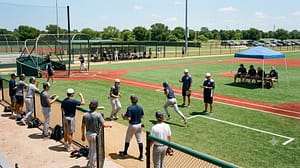
The Texas Championship matters because Texas youth baseball growth is no longer just a story about one bracket, one park, or one weekend. The available research does not identify a single official statewide organizer, host site, or complete schedule for one event under that exact name, so the safest read is to treat it as championship-level tournament baseball in Texas. From that angle, the significance is clear: these events bring families together, give players stronger competition, and show cities why youth baseball can fill hotels, restaurants, and ballparks.
Why The Texas Championship Matters To Texas Baseball
Texas Championship As A Participation Signal
The clearest value of a major youth event is not just who wins the last game. It is who shows up in March, June, or July with uniforms, grandparents, coolers, and a weekend plan. Youth baseball participation among 6- to 12-year-olds grew by 12% from 2021 to 2022, a post-pandemic gain reported in youth baseball participation data. That number matters for Texas because tournament operators can only build full brackets when local leagues, select teams, and travel families are active enough to enter.
Seen this way, the Texas Championship is a checkpoint for the health of the sport. If age divisions fill, fields stay booked, and teams are willing to drive across the state, then the youth pipeline is doing more than surviving. It is producing enough player interest to support competitive weekends beyond local league play. For coaches, that creates a useful measuring stick. A roster can learn where it stands against teams from other parts of Texas without leaving the state or turning every weekend into a national trip.
Why Texas Families Read These Events Closely
Texas baseball families tend to think in practical terms: distance, field quality, game count, bracket format, lodging, weather, and whether the competition level fits the roster. Championship-style events raise those questions all at once. A strong event can help a 10U team test its pitching depth, give a 12U catcher more pressure innings, or give a new select group a clearer idea of whether it belongs in open, AAA, or AA competition. That is why choosing the right weekend matters as much as chasing the biggest name on a flyer. Families comparing event fit can use local planning ideas from Texas youth baseball tournament selection before paying entry fees.
Participation Signals Behind The Tournament Surge
Travel Baseball Pressure
The research notes point to a larger trend: travel baseball has expanded since 2010, with the cited participation source reporting 40% growth in the travel baseball market. That does not mean every Texas player needs a heavy travel schedule. It does mean championship weekends sit inside a bigger shift toward organized tournaments, team branding, paid instruction, and weekend competition outside the local league calendar.
For Texas coaches, the task is to keep that growth connected to development. A tournament weekend should not be only a trophy chase. It should help coaches evaluate strike throwing under pressure, defensive communication, base-running decisions, catcher workload, and how players respond after a rough inning. The best event experience gives a staff more information than a regular practice can provide. It also gives players a chance to learn the rhythm of pool play, bracket play, early report times, and the quick reset required after a loss.
Broader Participation Matters
The same research set reports growth in Hispanic participation from 2010 to 2022 and growth in girls playing baseball since 2018. Those points are important in Texas, where communities vary widely by region, school district, and league access. A championship event that draws from Houston, Dallas-Fort Worth, Central Texas, South Texas, the Golden Triangle, and smaller towns can reflect a broader player base than a single neighborhood league. That helps the sport stay connected to the full state, not just the programs with the biggest indoor facilities or longest travel budgets.
For organizers, participation growth should create a planning challenge, not a reason to overbook fields. Age divisions need realistic start times, proper rest between games, enough umpires, and clear rain or heat policies. Texas families will accept a long day at the park. They are less forgiving when communication is poor or when a bracket runs far behind without updates.
Texas Championship Impact On Local Economies
Beaumont Shows The Event Model
The best verified Texas example in the research comes from Beaumont. The Spindletop Boom Tournament, held March 28-29, 2026, attracted 131 teams, including 52 from out of town, and produced a reported direct economic impact of $202,800, according to Yahoo Sports on Beaumont youth baseball. That is the kind of weekend city leaders notice because tournament traffic reaches beyond the foul lines.
For Texas Championship hosts, the spending pattern is familiar. Visiting teams need rooms, meals, fuel, ice, sunscreen, batting gloves, and sometimes a last-minute stop for cleats. Parents often bring siblings. Grandparents may come for bracket Sunday. Local restaurants see lunch rushes around game gaps. Hotels benefit when divisions are large enough to keep out-of-town teams overnight. None of that guarantees every event is profitable for a city, but the Beaumont data shows how one well-attended youth baseball weekend can produce measurable local value.
Why Local Support Affects Event Quality
Community support also affects the game-day product. Cities that value tournament baseball are more likely to pay attention to field readiness, parking, restroom access, trash pickup, and traffic flow near the complex. Those details matter to families deciding whether to return next season. Local programs can also benefit when tournament attention encourages sponsors, volunteers, and small businesses to back youth teams. That connection is part of why community support for local programs remains a real factor in keeping baseball affordable and visible.
Tournament Structure And Family Planning
Schedule Fit Before The Entry Fee
A championship label can be appealing, but Texas families still need to ask practical questions. How many guaranteed games are listed? Are pool games tied to bracket seeding? Are divisions separated by class or grouped together? How many fields are being used? Are game times spread across one complex or split between several parks? The answers shape pitching plans, catcher availability, hotel choices, and whether siblings can manage the weekend without spending twelve straight hours in the heat.
Coaches should also think about roster depth before entering a higher-pressure event. A team with two reliable pitchers may compete well in a one-day format but struggle in a two-day bracket if pitch counts stack up. A deep roster can survive heat, delays, and back-to-back games more easily. That is not just about winning. It protects arms and keeps players from being used in roles they are not ready to handle.
Texas Weather And Venue Logistics
Texas tournament planning always includes weather. Spring weekends can bring rain and lightning. Summer events can bring heat that affects catchers, pitchers, umpires, and families in the stands. A good event plan should tell teams how updates will be shared, who makes delay decisions, and what happens when a field becomes unplayable. Families should pack like the day may change: shade, water, extra socks, towels, snacks, and patience.
Venue logistics also influence the reputation of an event. Clear parking plans, visible field numbers, enough warm-up space, and predictable gate procedures make a long weekend easier. For younger teams, those details reduce stress before first pitch. For older teams, they allow coaches to focus on scouting opponents, building lineups, and managing arms instead of solving basic access problems.
What Texas Championship Growth Means For Families
The Texas Championship idea carries weight because it represents where youth baseball in the state is headed: larger weekends, more travel decisions, stronger competition, and more attention from local communities. The opportunity is real, but it works best when families stay grounded. Pick events that match the team. Watch workload. Ask about format. Treat development as part of the scorecard.
For Texas players, championship baseball can build confidence and expose weaknesses in a useful way. For coaches, it offers a pressure setting that practice cannot fully recreate. For cities, it can bring visitors and show why ballpark investment matters. The strongest version of this growth keeps the sport local enough for families to belong, competitive enough for players to improve, and organized enough that teams want to come back.