Welcome to the world of structured training for our aspiring athletes! If you’re a coach or a parent, you know that effective preparation is key. It’s like the secret sauce that turns raw talent into refined skills. Even the greatest players started somewhere.
In this article, we’ll show you how to create engaging and productive sessions for young athletes. We’ll focus on activities that are right for their age. These activities will boost their skills and keep the fun high.
Imagine the joy on a child’s face when they hit that perfect ball or make a flawless play! It’s a moment of pure happiness.
We’ll also cover time-boxed segments to make every minute count. You might wonder, “How do I keep everyone engaged?” Don’t worry, we’ll talk about station rotations and dynamic warm-ups. These will get your team excited and buzzing with energy.
So, are you ready to take your game to the next level? Let’s start this journey together. And don’t forget to check out our comprehensive plans for more insights!
Principles of a Great Practice: Intensity, Reps, Decision Making, Fun
What makes a practice great? It’s about four key things: intensity, quality reps, smart decisions, and fun. These elements are essential for a successful youth baseball practice. They help turn a chaotic practice into a well-organized one.
Intensity isn’t about making the practice too hard. It’s about keeping a fast pace where everyone stays focused. Imagine a practice where every kid gets to touch a baseball every 90 seconds. This kind of intensity builds skills and keeps players alert.
Next, we have reps. But these are special reps that feel like the real game. They help players develop muscle memory and avoid bad habits. It’s like rehearsing for a big show; you wouldn’t go on without practice!
Then, there’s decision-making. This is the thinking part of the game. Decisions like whether to throw to second or hit the cutoff can make a big difference. Teaching players to think critically during drills prepares them for real games.
And let’s not forget fun. Fun is a natural result of being good at something. When a kid makes a double play for the first time, it’s a huge thrill. The Astros Academy manual shows how to structure practices around these four pillars, ending with competitive base running to improve conditioning.
But how do we fit all this into a season? That’s where season periodization comes in. You can’t pack everything into one session. Start with simple drills in March and move to more complex ones by May. It’s like building momentum in a campaign.
| Principle | Description | Outcome |
|---|---|---|
| Intensity | Maintaining a crisp pace where players are consistently engaged. | Increased skill development and player focus. |
| Reps | Deliberate, game-speed repetitions to build muscle memory. | Reduction of bad habits and improved performance. |
| Decision Making | Encouraging quick, strategic thinking during drills. | Better game awareness and player confidence. |
| Fun | Creating an enjoyable environment that fosters competence. | Higher motivation and retention of players. |
Safety and Warm Up Routine: Dynamic Mobility, Throwing Progression, Arm Care
Warm-ups are not just a formality; they’re essential for preventing injuries. Many coaches overlook this important step, seeing it as just a legal formality. But, youth arms are fragile, like uncooked spaghetti. So, I start every practice with dynamic mobility exercises that are as thorough as a yoga class.
Imagine doing high knees, butt-kickers, and grapevines. These movements get the muscles ready without making them stiff. Then, we move on to a throwing progression that’s as smooth as a Beyoncé performance. We start on one knee, focus on proper mechanics, and then move to more complex throws.
Arm care is not optional; it’s what keeps kids pitching through high school. The Astros manual suggests a 15-minute routine with 14 exercises, from shoulder raises to bicep curls. Skipping arm care is like ignoring the Constitution.
Using station based coaching during warm-ups is essential. It keeps everyone active and prevents boredom. It also allows for age appropriate drills, making sure kids of different ages do exercises that suit them.
| Exercise | Duration | Focus Area |
|---|---|---|
| Dynamic Mobility | 5 minutes | Full Body Activation |
| Shoulder Series | 15 minutes | Arm Care |
| Throwing Progression | 10 minutes | Mechanics |
| Long Toss | 5 minutes | Arm Strength |
A well-warmed-up team is a safe team. And a safe team is more likely to win the championship game.
8U Template: Stations, Tee Work, Ground Ball Basics, Baserunning Games, 75 Minutes
Coaching 8U baseball is like trying to manage a bunch of excited kids. A good youth baseball practice plan is key to keeping things organized. This 75-minute plan includes four stations, making sure every minute is filled with activity.
| Station | Focus | Duration |
|---|---|---|
| Tee Work | Batting technique and sweet spot awareness | 12 minutes |
| Ground Ball Basics | Fielding techniques with a focus on glove positioning | 12 minutes |
| Baserunning Games | Fun relay races and sliding techniques | 12 minutes |
| Catching Drill | Open pocket drill for receiving the ball | 12 minutes |
First, we focus on tee work. It’s not just about swinging; we teach kids about the bat’s sweet spot. We adjust the tee to help players learn proper technique.
Then, we move to ground ball basics. Here, we teach kids how to use their gloves correctly. We want them to catch the ball, not just hold onto it.
Next, we play baserunning games. We make it fun with races and slides. If it’s not fun, it’s not worth it at this age.
Lastly, we do a catching drill. It teaches kids how to receive the ball properly. We use the open pocket drill from Baseball-Tutorials to show them how to catch.
We start with a 5-minute warm-up. Then, we end with a controlled scrimmage. Every kid gets to play infield. This helps them prepare for Texas rec ball to select leagues.
In short, this 8U template is the start of a successful baseball journey. Stick to it, and watch your players grow!
10U Template: Add Live Toss, Simple Relays, Intro Signs, 90 Minutes
Welcome to 10U baseball, where kids learn to hit under pressure. Live toss introduces them to failure, a valuable lesson. My 90-minute plan has five blocks, fitting for their growing focus.
We start with a 10-minute baserunning block. Players practice the turn to the base and lead drills. Learning a secondary lead is key—it can change the game.
Then, we move to hitting stations, following the Astros manual’s structure:
- Live Station: I throw from behind a screen, mixing in bunt rounds and situational hitting.
- Tee Station: This is for mechanical tune-ups, ensuring players are set up for success.
- Bunt Station: Focused on bat-angle reps to improve precision.
- Fielding Station: Shaggers work on reading balls off the bat, a critical skill for any player.
Defense is next, with simple relays teaching the concept of a cutoff man. I introduce basic signs: steal, bunt, take. No need for complex signals.
Remember, drills are age-appropriate. Live toss is from 40 feet, with controlled velocity. Coaches should keep it simple, not complex.
The Baseball-Tutorials suggest a 10-minute controlled game at the end. We scrimmage, but with rules: hit behind the runner, freeze on a pop-up. It’s like learning by playing, not reading rules.
| Station | Focus | Duration |
|---|---|---|
| Baserunning | Turn to the base, lead drill | 10 minutes |
| Live Hitting | Bunt rounds, situational hitting | 20 minutes |
| Tee Work | Mechanical tune-ups | 15 minutes |
| Bunting | Bat-angle reps | 15 minutes |
| Fielding | Reading balls off the bat | 20 minutes |
| Scrimmage | Controlled game with conditions | 10 minutes |
12U Template: Infield Outfield Circuits, Intro Bullpen Sequences, Situational Hitting, 105 Minutes
At 12U, practices become a fast-paced mix of skill and strategy. The tempo is quick, and so are the expectations. A good youth baseball practice plan for this age should be like a symphony, with each player playing their part well.
Our 105-minute session is divided into two 20-minute blocks: infield and outfield. Infielders do short-hop drills, double-play feeds, and barehand catches. These drills are fast-paced, helping players adapt quickly. Outfielders work on drop steps, crow-hops, and accurate throws to the cutoff. It’s important for a 12-year-old outfielder to throw accurately, not like they’re pushing a shopping cart!
Then, we introduce bullpen sequences. These are 15-pitch segments where pitchers work on fastball location and changeup grip. Catchers aim for a low target, making every pitch count.
Situational hitting is the brain of this practice. We run drills from the Astros manual, like hit and run, and sacrifice flies. We also add a 2-strike round to teach grit. By mid-April, these drills replace generic batting practice, focusing on game IQ, not just exit velocity.
To finish, we have a 15-minute controlled scrimmage. I stop the game and ask, “What’s the play?” It’s like a Socratic seminar in cleats, teaching critical thinking and situational awareness. Remember, a youth baseball practice plan without situational hitting is like a campaign ignoring swing states—it’s not a winning strategy.
| Drill Type | Focus | Duration |
|---|---|---|
| Infield Circuits | Short-hop drills, double-play feeds | 20 minutes |
| Outfield Circuits | Crow-hops, drop steps | 20 minutes |
| Bullpen Sequences | Fastball location, changeup grip | 15 minutes |
| Situational Hitting | Hit and run, sacrifice fly | 30 minutes |
| Controlled Scrimmage | Game situations, decision making | 15 minutes |
With station-based coaching, we keep all 12 players active. Idle hands can lead to clubhouse dissent!
14U Template: Cutoffs, Double Play Turns, Live Pens, PFP, 120 Minutes
In 14U baseball, practices are intense. They focus on perfecting skills. We start with a 15-minute baserunning segment on bent-leg sliding and double play turns. A bad slide can lead to injuries.
Then, we move to defensive drills. Cutoffs and relays are practiced until they’re automatic. Outfielders aim for the cutoff man’s chest with precision. Double play turns are a dance of footwork, executed with finesse.
Live pens are a key part of our routine. It’s not just bullpen work; it’s real-time feedback for pitchers and hitters. We also do PFP, covering bunts and first base coverage. We spend 20 minutes on pitcher-catcher drills and then do infield/outfield.
The heart of the practice is 60 minutes of hitting, bunting, and situational swings. We use the Baseball-Tutorials game situation fielding series. Every player learns all seven defensive scenarios. Inactive players do soft toss to stay involved.
Station based coaching is our strategy. While one group is in live pens, another practices double-play turns. A third hits off a tee with purpose. A 120-minute practice needs a plan to be effective.
For more insights on practice templates, check out this practice schedule. It’s essential for any coach looking to improve.
Rain or Heat Alternates: Gym and Shade Plans
Weather in Texas is as unpredictable as a friend who changes plans last minute. Sometimes it’s sunny, then rainy, or too hot. That’s why I always have a backup plan ready, not just for bad weather but for any unexpected change.
On rainy days, we head to the gym. We set up four stations: tee work, soft toss, mirror drills, and agility ladders. The Astros manual helps with a quick warm-up, no need for a foul pole.
When it gets too hot, we practice early or late. We take breaks in the shade every 10 minutes. I make sure everyone drinks enough water, and we have ice towels ready. Heat stroke is serious, and I won’t risk it.
Indoor drills are tailored for each age group. Young players do fun, game-like activities, while older ones review videos. A good practice plan always has a backup for bad weather. It’s not just about showing up; it’s about being prepared.
| Weather Condition | Indoor Activity | Outdoor Activity |
|---|---|---|
| Rain | Tee Work, Soft Toss | Agility Drills |
| Extreme Heat | Video Review, Shadow Drills | Shade Breaks, Hydration |
| Ideal Weather | Full Practice Plan | Full Practice Plan |
Equipment Checklist: Cones, Nets, Radar, Pocket Radar, Buckets, Whiteboard
Every great practice starts with the right tools. Imagine walking onto a field with only a deflated ball. That’s not coaching, it’s a performance art piece waiting to happen. A well-oiled practice needs a kit that would impress a NASA engineer.
At the top of my list: cones. Not the tiny orange ones that disappear in grass, but the flat, disc-style markers. They help set up stations, baserunning paths, and defensive positions. Without cones, your station based coaching becomes a guessing game, and kids are not good at guessing.
Nets are a must. You’ll need a portable L-screen for live batting practice, a pop-up net for soft toss, and a larger cage net if you have space. These nets create a safe environment for practice and let players focus on their skills.
Next up is the radar gun. I prefer the Pocket Radar because it’s small and doesn’t scream “I’m overcompensating.” Use it sparingly; a velocity reading once a week for pitchers is enough. You don’t want to create a generation of max-effort arm injuries.
Don’t forget the buckets—plural. One for baseballs, one for collected foul balls, and one for ice water. Hydration is key! A whiteboard and dry-erase markers are my secret weapon; I diagram cutoffs and relays before we run them because visual learners outnumber auditory ones 3-to-1.
Lastly, a well-stocked med kit with ice packs and band-aids is essential. Blisters and bruises are the only souvenirs I want kids taking home. Remember, season periodization influences the checklist: early in the season, I bring more tees and softer balls for skill acquisition; late in the season, the radar and situational charts come out.
| Equipment | Purpose | Quantity |
|---|---|---|
| Cones | Mark stations and paths | 10-15 |
| Nets | Safety for batting practice | 2-3 |
| Pocket Radar | Measure pitch velocity | 1 |
| Buckets | Store balls and water | 3 |
| Whiteboard | Diagram plays | 1 |
Invest in the gear that turns chaos into curriculum. Your practice planning templates for youth baseball only work if the tools are there to execute them.
Evaluation Sheets: Attendance, Skill Rubrics, and At-Home Assignments
In youth baseball, assessments turn practice plans into real growth. Without evaluation, it’s just a game of chance. And let’s be honest, chance is for lottery tickets, not for growing young athletes.
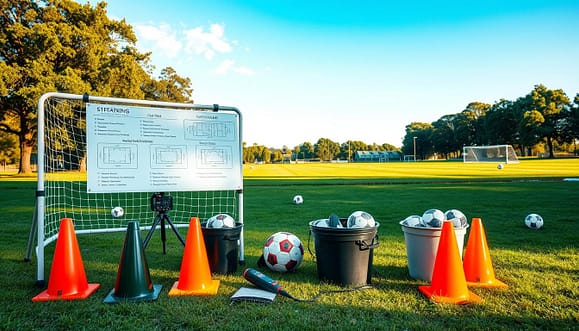
I always carry a clipboard with three key sheets: attendance, skill rubrics, and at-home assignments. Keeping track of who shows up isn’t just about the numbers. It shows who’s really committed and who’s just there for fun.
Skill rubrics are my go-to tool. I rate each basic skill like throwing, fielding, and hitting on a 1-to-4 scale. Each player gets checked twice a season. It’s about seeing how they improve, not just labeling them.
Sharing these rubrics with parents is quick and simple. I don’t give them a long lecture. At-home assignments help players practice between sessions. I send them simple drills to do at home, like practicing their swing or throwing.
The Texas rec ball to select system needs this kind of accountability. Coaches who notice who’s practicing at home have an edge. A good practice plan doesn’t stop when the drills do. It’s about ongoing improvement.
So, I’m okay with the paperwork. It’s not fun, but it’s better than losing big because of lack of practice. Here’s a simple table that shows what I evaluate:
| Evaluation Type | Description | Frequency |
|---|---|---|
| Attendance | Tracks player commitment and presence at practices | Every practice |
| Skill Rubrics | Measures growth in key baseball skills | Twice a season |
| At-Home Assignments | Encourages skill development outside of practice | Weekly |
Printable PDFs, Links, and Editable Google Sheets
As we finish our journey through youth baseball practice planning, we have some key resources for you. The Houston Astros MLB Youth Academy manual is packed with valuable info. It covers stretching routines to catcher drills, all made by experts who know the game well.
Then, there are the pre-designed practice plans from Baseball-Tutorials. These templates fit any age group and have time blocks set. They make planning effective sessions easier. You can also make editable Google Sheets from these templates. This lets you change your weekly practice plans as needed.
Imagine a Google Sheet with dropdown menus for drills and automatic time calculations. It even has a season periodization tab for planning your whole spring season. This ensures you’re not just a “napkin coach” but a strategic planner.
Use these youth baseball practice planning templates to improve your coaching. Download the PDFs, save the links, and open the Google Sheet during warm-ups. These resources are here for you. Use them well, and watch your team do great on the field.