Texas high school baseball draft picks are more than draft-night names for families around the state. They are markers for what local coaching, school programs, select teams, college recruiting, and community support can build when players are given time, instruction, and steady backing.
The 2026 MLB Draft offered Texas baseball communities a clear reminder: the path from a local diamond to pro baseball can run through high school fields, college commitments, summer tournaments, and hometown support systems. For youth leagues and high school programs, the impact is not just pride. It can change how parents ask questions, how sponsors see value, how coaches plan development, and how younger players picture their own next step.
That does not mean every player should be pushed into a pro-track mindset before they are ready. If anything, the recent draft results point toward a healthier local message. Strong programs are built by teaching fundamentals, protecting arms, creating fair playing time, helping athletes grow in the classroom, and keeping families connected to the game. The draft can inspire. The community still has to do the daily work.
Why Draft Results Matter To Local Programs
Scouting Attention Starts Earlier
When high school players from Texas are selected in prominent draft spots, younger players notice. So do tournament directors, private instructors, school coaches, and college recruiters. A draft pick can bring more eyes to a region, but the attention usually lands on a full ecosystem, not one athlete alone. The high school coach who sets standards, the youth coach who teaches footwork, the parents who manage travel, and the local businesses that help fund uniforms all sit behind the moment.
For Texas leagues, that means development should be treated as a long process. A 12U player does not need a professional-style schedule. He needs sound throwing mechanics, safe workload habits, confidence at the plate, and adults who know when rest is the right call. The draft may be the headline, but the habits are formed years earlier on practice fields, in batting cages, and during weekend tournaments across the state.
College Commitments Still Shape Choices
Recent draft stories also show how college programs remain tied to the high school path. A player can be drafted, signed to a college program, or weighing both paths at the same time. That puts extra pressure on families to understand options without rushing. Coaches and community mentors can help by explaining the value of academics, strength training, maturity, and fit.
For local baseball groups, the best response is not to sell one path as the only path. Some players will move toward professional baseball quickly. Some will develop in college. Many will play because they love the game and want to be part of a team. A healthy Texas baseball culture makes room for all of those outcomes.
What The Rangers And Aggies Showed
A High School Bet In Arlington
The Texas Rangers selected high school players with each of their first three picks for the first time since 2018, according to the Rangers draft release. For local baseball families, that fact carries weight because it shows a Major League club in Texas placing early draft value on younger talent.
That does not mean the club’s approach should be copied by every youth team or high school program. Professional scouting departments make decisions with resources, data, and long development timelines that local teams do not have. Still, the message can be useful: athletic growth takes patience. High school players who draw attention are usually the product of years of repetition, competition, adjustment, and support.
For community partners, this is a practical opening. Sponsors can help fund safer fields, indoor cage time, coaching clinics, and travel assistance instead of only paying for banners. Booster clubs can direct energy toward resources that serve the whole roster. A draft pick may bring attention, but a better practice setting helps every player.
College Programs Feed The Same Pipeline
Texas A&M had eight players selected in the 2026 MLB Draft, with five taken in the top five rounds, per the Texas A&M draft recap. That college result matters to high school baseball because it shows how the state’s player pipeline does not stop at graduation. College baseball can be a major step in physical growth, skill refinement, and exposure.
For Texas high school coaches, this reinforces the need to prepare athletes for more than showcase results. College-ready players must handle schedules, strength programs, classroom demands, travel, and competition for roster spots. Those habits can be taught locally. Being on time, caring for equipment, communicating with coaches, and learning how to fail without shutting down are not small details. They are part of player development.
Families should also hear a grounded message. Draft outcomes are exciting, but they are rare. The wider benefit of strong baseball communities is that more players learn discipline, teamwork, resilience, and leadership. Those traits help whether a player signs professionally, plays in college, coaches younger kids later, or simply carries baseball lessons into adult life.
How Local Leagues Can Respond
Support Without Turning Every Game Into A Showcase
The biggest mistake after a high-profile draft year is treating every youth game like a scouting event. Young players need competition, but they also need space to learn. A shortstop should be allowed to make an error and receive coaching instead of panic. A pitcher should be protected by pitch counts and rest, not stretched because adults are chasing a trophy. A hitter should learn approach and strike-zone judgment, not only exit velocity talk.
Local leagues can respond with clear parent meetings, coach education, and age-appropriate development plans. That kind of structure keeps ambition from turning into burnout. It also helps families who are new to select ball or high school recruiting understand what matters at each age.
- For youth leagues: invest in coach training, safe fields, and clear communication with parents.
- For high schools: connect baseball development with academics, strength work, and multi-sport balance where it fits the athlete.
- For sponsors: support equipment, scholarships, tournament fees, and facility improvements that reach more than one team.
- For families: ask about rest, coaching quality, and long-term growth before adding more games to the calendar.
Partnerships That Keep Players Grounded
Community partnerships matter most when they reduce pressure instead of adding it. A local business that sponsors a team meal, a civic group that helps cover registration fees, or a former player who volunteers at a clinic can make baseball feel reachable. Those efforts may not show up on draft night, but they help keep players in the sport long enough to improve.
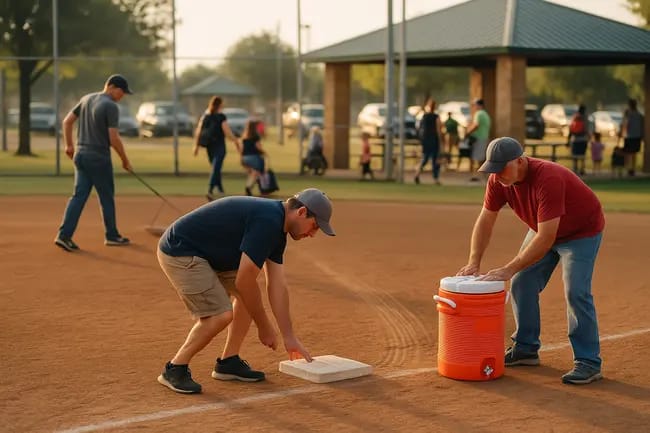
Texas baseball communities should also protect the volunteer base. Youth baseball depends on people who drag fields, run scoreboards, organize uniforms, manage concessions, and answer late-night parent messages. If draft attention brings more families into the game, leagues need systems that welcome help and spread responsibility. Better volunteer culture means better player experience.
What Texas High School Baseball Draft Picks Mean Locally
Texas high school baseball draft picks can lift expectations, but the best local response is not hype. It is better coaching, better communication, safer workloads, and stronger community support. Draft selections give young players something to imagine. Local programs give them somewhere to work.
For Texas families, the lesson is simple and useful: celebrate the players who reach the professional stage, then bring that energy back to the neighborhood field. Ask how the league can improve practice space. Ask whether a family needs help with fees. Ask if coaches have the support they need. Ask if the schedule leaves room for rest and school.
The draft will always spotlight a small group. Community baseball serves a much larger one. When those two ideas stay connected, Texas youth baseball can be ambitious without losing its roots. That is where the real impact of recent draft success can be felt: not only in a player’s name being called, but in the next group of kids showing up to practice believing the game has a place for them.