Imagine a warm evening with excitement in the air. Then, a flash of light cuts through the sky. It’s not just any lightning; it’s heat lightning, a mystery to many.
Coaching is full of its own sparks, like managing player safety. Understanding the environment is key. Heat lightning reminds us of nature’s unpredictability.
We must adjust our strategies for player pitch counts. It’s about being proactive. Coaches need to know the pitch count standards.
This protects our players and boosts their performance. A star player is useless if they’re out due to preventable injuries.
In this article, we’ll cover essential practices for coaches. We’ll mix humor with wisdom to keep players safe and competitive. Let’s light the way together!
Texas climate risks and why policies must be written
In Texas, the weather is unpredictable and poses a big risk for youth baseball. Freezes in February can turn infields into concrete, while August heat makes players feel like they’re melting. It’s time to change how youth leagues handle the weather.
The McKinney Little League Board knows this. They check the weather forecast by 2 p.m. on weekdays. If it’s too cold, they cancel outdoor practices. This isn’t just a rule; it’s a way to keep players safe.
Dealing with heat, lightning, and tornado warnings requires a solid plan. “We’ll see how it feels” isn’t a good strategy. It’s important to have strong safety and risk management plans for Texas baseball.
| Weather Condition | Action Required | Policy Reference |
|---|---|---|
| Temperature below 40°F | Cancel outdoor practices | MLLB Weather Policy |
| Heavy Rain | Field closure | City of McKinney Guidelines |
| Lightning/Tornado Warnings | Evaluate safety; potentially cancel play | Umpire/Manager Decision |
| Heat Index > 115°F | No outdoor activity | MLLB Weather Policy |
Heat index thresholds practice modifications and cooling stations
When the heat index rises, Texas baseball practices face new challenges. The MLLB heat policy is clear: under 100 degrees, we play. But 100 to 105 degrees means we need to adjust. After 20 minutes, athletes get a 5-minute break.
At 106 to 115 degrees, we make a bigger change. It’s 20 minutes of play, then a 15-minute break. This is like a baseball siesta, where cooling down is key. Over 115 degrees? We stop practice immediately.
Cooling stations are vital, not just nice to have. Picture pop-up tents, misting fans, and ice water. These can turn a heat stroke risk into a funny story about Jimmy’s red face. Practice early morning or dusk to avoid the hottest sun.
Lastly, watch your players closely. If someone looks dizzy or talks strangely, don’t just give them Gatorade. Call 911. Heat illness is serious, and athlete safety always comes first.
Hydration plan water electrolyte timing shade and ice towels
Water is more than just a drink; it’s vital for youth baseball safety in Texas. Coaches often think hydration can wait until after practice, but that’s a rookie mistake. Hydration is key before, during, and after every game. The Major League Baseball (MLB) policy is clear: unrestricted access to water at all times.
Now, let’s talk electrolytes. Plain water is good, but when you sweat a lot, you need more. A sports drink with sodium and potassium can prevent cramps. Remember, skip the caffeine; it dehydrates you faster. Pre-hydrate 30 minutes before the game, drink water or sports drinks every inning, and rehydrate within 30 minutes after.
Shade is your best friend on the field. Move catchers and umpires to the dugout’s shadow like they’re VIPs. Ice towels are also important. They cool your neck and drop your core temperature fast. So, create a detailed hydration plan like your batting order. A dehydrated shortstop is just a spectator in cleats.
Lightning and severe weather protocol 30 30 rule shelters alerts
Lightning storms in Texas are serious. When you hear thunder, it’s time to act. The 30-30 rule is your guide. If the time between lightning and thunder is 30 seconds or less, the storm is near. Get everyone inside right away!
But there’s more. Wait 30 minutes after the last thunder before going back outside. This rule is key for safety. The MLLB says umpires and managers decide when to stop play. But, that’s a lot of pressure.
Here’s what you need to do:
- Identify Safe Shelters: Find fully enclosed buildings with plumbing or wiring. Don’t use dugouts or bleachers—they’re not safe!
- Heed the Sirens: When the city’s lightning sirens sound, move fast. No “just one more batter” excuses!
- Stay Informed: Use your smartphone weather alerts. Ignoring them is like ignoring a fire alarm—don’t do it!
And don’t forget about tornado warnings. If you hear one, get low, get inside, and stay away from windows. Safety comes first, not the game. Playing hero when the weather gets wild isn’t worth it.
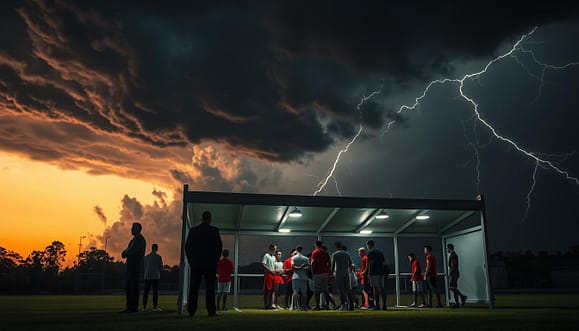
In summary, having a solid lightning protocol is key for safety and risk management in Texas baseball. Always put the safety of players and spectators first. The only thing that should strike during a game is a well-hit ball, not lightning!
Field and equipment safety screens bases mound lips bats helmets
Walking onto a Texas youth baseball field can feel like a minefield. Gopher holes and mound lips are just a few hazards. Safety is a must, not just a suggestion.
Equipment safety is key. Batting helmets must fit well; a loose helmet is useless. Catchers need full gear, including a helmet with a face guard, to protect against foul tips.
The field itself must be safe. It should be free of debris and have no holes or uneven spots. Regularly raking the infield and pitcher’s mounds helps prevent injuries.
Breakaway bases are essential. They help prevent injuries from sliding, which is important for young players. A broken leg from a bad base is not what we want.
Safety screens are also vital. They protect the dugouts from wild pitches and flying bats. Without them, the dugout could become a makeshift hospital.
Wearing the right shoes is important too. Rubber spikes are safer than metal spikes for young players. A spiked ankle can ruin a game.
Before the game, a field walk is a must. It’s the first step in keeping young athletes safe. With careful planning, we can make sure they have fun and stay safe.
Concussion recognition return to learn and return to play steps
A concussion is more than a temporary daze; it’s a serious brain injury needing immediate care. In Texas baseball, players can get concussions from bad hops or collisions. It’s key to recognize the signs like headaches, dizziness, and light sensitivity. If you see a player staring off, pull them right away.
The “return to learn” phase is often missed. A concussed brain needs cognitive rest before getting back to physical activities. This means no school, no screens, and no playbooks until symptoms go away. After symptoms clear, a slow return to school is vital. Then, we can start the return to play steps: light exercises, drills, non-contact practice, and full-contact practice, all with a healthcare professional watching.
The concussion baseline test at the start of the season is a game-changer. It shows brain function before the injury, guiding recovery with data. Without it, you’re trying to navigate blind.
This isn’t just about safety and risk management in Texas baseball; it’s about protecting a kid’s future. For more on concussion safety, check out this resource on youth athlete safety.
Pitch count and catcher pitcher combo rules arm health first
Pitch counts are not just numbers; they are the guardians of our young athletes’ futures. In youth baseball, every pitch is important. It can decide if a player has a fun season or misses a year. Coaches often ignore pitch count rules, but this can lead to serious injuries.
USA Baseball sets pitch limits for a reason. For example, a 12-year-old who throws 85 pitches on Tuesday can’t pitch again until Friday. If they catch three innings in between, it’s dangerous. The catcher-pitcher combo rule is key here. A player who pitches more than 40 pitches shouldn’t catch in the same game.
Arm health is the most important thing. We need to watch not just game pitches but also warm-ups and bullpen sessions. Teach kids to throw right, using their legs and core. Throwing only with the arm is risky.
Also, listen to what young players say. If a pitcher’s elbow hurts, we should take action. Ignoring pain can lead to serious injuries. In youth baseball safety Texas, following pitch counts is essential. It helps protect our young players and lets them enjoy the game for years.
First aid kit build and emergency action plan with roles
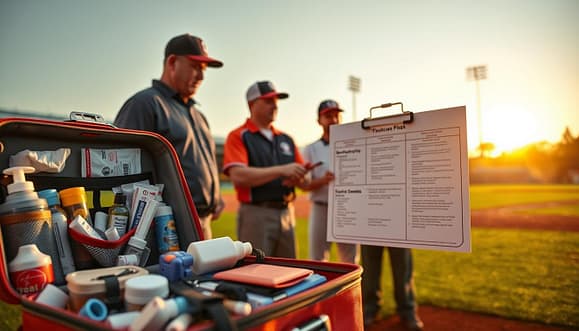
In Texas baseball, a good emergency plan is key. It’s not just about a first aid kit. It’s about having the right stuff and a solid plan. Think of your first aid kit as your team’s safety net. Without the right supplies, it’s like using a screen door on a submarine.
Here’s how to build a first aid kit that’s ready for anything:
- Sterile gauze and medical tape
- Antiseptic wipes
- Instant ice packs
- A CPR face shield
- Splints for possible fractures
- An Automated External Defibrillator (AED), if your league can afford it
Remember, commotio cordis doesn’t wait for paramedics. Having the right tools is just the start. The real magic is in your emergency action plan (EAP). Who calls 911? Who meets the ambulance? Who keeps the crowd calm? Write these roles down, assign them, and practice like a double steal.
Every team member should get a copy of the EAP. Parents should review it with their kids. A well-executed EAP can turn a tragedy into a controlled response. Without one, chaos can ensue.
In Texas, where heat, lightning, and injuries are common, your EAP is your safety net. Stock that kit, script those roles, and practice until it’s second nature. When the moment comes, you’ll act on instinct, thanks to your training.
Documentation incident logs parent notifications HIPAA light
If it’s not documented, it’s like it never happened—just ask any lawyer. In the world of youth baseball safety in Texas, incident logs are key. They record every injury, concussion, or evacuation. Include the date, time, people involved, and what happened.
It’s not just about filling out forms. It’s about protecting yourself when parents ask questions. It shows you took their child’s health seriously.
Notify parents right away and keep a record of it. Use texts, calls, or emails. This trail helps you if issues come up later. It’s like having a safety net.
Even if you’re not covered by HIPAA, you handle sensitive health info. Don’t share injury details on social media. Keep logs safe, either in a locked cabinet or a password-protected file.
Only share info with those who need it. If a player has asthma or concussion history, keep it private. It’s not for everyone to know.
I’ve seen coaches accidentally share medical info. Keep your records like a diary you’d show a judge. They should be factual, timely, and private. In youth baseball safety in Texas, the pen is mightier than a lawsuit.
Annual review tabletop drills to test your plan
A safety plan is only as good as how well you put it into action. In Texas baseball, the risks are high. Weather can turn bad fast, making a sunny day stormy.
So, annual reviews are more than just a formality. They are key for keeping players safe in Texas baseball.
Get your coaches, board members, and even that one skeptical parent together. Go over every policy: heat rules, lightning shelters, and concussion plans. It’s not enough to just write these down. You need to practice them.
Run drills that mimic real-life situations. For example, what if it’s 2 p.m. and the heat index is 108, and a catcher collapses? Who steps up? Where’s the AED? Who calls 911?
These drills show you what your plan is missing. Maybe the emergency contact number is wrong, or the ice packs are gone. Fix these problems before they become big issues. After each drill, update your plan and share it again. This is important for making sure everyone knows what to do in emergencies.
In Texas, where the weather can change quickly, your plan’s success depends on practice. Treat that annual review like a big game. When an emergency happens, you’ll be ready.