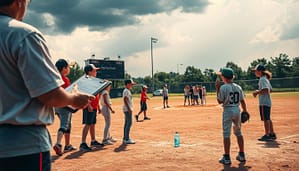
Navigating Dallas youth baseball can feel overwhelming. It’s like trying to navigate a corporate merger, not a sunny day at the ballpark. The pressure, politics, and early morning drives to distant fields can be too much.
Here’s a shocking fact: 70% of kids quit organized sports by age 13. They’re not losing interest in the game. Instead, the game is being taken away from them by adult expectations that focus too much on winning.
This isn’t a lecture. It’s a scouting report. We’re cutting through the noise to look at one specific place that claims to do things differently. What if there was a program that made sports fun again?
The Texas Rangers Youth Academy is all about that. It’s not just about playing games. It’s a counter-program to the travel-team world. We’ll explore what they offer, who they serve, and if they live up to the hype.
What the Academy offers and who it serves
Forget the one-size-fits-all approach. This operation runs on a tiered system of engagement worthy of a Fortune 500 playbook. It’s not just about baseball; it’s about building a comprehensive development portfolio for young athletes.
Consider the latest NFHS reports. They trumpet the value of education-based activities—debate, music, chess—for student growth. The Academy applies that same holistic logic to the diamond. We offer a sanctuary for deliberate skill-building, serving a broad church: the future prospect, the parent seeking a positive outlet, and the community fan.
Programs: A Strategic Menu for Every Appetite
Our portfolio is designed as a continuum. A player can enter at any point and find a path that matches their passion and commitment.
Skills Clinics are the single-serving espresso shots of training. They focus on one thing: the perfect swing, a quicker glove, base-running IQ. These are for the curious rookie or the player looking to polish a specific tool. Low commitment, high-impact learning.
Recreational Leagues are for the weekend warriors. The vibe is about teamwork, friendly competition, and love of the game. Think of it as the academy’s community garden—where the joy of playing is the primary yield. It’s the perfect after-school environment for building friendships and fitness.
Intensive Camps are for the obsessed. These are deep-dive, immersive experiences. If a clinic is a chapter, a camp is the whole novel. We’re talking multi-day sessions that transform fundamentals into instinct through repetition and focused coaching.
Structured Development Tracks are the flagship program. This is for the kid who eats, sleeps, and breathes baseball. It’s a long-term curriculum, blending advanced mechanics, strategic IQ, and physical conditioning. This isn’t a hobby; it’s a deliberate pursuit of player development.
| Program Type | Primary Focus | Ideal For | Commitment Level |
|---|---|---|---|
| Skills Clinics | Mastering a single technical skill | The curious beginner or specialist | Low (Single Session) |
| Recreational Leagues | Teamplay & in-game experience | The social player & weekend competitor | Medium (Seasonal) |
| Intensive Camps | Total immersion & habit formation | The dedicated player seeking a breakthrough | High (Multi-Day Intensive) |
| Development Tracks | Holistic, long-term athlete development | The serious prospect with long-term goals | Very High (Year-Round Curriculum) |
So, who does the Academy serve? Everyone from the shy kid learning to catch a fly ball to the athlete fine-tuning their draft stock. In an era of cutbacks, we provide the multi-pathway programming that turns a pastime into a passion, and transforms raw talent into top-notch performance.
Registration: documents, deadlines, costs, scholarships
Signing up for a youth baseball academy is like getting a small government security clearance. It’s where talent meets paperwork, and gets its first official approval.
You’ll need a birth certificate, proof of residency, and a current physical exam form. It’s like the athletic version of a passport application.
Deadlines are strict. They’re like the final out in the bottom of the ninth. Missing them means you’re out. Programs have limited spots, and waiting lists form quickly.
The cost of quality instruction and facilities is a reality. It’s different from the free sandlot games of the past.
Consider the “hidden fees” of cheaper programs. Travel, equipment, and private lessons can add up. A structured academy offers value by bundling these costs.
The smartest registration steps include a clear cost breakdown:
- Base program tuition
- Uniform and equipment package
- Tournament and travel fees (if applicable)
- Payment plan options
Scholarships are key for equal opportunity in sports. They ensure a spot on the roster is earned by talent, not just wealth.
Any reputable academy should have a clear scholarship or aid application process. This ensures the program is truly open to all.
Completing the registration steps is a big commitment. It transforms interest into action. You’re investing in a structured development path. And by ensuring robust scholarships are part of the equation, the academy invests back—building a team and community that reflects the world outside the fence.
Tryouts: criteria, drills tested, prep checklist
Tryout day is like a pop fly in the sun—everyone squints and flinches. It’s not the World Series, but parents are super nervous. They want their kids to be like “miniature professionals.”
A good academy’s evaluation should feel like a check-up, not a marathon. What are they really looking for? Is it trophies or athletes?
The criteria should be clear to see. First, they look at basic skills: arm strength, foot speed, and hitting for contact. It’s about putting the ball in play, not hitting home runs.
Second, they check baseball IQ. Can the kid throw the ball with a runner on second? It’s about instinct, not trivia.
Third, they look at coachability and attitude. The kid who hustles and encourages teammates often scores high. They’re looking at clay, not sculpture.
The drills are simple and clear. You’ll see the 60-yard dash for speed. Coaches look for quick starts and steady pace.
Next, there are ground ball fungos from shortstop and second base. They’re checking for clean mechanics and quick transfers.
Live batting practice shows the most. Can the player adjust to different pitches? Do they stay balanced? The crack of the bat tells one story, but the coach’s eyes read more.
Your prep checklist is key. It’s about being ready physically and mentally.
| Physical Prep | Mental Prep | Gear Check | On-Field Protocol |
|---|---|---|---|
| Full night’s sleep (2 nights prior) | Focus on controllables: effort, attitude, listening | Broken-in cleats, molded preferred | Hustle everywhere, even on errors |
| Hydration starting 48 hours out | Visualize success, not perfection | Properly sized glove, broken in | Eye contact with coaches during instruction |
| Light activity day before, no exhaustion | Embrace the challenge, not the fear | Batting gloves, helmet, athletic cup | Encourage other players, show teamwork |
| Healthy meal 2-3 hours before | Goal: Show coachability, not flawless play | Water bottle, sunscreen, hat | Respond to feedback immediately |
The kid who hustles after a grounder shows more value than the silent one. Tryouts look for future athletes, not just talent. A great program wants athletes who want to grow.
See tryouts as a chance for growth, not a test of worth. The best results come when everyone remembers it’s a game, not a job.
Season structure: practices, games, travel, attendance
The season’s rhythm is more like a structured symphony than a gentle melody. It’s filled with sweat, strategy, and bus rides. Once you’re in, the academy’s calendar becomes your family’s second bible. This is where dreams meet reality.
Practices are the non-negotiable rehearsals. They are like daily lab sessions where skills are worked on. A good schedule balances drills, batting practice, strategy, and conditioning. The game is the exam, but practice is where you learn.
Then come the games. Their frequency and location show an academy’s philosophy. In today’s world, many leagues are changing games and reducing travel to save money. A local-heavy schedule might not be a lack of ambition. It could be a choice to make things easier for families.
It’s the model behind initiatives like the Rangers Youth Academy helping baseball stay relevant and accessible. Is your travel purposeful, or is it too much?
To see the trade-offs, let’s look at typical schedules:
| Schedule Type | Game Frequency & Location | Primary Focus | Family Logistics Impact |
|---|---|---|---|
| Local-Focused | 1-2 games per week, within 30-min drive. | Skill development, league play, community. | Lower time/cost commitment. Easier to manage. |
| Regional-Tournament Heavy | Weekend tournaments, 1-3 hour travel, 3-4 games. | High-level competition, exposure, team bonding. | High time/cost. Requires weekend dedication. |
| Hybrid Model | Local league games plus 1-2 monthly tournaments. | Balanced development and challenge. | Moderate impact. Peaks of high intensity. |
This table isn’t about good or bad. It’s about fit. Does the rhythm match your family’s capacity? The right schedule provides growth without causing resentment.
Life happens, but missing practice is like skipping rehearsals. It disrespects the team and hinders personal growth. A clear, firm policy shows a serious program. It values commitment but understands reality.
So, look closely at that calendar. Is it a map to burnout or a blueprint for growth? The answer lies in the balance between home work and road tests.
Facilities: cages, mounds, classrooms, trainers
If a baseball program’s philosophy is its thesis, then its facilities are the proof. They show your investment in action. We’re not talking about a field built on cracked asphalt. We’re talking about a place designed for improvement.
Look for signs of serious intent. Multiple batting cages with programmable pitching machines are key. They let players work on specific skills. Properly groomed clay mounds are a pitcher’s challenge. And ample field space is the canvas for the game.
The real difference is off the field. The “classroom” is where players develop. It’s not just about sitting and learning. It could be:
- A film room for detailed video analysis, breaking down swings and mechanics.
- A dedicated space for strategy sessions and chalk-talk, turning game theory into instinct.
- A fitness area focused on baseball-specific conditioning—rotational power, arm care, functional strength.
A certified athletic trainer or strength coach on-site is key. It shows the program cares about safety and growth. It answers safety and growth questions before parents even ask.
In the end, great facilities are more than a nice perk. They are the essential infrastructure for turning theory into practice. It’s the difference between playing the game and making a better player.
Expectations and Code of Conduct
Our code of conduct is more than just a list. It’s a promise to keep the program fun for everyone. Studies show that too much pressure from adults can ruin the fun. We’re committed to keeping the focus on enjoyment, not just winning.
This rule applies to everyone: players, parents, and coaches. It’s like a shield that protects our program. By signing it, you promise to help make our academy a place where everyone can grow and learn.
Let’s look at what this agreement means for each group. The table below shows the main rules for players, parents, and coaches.
| Group | Core Expectation | Specific Non-Negotiables | The Spirit of the Rule |
|---|---|---|---|
| Players | Demonstrate respect for the game and everyone in it. | Respect teammates, opponents, officials, and facilities. Hustle. Listen to coaches. | You’re learning baseball and life. How you treat others defines your character more than your batting average. |
| Parents & Guardians | Be the ultimate support role, not the director. | No berating umpires. No coaching from the stands. No passive-aggressive comments about playing time. | You are the role model in the bleachers. Your job is to encourage, not instruct. Let the coaches coach. The “sideline nightmare” profile ends here. |
| Coaches | Teach, encourage, and model sportsmanship above all. | Positive reinforcement. Focus on effort and growth. Enforce rules consistently and fairly. | You are the steward of the environment. Your patience and perspective set the tone. Winning is a goal, but building resilient young people is the mission. |
For parents, this means stepping back and letting the kids play. Adult behavior is often what kills the fun. We encourage you to support the team in other ways, like volunteering and cheering.
For coaches, the code of conduct is a commitment. It’s a promise to treat players as kids, not just athletes. Your role is to uplift and support them.
This framework helps us create a positive environment. By following these rules, we don’t just play better baseball. We build a stronger community around the game we all love.
Health and safety: concussion, heat, pitch counts, emergencies
Safety in youth baseball isn’t about bubble wrap. It’s about making smart choices to protect players. We focus on getting every kid home safely, not just the ones with talent.
Let’s talk about the brain. A certified concussion protocol is key. It’s about recognizing, removing, and getting clearance from a doctor. Our team knows how to spot signs of concussion.
They know to say when in doubt, sit them out. Getting back to play is not up to coaches or parents. It’s a doctor’s decision.
Heat is a big deal in Texas. We have a formal hydration and heat illness prevention plan. We make sure players drink water and watch for signs of heat exhaustion.
For pitchers, we follow the science. We don’t push them too hard to avoid injuries. We track every pitch to keep their arms safe.
Lastly, we have a comprehensive emergency action plan. It covers everything from minor injuries to serious emergencies. Every coach knows the plan, and we practice it.
| Safety Protocol | Key Components | Implementation | Core Rationale |
|---|---|---|---|
| Concussion Management | Immediate removal, healthcare provider clearance, graduated return-to-play | Staff training, standardized assessment tools, documented clearance forms | Protecting long-term cognitive health over short-term competition |
| Heat & Hydration | Scheduled fluid breaks, environmental monitoring, recognition training | WBGT tracking, mandatory break schedule, electrolyte solutions available | Preventing exertional heat illness in demanding climate conditions |
| Pitch Count & Rest | Age-based pitch limits, required rest days, bullpen session tracking | Digital pitch logging, coach accountability, parent transparency reports | Reducing overuse injury risk and promoting sustainable arm health |
| Emergency Action | Venue-specific plans, staff CPR/first-aid certification, clear communication chains | Posted plans at facilities, emergency drills, travel itinerary risk review | Ensuring swift, effective response to any medical or environmental crisis |
This approach isn’t about being paranoid. It’s about being responsible for the kids in our care. Programs that focus on safety see fewer injuries and build trust. It makes safety a part of our culture.
When everyone works together on safety, it becomes second nature. This shows we care about the whole child, not just their athletic skills.
Parent roles: volunteering, communication, logistics
Forget assistant coach. Your most critical positions this season are Chief Morale Officer and Director of Ground Transportation. The academy’s framework is professional, but the team’s soul often runs on parent fuel.
Your official title is “Parent/Guardian.” Your actual resume will read differently by season’s end.
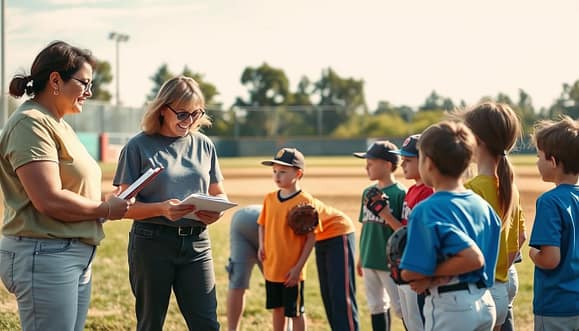
Let’s break down the unofficial portfolio. It’s a blend of hard logistics and soft psychology.
The Parent Role Breakdown: A Job Description
| Unofficial Title | Core Duties | Key Mindset |
|---|---|---|
| The Logistician | Carpool maestro, gear manager, tournament packing specialist. You master the schedule. | Proactive planner. A forgotten glove is a crisis you can prevent. |
| The Psychologist / Cheerleader | Emotional regulator, effort-focused praise-giver, post-game listener. | You are the anti-pressure valve. Celebrate the grind, not just the win. |
| The Fundraiser & Volunteer | Snack bar duty, field prep, tournament help. You build the community. | Teamwork off the field. Stepping up shows your player what community means. |
| The Communications Liaison | App navigator (SportsEngine, TeamSnap), chain-of-command follower. | Clarity over chaos. Know when to text the coach and when to let it go. |
The academy will have defined volunteer needs. Saying “yes” to snack bar duty or field dragging isn’t just about help. It’s about building the village that raises the player. This involvement is a positive force, assuring fun and equal opportunity for all kids.
Now, let’s talk tech. Is team communication a chaotic group text or a structured app? Most leagues use platforms like SportsEngine for a reason. They centralize schedules, messages, and payments. Use them. This is your logistical command center.
Understanding the chain of command is non-negotiable. A question about practice time? Go to the team chat. An issue with playing time or coaching? That’s a private conversation with the coach first, not a public post or a call to the director. Follow the protocol.
Your logistical prowess will be tested. Seven AM games across town? You’ll become a carpool calculus expert. The eternal search for a clean uniform? A rite of passage. But these tasks are the easy part.
The real work is emotional. After a strikeout or a loss, you are the safe harbor. Your job is to listen more than you instruct. Emphasize effort over outcome. In the high-pressure ecosystem of youth sports, an engaged, calm parent isn’t just support. You’re a keystone species. The entire team’s environment depends on it.
So wear your unofficial titles with pride. The Logistician keeps the wheels turning. The Psychologist keeps the heart in the game. Together, that’s how a season becomes more than just wins and losses. It becomes a chapter they’ll remember.
Player success habits: academics, time, nutrition
The real challenge in youth sports isn’t a tough pitch; it’s balancing schoolwork with sports. Any program that only focuses on hitting is missing the mark. The best ones help student-athletes succeed in both academics and sports.
This isn’t just a feel-good idea. Studies show that sports can help students do better in school. Athletics teach discipline and goal-setting, skills that help in the classroom too. The Academy’s goal is to make this connection clear and intentional.
The Non-Negotiable: Academic Minimums
“No pass, no play” is not a punishment; it’s a priority. It shows that the student comes first. There should be clear academic standards for sports participation.
This approach teaches accountability. Failing in school is different from striking out in a game. The Academy helps by providing study support and setting academic goals. It reminds students that their brain is their most important tool.
Mastering the Daily Marathon: Time Management
A young athlete’s day is packed, like a CEO’s. School, practice, homework, and meals fill the day. Without a plan, this schedule can lead to burnout.
Good programs offer tools for managing time. They teach time blocking and using calendars. The goal is to have structured time for work and free time for rest and fun. This balance is key to being productive, not just busy.
| Area of Focus | The Ballplayer’s Habit | The Student-Athlete’s Habit | Key Advantage |
|---|---|---|---|
| Academic Approach | Homework as an afterthought, done late or rushed. | Homework is time-blocked; uses school resources and communicates with teachers. | Sustained eligibility, reduced stress, deeper learning. |
| Daily Schedule | Reactive, chaotic, driven by the next practice or game. | Proactive, planned weekly. Includes dedicated slots for work, sport, meals, and rest. | Prevents burnout, ensures preparation, protects personal time. |
| Nutrition & Fuel | Relies on concession stands, fast food, or whatever’s in the pantry. | Packs snacks/meals, prioritizes hydration, understands food as performance fuel. | Better energy levels, faster recovery, improved concentration. |
| Recovery & Rest | Sleep is sacrificed for screen time or last-minute work. | Protects sleep schedule as critical for physical repair and mental sharpness. | Reduces injury risk, enhances memory consolidation, improves mood. |
| Mindset | “I just play baseball.” Identity is singular and sport-dependent. | “I am a student who plays baseball.” Identity is multifaceted and resilient. | Builds life skills, provides stability if sport ends, encourages well-rounded growth. |
Fueling the Machine: Practical Nutrition
We’re not talking about fancy meal prep or extreme diets. It’s about improving from the classic sports diet. Nutrition advice is simple: eat like you’re fueling a high-performance engine.
Hydration starts the day before a game. A pre-practice snack should have carbs and protein. Think a banana with peanut butter, not sour candy. Post-game recovery involves replenishing protein and fluids.
This focus on academics, time management, and nutrition sets a true development program apart. It produces not just players, but capable, balanced young people. The habits learned here will last a lifetime, preparing for both sports and life’s bigger challenges.
FAQ: weather, uniforms, equipment, refunds
Let’s tackle the morning crises – foggy fields and missing uniforms. It’s not the fun part of baseball. But knowing these details helps you stay calm, unlike those having a meltdown by the concession stand.
Weather: The Great Unpredictable Opponent. We can’t control the weather, but we can communicate well. We decide on cancellations by 6:30 AM for morning games and 3 PM for evening practices. You’ll get a text and an email, and we post updates on our team app.
For rainy days, we have indoor batting cages and a turfed gym. We won’t let rain stop us from practicing.
The Uniform Situation: What You Get vs. What You Buy. The academy gives you the jersey and hat. You buy the pants, belt, and socks. Cleats are your responsibility. We keep a professional look with our uniforms.
Customization is limited. No nicknames on jerseys, and no logo changes. Think of uniforms as our team’s armor.
Equipment: Rulebooks and Shared Resources. Bats must meet USA Baseball’s BBCOR standard. We’re strict about this. Forgot your helmet? We have shared gear for emergencies.
Gloves are personal, and we don’t share them. That’s just for hygiene.
The Refund Policy: Reading the Fine Print. Our policy has three parts. Act 1: Injury with a doctor’s note gets a refund. Act 2: Relocation gets the same. Act 3: Changing your mind after the season starts? No refund.
We plan and pay for facilities, coaches, and insurance based on your commitment.
This is also where we talk about scholarships. Need-based aid is reviewed each year. Renewal requires updated documents and good grades. We also offer work-study spots for facility maintenance.
So, bookmark this page. For uncertain weather or outgrown uniforms, you’ll know what to do. This knowledge helps turn chaos into a manageable situation.
Sample timelines: pre-tryout, in-season, post-season
A clear roadmap can turn chaos into order. It’s like the difference between a blockbuster movie trilogy and random clips. Without a plan, you just react. With one, you execute a strategy.
Every baseball season has a natural flow. Knowing this three-part journey—pre-tryout, in-season, and post-season—can make you look forward to it. It helps manage family schedules and athlete expectations.
The pre-tryout phase starts 6 to 8 weeks before tryouts. It’s not about last-minute prep. It’s about focused, individual work. Players should improve specific skills and build their endurance. Parents need to gather important documents.
This time is for refining skills, not changing everything. It’s the calm before the storm. A good checklist here avoids future headaches.
The in-season timeline is the main event, lasting 2 to 4 months. It follows a weekly pattern of practices, games, and rest. Tournaments add excitement to the season.
This phase shows the roadmap‘s value. Knowing the schedule helps plan around school and family time. It makes a busy calendar easier to manage.
The post-season phase is often misunderstood. For some, it’s playoffs and a chance to win. For all, it’s a time for evaluation. Coaches give feedback on progress and areas for improvement.
This is when to set off-season goals. It’s also a time for a mental and physical break. A well-run academy provides this closure.
Why does this structure matter? It sets expectations. It lets families see the whole journey, not just the next game. This planning turns events into a story of growth.
The table below breaks down the key components of each phase. Use it as your strategic guide.
| Season Phase | Typical Duration | Primary Focus | Key Activities |
|---|---|---|---|
| Pre-Tryout | 6-8 weeks | Individual Preparation | Skill sharpening, conditioning, paperwork completion, tryout drills |
| In-Season | 2-4 months | Team Execution & Competition | Weekly practice cycles, league games, weekend tournaments, skill application |
| Post-Season | 2-4 weeks | Evaluation & Transition | Player assessments, coach feedback, off-season goal setting, scheduled break |
This timeline is not just for organization. It’s also psychological. When everyone knows what’s coming, they can prepare mentally and logistically. The season becomes a shared mission with a clear start, middle, and end.
So, before the first pitch, understand the arc. Map the pre-tryout, in-season, and post-season phases. Your future, less-stressed self will thank you.
Contacts and community resources
Ever sent an email into the void, hoping someone in accounting or coaching philosophy hears your plea? A great youth baseball academy doesn’t leave you guessing. Clear contacts are the mark of organizational competence.
For billing questions, email our finance lead directly. Philosophical concerns about player development go to the director of coaching. Safety protocols and incident reports route to our dedicated safety coordinator. We provide specific names, not generic inboxes.
But our role extends beyond our own fence. Think of us as your hub in the local sports ecosystem. We connect families to trusted resources: reputable sports medicine clinics like the Andrews Institute, physical therapists who understand throwing mechanics, and academic tutors who work around tournament schedules.
We even have relationships with other local baseball organizations for additional play. This network turns a simple program into a support system.
That 2002 study on youth sports got it right. The systems serving the greatest good are the right choice. Knowing how to tap into the wider network is part of our service. Your family’s experience should be supported, informed, and thoroughly connected.