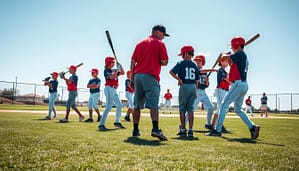
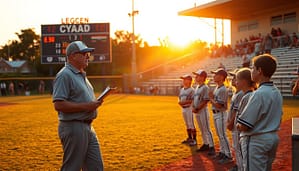
A youth baseball game can change quickly. The sun can be intense one minute, then dark clouds come in. The air gets thick, and the weather is as unpredictable as the parent group chat.
As a facility manager or league official, you’re more than just an umpire. You’re like a meteorologist, safety officer, and calm in the storm all at once.
The heat index rises, the sky looks dark, and the air feels heavy. Is it a delay or a cancellation? Do we have a plan for this? Dealing with extreme heat, lightning, and poor air quality is a big challenge for youth sports.
This isn’t about making the game too safe. It’s about having smart facility protocols. These keep the game safe and fun, not scary.
Environmental Risk Basics: When a Number Isn’t Just a Number
In today’s youth baseball, we’re all about the data. We track everything from pitch counts to exit velocities. But when it comes to environmental factors, we often rely on vague terms. It’s like trading stocks without looking at the S&P 500.
The environmental risk assessment for your facility starts with understanding the right metrics. Forget the “feels like” temperature on your weather app. For real weather & facility safety, you need to know the difference between a heat index and a Wet Bulb Globe Temperature (WBGT). And why the Air Quality Index (AQI) is key for lung safety.
Let’s talk about the heat. The heat index is what you hear on the local news. It’s the “feels like” temperature that factors in humidity. It’s a good, basic indicator of discomfort.
But for WBGT, or Wet Bulb Globe Temperature, it’s the top choice. While the heat index uses just temperature and humidity, WBGT measures everything. It uses three thermometers to give you a single number that shows the physiological stress of the environment. For a 12-year-old at shortstop, this is the difference between being uncomfortable and being in a dangerous weather & facility safety red zone.
Then there’s the AQI (Air Quality Index). This isn’t just for eco-conscious commuters. For young athletes, poor air quality from ozone or particulate matter is like playing with a respiratory hand tied behind their back. High AQI days can trigger asthma, reduce lung capacity, and turn a tough game into a medical situation. It’s not just “bad air”—it’s a quantifiable environmental risk assessment that directly impacts performance and health.
| Metric | What It Measures | Best For | Youth Sports Application |
|---|---|---|---|
| Heat Index | Perceived temperature based on air temp & humidity. | General public heat stress awareness. | Quick, public-facing risk communication. |
| WBGT | Temperature, humidity, wind, sun angle, and solar radiation. | Gold standard for heat stress in athletes. | Mandatory for practice/competition safety decisions. |
| AQI | Concentration of pollutants (ozone, PM2.5). | Respiratory health and lung function. | Determining practice cancellations or indoor alternatives. |
So, why the distinction? The heat index might tell you it’s 95°F but feels like 108°F. It’s a useful red flag. But WBGT will tell you the actual physiological stress on a player’s body, accounting for the sun beating down on the field and the lack of a breeze. Following guidelines from the American College of Sports Medicine, a WBGT over 82°F (27.8°C) triggers mandatory water breaks and increased monitoring. An AQI over 100 (for sensitive groups) or 150 (for everyone) on the AQI scale means it’s time to check the rulebook for your environmental risk assessment protocol. In short: heat index is the weather app on your phone. WBGT is the professional-grade weather station. You wouldn’t fly a plane with a phone app, so don’t manage athlete safety with just a heat index.
Understanding these metrics isn’t just about avoiding heat stroke or an asthma attack. It’s about optimizing performance and safety. A child’s body doesn’t cool itself as efficiently as an adult’s. Their core temperature rises faster, and they have a lower sweat rate. That means on a day with a high heat index or, more accurately, a high WBGT, a 12-year-old at shortstop is under a much greater physical strain than the coach on the sidelines. And that high AQI day? It’s not just a hazy sky—it’s a direct challenge to lung capacity and endurance.
Thresholds & Adjustments (Rest Breaks, Gear Changes, Time Shifts)
Game day adjustments aren’t just for the playbook; they’re for the weather. The ACSM’s 35°C (temperature plus humidity) threshold is a must-follow rule. It’s like the first play in a hot, humid game. It’s not being too careful; it’s smart activity modification to beat the heat before it stops a player.
When it hits 35°C, it’s time for a water break. This is key for heat stress management. These breaks aren’t weak; they’re strategic pauses. They let players reset, rehydrate, and check the field again. It’s a chance for the coach to see more than just the score.
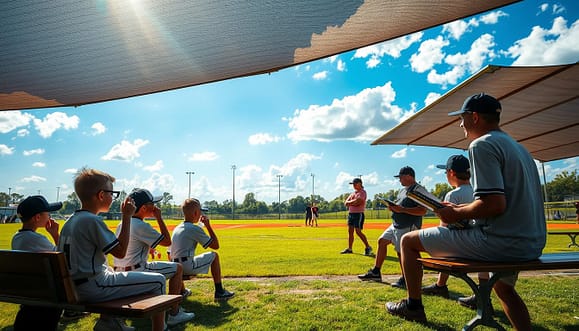
Gear changes are also important. Crossing the ACSM threshold means more than just drinking water. It’s time to switch to lightweight, moisture-wicking clothes. These clothes help the body cool down naturally. It’s a smart weather & facility safety move that lowers heat retention and illness risk.
Time is another key adjustment. The best activity modification is often changing the schedule. Early morning practices or evening games are smart moves. They avoid the sun’s peak and choose the best weather for playing and weather & facility safety. It’s a way to respect the environment and improve performance.
These safety thresholds are not just rules; they’re the game plan for heat stress management. They keep players safe and in the game. For more on safety thresholds and guidelines for youth sports, check out the workplace safety guidelines. Winning means knowing when to push and when to change, using these thresholds as your advantage.
Hydration Stations & Electrolyte Plan by Temp Band
Managing the bullpen is easy compared to the hydration schedule in youth baseball. It’s not just about handing out water bottles. It’s a detailed plan to keep players hydrated under the sun.
The American College of Sports Medicine (ACSM) has the playbook. But it’s up to the coaches to follow the fluid replacement protocol. Think of it as a strict order.
The ACSM Hydration Playbook: A Timed Schedule
Forget “drink when you’re thirsty.” Thirst is a sign of dehydration. The ACSM schedule helps prevent dehydration:
- 2 Hours Before: 16 oz of water or a electrolyte management drink.
- 1 Hour Before: Another 8 oz of fluid.
- During Activity: 4-8 oz of fluid every 15-20 minutes. This is non-negotiable. Your hydration stations are key.
- Post-Game: 16-24 oz for every pound lost (yes, weigh-ins are the ultimate analytics).
The Temperature Band Playbook
Hydration changes with the temperature. Your electrolyte management and fluid strategy must adapt. Think of it as your fluid replacement protocol DEFCON level.
| Temperature Band | Hydration Protocol | Electrolyte Strategy |
|---|---|---|
| 80-85°F (The Standard Play) | ACSM base schedule, with hydration stations at every dugout. Water is primary. | Water is sufficient. Introduce a 50/50 sports drink/water mix in the 4th inning. |
| 85-90°F (High Alert) | Increase pre-hydration. Mandatory 8 oz at the top of every inning. Mandatory 4 oz at every pitching change or defensive half-inning. | Switch to a 50/50 sports drink-to-water ratio for all in-game fluid intake. Electrolyte management becomes critical. |
| 90°F+ (Red Zone) | All of the above, plus mandatory 5-minute “cool and hydrate” breaks every 30 minutes of play. Consider wet towels on necks. | Full-strength, zero-sugar electrolyte drinks only. Water is insufficient to replace lost sodium and potassium. |
The Electrolyte Equation
Water hydrates, but sweat depletes. For sessions under 60 minutes, water is enough. But for longer or hotter games, you need an electrolyte management plan. A 50/50 mix of sports drink and water is essential.
The sugar in sports drinks isn’t bad. It’s fast energy and helps carry sodium and potassium. These are key to preventing cramping and heat stress.
The Unsung Hero: Post-Game Protocol
The game isn’t over when the last out is called. The ACSM and many sports nutritionists recommend low-fat chocolate milk. It’s perfect for muscle repair and glycogen replenishment.
Managing a dugout’s hydration is complex. It requires a logistics coordinator’s mind and a chemist’s precision. In youth baseball, the most important stat isn’t the score—it’s the hydration level of your roster.
Lightning 30/30 Policy & Shelter Map
When the sky darkens and the first low rumble echoes, what’s your first move? We focus on stats, but lightning is a force you can’t ignore. The 30/30 rule is a must for lightning safety. It’s about survival, not just playing the game.
The rule is simple: count seconds after seeing lightning. If thunder comes in 30 seconds, it’s time to go. The game stops. Wait 30 minutes after the last thunder before returning to play. This rule is not a suggestion; it’s a must.
So, the game is called. Now, what? Your shelter map is key. It’s your plan against nature’s power.
The Lightning Chariots (Safe Shelters):
- Substantial, Enclosed Buildings: The best choice. A solid structure with plumbing and wiring, like a field house.
- Hard-Topped Vehicles: A safe, if temporary, option. A car or bus with a solid roof and windows up.
The Lightning Rods (Death Traps):
- Dugouts & Rain Shelters: Not safe. They offer no protection from lightning.
- Gazebos, Picnic Shelters, & Press Boxes: False sense of security. They attract lightning and offer no protection.
Your dugout is a metal bench in a concrete trench. Your rain shelter is a metal roof with four posts. In a storm, they’re not shelters; they’re lightning rods. A vehicle, with its metal cage, is your safe haven.
When the first flash or thunder comes, stop and seek shelter. Wait 30 minutes after the last thunder. It’s not a choice; it’s physics. And it’s the only way to play when the sky is the opponent.
Air Quality Rules: Particulate Thresholds and Masks
Forget batting averages for a moment. On a hazy summer day, the AQI is what matters. It’s like the OPS of air quality, telling us if it’s safe to play.
We don’t practice in bad weather, and we shouldn’t in bad air. Our AQI policy is simple. We follow particulate thresholds like a pitch clock. Green or moderate AQI (0-100)? Play ball. “Unhealthy for Sensitive Groups” (101-150)? That’s our orange alert. Time to modify.
When the dial hits “Unhealthy” (151-200), we have our red line. We move indoors, shorten the practice, or cancel. It’s not a suggestion; it’s a air quality safety red card. We use the US AQI scale like a scouting report on the atmosphere, and the Government of Canada’s AQHI is our scouting bible.
And the masks? Think of them as batting helmets for your lungs. On an orange or red AQI day, a well-fitted N95 or KN95 isn’t political theater—it’s pulmonary PPE. It’s no different than requiring a cup or a helmet. We’re not making a statement; we’re managing risk. On bad air days, the mask is just another piece of mandatory equipment, as non-negotiable as a glove.
This isn’t about wrapping kids in bubble wrap. It’s about using data to make calls. We track batting averages and ERAs with religious fervor. Why wouldn’t we track the one stat that determines if our players can breathe? Our AQI policy turns an abstract number into an action plan, because in youth sports, the goal isn’t just to play the game. It’s to ensure there’s a game to play tomorrow.
Indoor Alternatives & Last-Minute Moves
In youth sports, coaches think ahead. They don’t just play the game in front of them. They plan for the next move, even if it means a strategic retreat.
When bad weather hits, a smart coach doesn’t cancel the game. They change the plan. This shows they care about weather & facility safety.
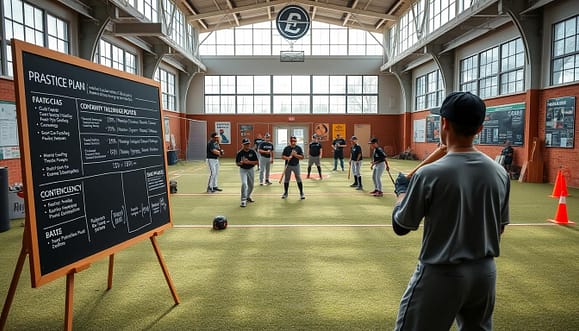
It’s like calling an audible in football or making a surprise move in chess. The contingency planning you did before is your defense against sudden storms or air quality warnings. It’s not about giving up to the weather. It’s about showing you’re prepared.
Your indoor practice plans are your secret weapon. A rainstorm doesn’t mean you can’t practice. You can move to the gym for film study or a classroom for strategy. The key is to have these plans ready before the first raindrop.
Think of this as your playbook for unexpected changes. When the weather changes, you need to be ready with your own plans.
| Weather/Facility Threat | Primary Contingency | Secondary/Backup Plan | Communication Action |
|---|---|---|---|
| Extreme Heat (WBGT over 90°F) | Move practice to an air-conditioned indoor facility for film and chalk talk. | Cancel outdoor activity; shift to light film study in a shaded, ventilated area. | Activate “Heat Protocol” alert via mass notification system. |
| Lightning/Thunder (within 10 miles) | Execute immediate shelter-in-place at designated safe structure. | Move to pre-designated indoor shelter (gym, cafeteria). | Send mass alert: “Lightning Alert. All to shelters. Use Shelter Map.” |
| Poor Air Quality (AQI > 150) | Move all activities indoors. Use gymnasium for light conditioning or strategy work. | Cancel all outdoor exertion. Move to indoor film study or classroom session. | Post notice on facility entrances and team communication apps. |
| Torrential Rain/Flooding | Relocate to gym for strength, conditioning, or strategy session. | If gym is unavailable, conduct virtual team meeting for film review. | Send “Indoor Plan Activated” alert with new location details. |
This isn’t just about moving indoors. It’s about contingency planning that keeps practice on track. A sudden change to a classroom for film study can be more valuable than a rained-out field session. It’s about having a comprehensive severe weather plan that goes beyond just knowing where the safe shelters are.
The mark of a prepared organization isn’t the absence of a plan B; it’s the elegance and calm with which it’s deployed. When you call that audible, your team should know the play. Your indoor practice plans aren’t a backup; they’re a parallel strategy, ensuring that no practice time—and no opportunity for development—is ever truly lost to the weather.
Communication: Mass Alert Templates & Role Assignments
Think of emergency communication as your facility’s nervous system. When weather threatens or air quality plummets, information must travel fast. This isn’t about being paranoid; it’s about having a plan so well-oiled that emergency communication becomes as routine as a double play. The goal isn’t just to inform, but to command, direct, and prevent chaos.
In the theater of youth sports, a disorganized response is a liability in cleats. Clear, calm, and immediate emergency communication is what separates a minor hiccup from a headline. The weather & facility safety of dozens of children depends on a single, unambiguous message reaching the right people at the right time.
The Alert: Your Mass Notification Template
Your mass alert templates are not novels. They are dispatches. They must be scannable, actionable, and impossible to misinterpret. Forget paragraphs; think headlines and bullet points.
Sample Alert Template (Lightning Protocol):
- TO: All Coaches, Officials, and Staff
- SUBJECT: IMMEDIATE: Lightning Alert at [Facility Name]
- MESSAGE: Lightning has been detected within 10 miles. ALL activities are suspended immediately. All players, staff, and spectators must seek shelter in designated areas NOW. Games are postponed for a minimum of 30 minutes after the last observed lightning or thunder. Coaches, account for all players. Await the ALL CLEAR message.
Role Assignments: Your Emergency Roster
In a crisis, “someone” must become “someone.” Confusion is the enemy. The following table clarifies the chain of command and communication during a weather & facility safety event.
| Role | Primary Responsibility | Communication Tool | Backup Contact |
|---|---|---|---|
| Safety Officer (SO) | Makes the final call on game delays, cancellations, and shelter-in-place orders. The ultimate authority during an event. | Two-way radio, designated phone line. | Assistant Safety Officer |
| Weather & Air Quality Monitor | Constantly monitors NOAA, EPA AQI, and lightning detection apps. Alerts SO to threshold breaches. | Smartphone with dedicated weather apps, NOAA radio. | Assistant Coach or Designated Parent |
| Communications Lead | Sends the mass alert templates via text/email blast, updates social media, and mans the info hotline. | Mass notification system (like RainedOut, Remind), social media accounts. | Assistant Communications Lead |
| Field Marshals (2-3 Staff/Volunteers) | Physically direct people to shelters, perform headcounts, and act as the eyes and ears on the ground. | Handheld radios, high-visibility vests. | N/A |
Executing the Plan: The 3-Phase Protocol
When the alert sounds, the plan should be so rehearsed it’s muscle memory.
- Activation: The Weather Monitor alerts the Safety Officer when thresholds (AQI, heat, lightning) are breached.
- Broadcast: The Communications Lead sends the pre-written alert via all channels. No debate, no committee. The message is law.
- Execution: Field Marshals move, direct traffic, and ensure compliance. The Safety Officer oversees the entire operation, making the final call to resume play.
This isn’t bureaucracy; it’s a pre-flight checklist for a reason. In the chaos of a sudden storm or plummeting air quality, a well-oiled emergency communication plan is your best defense. It turns a potentially disastrous situation into a well-managed drill, and that’s something everyone can appreciate.
Post-Event Review & Incident Log
Think of the season’s final out as the first play of next season. The post-game show for your weather & facility safety program isn’t a post-mortem—it’s the game film. Every heat cramp, lightning delay, and AQI spike is a play in the data reel. This is where the incident log becomes your season’s most valuable player.
That log is your program’s black box. It’s not a blame ledger. It’s the objective record of every near-miss and every adjustment. A player with early heat stress, the 30/30 lightning call that cleared the field, the day the AQI spiked and you moved practice—each entry is a data point. This log is the raw material for your post-event analysis.
This analysis is the sage’s review. It’s where you mine the log for patterns. Did your hydration plan hold up in the third hour of a doubleheader? Was the lightning shelter-in-place protocol followed smoothly? This safety protocol review turns hindsight into foresight, transforming a simple incident log into a strategic playbook for next season’s weather & facility safety. The goal isn’t a perfect season. It’s a safer, smarter one next time.