Every kid with a glove dreams of the big leagues. But dreams alone won’t get you there. It takes data, discipline, and a structured pathway.
Forget the feel-good summer camp stories. Real player development is tough. It’s where talent meets hard scrutiny. The Texas Rangers Youth Academy knows this.
Their method isn’t just keeping kids busy. It’s about making them into real ballplayers. This starts with a clear-eyed diagnosis—a baseball physical to find your weaknesses.
Then, they group players wisely. No one improves by being too far ahead or too far behind. You learn with peers at your level, pushing each other.
Lastly, they set clear goals. These aren’t vague wishes like “get better.” They’re specific targets: increase exit velocity by 3 mph or shave 0.2 seconds off your 60-yard dash.
This is where you stop being just a kid with a glove. You become a project. The real, data-driven work starts here.
Hitting lab: key metrics, drills, decision training
The batting cage has turned into a high-tech lab. The Rangers’ hitting lab checks every swing closely. No more just looking good in the box.
Today, we rely on data like launch angle, exit velocity, and bat speed. These metrics are the swing’s vital signs. Launch angle helps hit the ball hard and consistently. Exit velocity shows how hard you hit the ball. Bat speed is the power behind it.
But data collection is just the start. The real work is in the drills. Coaches create precise movements to build muscle memory. This helps create the perfect swing.
The Rangers also focus on decision training. A great swing in the cage isn’t enough. They need to recognize and react to different pitches quickly. This is what separates practice from game-day performance.
Analytics and neuroscience come together here. The lab uses pitching machines and video to mimic game situations. Hitters learn to read and react to different pitches. This builds their “hitter’s IQ.”
| Aspect of Training | Old School Approach | Modern Lab-Driven Approach |
|---|---|---|
| Primary Focus | Mechanics & “Feel” | Metrics & Decision Patterns |
| Feedback Method | Coach’s Visual Assessment | Real-Time Data & Video Analytics |
| Drill Design | Repetitive Muscle Memory | Contextual & Situational Repetition |
| Success Measurement | Batting Average & Home Runs | Exit Velocity, Launch Angle, Swing Decisions |
| Technology Used | Basic Video | TrackMan, High-Speed Cameras, Blast Motion Sensors |
The table shows a big change. It’s moving from “Bull Durham” to “Moneyball” and neuroscience. The goal is to unlock a player’s ability and sharpen it under pressure.
A session in the hitting lab starts with baseline tests. Then, drills focus on swing weaknesses. Hitters face random pitches to train their brain. This makes them complete hitters, not just pretty swings.
This mix of biomechanics and brain training is the future. The hitting lab shows that hitting is both art and science, instinct and information.
Pitching lab: mechanics, velocity, command, arm care
The pitching lab is like a forensic studio for your throwing motion. It’s not about pushing you too hard for speed. We focus on making your arm work better, not wear it out.
We examine your mechanics closely. High-speed video helps us see every detail of your throw. We figure out why your shoulder might be opening too soon or why your hip isn’t leading right. It’s all about making you more efficient and consistent.
Getting faster is a puzzle we solve through smart training and better mechanics. It’s not just about throwing hard. It’s about using your body’s power effectively. We aim for healthy, sustainable speed that doesn’t harm your future.
Command is all about your brain and fingers working together. We practice it with focused drills that help you hit your target every time. It’s not luck; it’s skill. Our command-first philosophy emphasizes precision over raw power.
Arm care is the unsung hero of pitching. It’s what keeps you playing for years. Our routine includes:
- Pre-hab mobility circuits to get your shoulder and elbow ready for the game.
- Recovery protocols that are as important as the game itself.
- Strength maintenance for the muscles that keep your joints stable.
In this lab, every pitch is a chance to learn and improve. Every session is filled with purpose. The result is a pitcher who’s built up, not broken down. That’s the real magic.
Defense and game IQ: positioning, cuts/relays, situations
Being a good defender is more than just having a good glove. It’s about having the spatial awareness of a fighter pilot and the quick thinking of a chess grandmaster. In the Rangers’ development lab, defense combines raw athleticism with sharp intellect. You can practice footwork all day, but if your brain isn’t ready when the ball is played, you’re just a fancy liability.
The old saying “be ready for anything” is outdated. Here, they teach you to be ready for everything specific. It begins with positioning. This isn’t just about moving when your coach says. It’s about understanding the analytics behind every move. Why are you positioned six feet toward the hole? It’s because the hitter has a 78% pull rate against this pitcher’s slider, and the game situation calls for preventing the double. They give you this data until it becomes second nature.
Then, there’s the chaos of cuts and relays. A missed cutoff isn’t just an “oopsie”; it’s a major failure they treat like a broken play in the NFL. Every player has a lane, a responsibility, and a backup plan. They practice these until the movement is like a military operation—crisp, communication-heavy, and without panic. The goal? To take the other team’s extra base off the table before the runner even rounds first.
The real test is the situational simulation. Bases loaded, one out, up by one run. The ball is hit hard to the gap. Do you gamble for the out at home? Do you know the speed of the runner on second? This is where they separate players from athletes. They teach you to have an internal clock and a map of the field that lives in your head. Is your first reaction the right, calculated decision?
This mental training is also applied to basic fielding drills. Every catching and throwing rep is done with a purpose tied to game analytics. A backhand stop drill isn’t just about stopping the ball; it’s about the footwork to get into the best throwing position for the most likely play, based on the simulated runner’s speed. Throwing drills include decision gates: “If you field it cleanly, go to first. If you bobble it, go to second.” The physical skill is just the delivery system for the mental command.
To see how this breaks down, look at the positional analytics focus. It’s not one-size-fits-all.
| Defensive Position | Primary Analytical Focus | Key Situational Drill | Game IQ Benchmark |
|---|---|---|---|
| Middle Infield (SS/2B) | Hitter spray charts & pitcher tendencies | Double-play turns with varying lead runners | Knowing when to “eat” the ball vs. forcing a throw |
| Third Base | Bunt defense & reaction time metrics | Charging slow rollers with throw selection | Deciding to go home or to first on a contact play |
| Outfield | Launch angle data & ball flight off the bat | Communication drills on gap shots | Hitting the proper cutoff man every single time |
| Catcher | Pitch sequencing & runner jump analytics | Block and recover to throw out steals | Managing the entire field on relays and pickoffs |
The result? Players stop seeing a batter and a ball. They see a set of probabilities, a moving chessboard. A sharp grounder isn’t just a test of hands; it’s a puzzle with one optimal solution. The Rangers aren’t just training fielders. They’re training tacticians who wear cleats. Because in today’s game, the best defensive play is often the one you position yourself to make before the pitch is ever thrown.
Strength and conditioning: speed, agility, power
Forget what you learned from 80s sports movies. Modern strength and conditioning is more like NASA engineering. The old “run poles and do push-ups” method is outdated. Today, we turn raw talent into baseball-ready skills through sport-specific training.
At the Texas Rangers Academy, we focus on speed in all its forms. It’s not just about running fast. It’s about quick starts and controlled speed for stealing bases or catching fly balls. We work on the nervous system as much as muscles.
Agility means changing direction smoothly without losing speed or hurting yourself. Imagine a shortstop’s quick reaction to a bad hop. Our training goes beyond simple cone drills. It’s about learning to be stable yet explosive in unexpected situations.
Power in baseball comes from the ground up. It’s about using strength to increase bat speed and throwing power. We aim to build athletes who can efficiently transfer force, not just lift weights.
The Texas Rangers Academy’s approach stands out. Our training combines conditioning with specific baseball skills. This way, conditioning fuels the drills, not just a separate task. Our goal is to enhance overall athleticism for better game performance.
Our program is based on movement science, not just hard work. We build bodies that can handle baseball’s unique demands while unlocking hidden abilities. We focus on both durability and ability.
This part of the Texas Rangers Academy’s player development is often unseen. Yet, every stolen base, diving catch, and fast fastball starts here. It’s the foundation of our success.
Mentorship and leadership opportunities
Forget the cliché of a coach giving a pre-game pep talk. The Texas Rangers Youth Academy’s mentorship program is more like having a seasoned navigator for life’s curveballs. It’s not a sidebar conversation. It’s the operating system.
As one staffer put it, “The most important thing we can teach these kids is not just how to hit a baseball, but how to be a good person.” That philosophy isn’t wall art. It’s action. This is where the program transcends sport and starts building the person behind the player.
So, what does embedded mentorship look like? It’s the coach who doesn’t just correct your footwork after a ground-ball error. He talks you through the frustration. He shares a story about his own epic fail. The goal isn’t to avoid failure—that’s impossible. The goal is to learn how to navigate it without your confidence shattering.
The leadership program follows the same active blueprint. Leadership isn’t assumed because you’re the oldest or the loudest. It’s created. Opportunities are designed and handed out like assignments.
You might be tasked with leading the dynamic warm-up for your group. Suddenly, you’re responsible for the energy and focus of ten peers. Another week, you could be organizing a community clean-up project. Now you’re managing logistics, motivating a team, and representing the academy off the field.
These aren’t random activities. They’re drills for soft skills. Empathy. Accountability. The ability to unite a dugout when morale dips. The academy knows the captain of a high school or college team needs more than a loud voice. They need emotional intelligence.
This intentional cultivation turns character development into a tangible skill set. It’s practiced as deliberately as a double-play turn. The leaders they develop here often become leaders everywhere else—in the classroom, at home, eventually in their careers.
In the end, the bats and gloves are just the tools. The real work, the lasting work, happens in these moments of guidance and responsibility. That’s the quiet win this program chases every single day.
Academic and life-skills support
Let’s get real. Every youth sports program says “academics first,” but it’s just a slogan. The Rangers Academy actually makes it happen.
Real academic support isn’t just checking grades. It’s helping kids build a future while playing sports. It’s like a special software for teenagers.
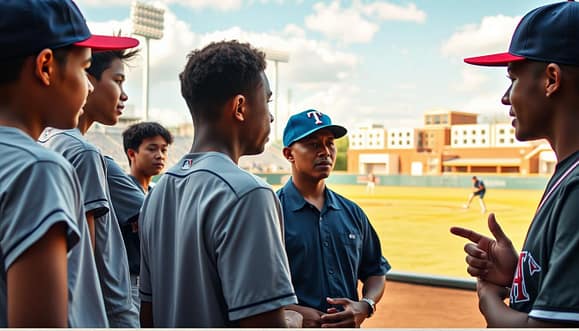
The real value of this program is its life-skills curriculum. It’s preparing kids for careers, not just sports. They learn to be CEOs, engineers, and innovators, with a great baseball skill set.
Workshops are very practical. They teach time management and goal setting. These skills help with school and sports, like managing a busy schedule or improving a baseball swing.
The table below shows the difference between empty promises and real solutions.
| Support Area | Traditional “Lip Service” Model | Rangers Academy Operational Model |
|---|---|---|
| Academic Priority | Verbal affirmation; grade checks as a gatekeeper for playing time. | Integrated scheduling systems, study hall protocols, and resource matching for subject-specific tutoring. |
| Time Management | “Make sure you do your homework.” | Workshops on time-blocking, digital planner tools, and the “travel day” study pack—turning bus rides into productive sessions. |
| Goal Setting | Vague “get better” sports goals. | Cross-domain frameworks: S.M.A.R.T. goals for batting average improvement and for semester GPA targets. |
| Resilience & Pressure | “Shake it off” after a bad game. | Cognitive reframing techniques applied to a defensive error and a failed presentation. It’s all performance under stress. |
This is the ultimate transferable skillset. The discipline to work on a swing for 90 minutes translates directly to grinding through a complex problem set. The focus to block out a heckling crowd is the same muscle used to ignore distractions during exam week.
The academy’s support structure acknowledges a simple, often unspoken truth: baseball is a magnificent teacher for life, but it is rarely life itself. By equipping players with these tools, the program isn’t just building better athletes. It’s building adaptable, resilient, and organized young adults. The diamond is just the first classroom.
Performance tracking and progress meetings
Progress meetings here are not like pep rallies. They are more like quarterly earnings reports for your athletic performance. We focus on showing you the data, not just telling you how you’re doing.
At the heart of this process is objective analytics. You might be moving faster, but your spin rate could be off. Your exit velocity might be up, but your chase rate could be down. These are facts, not opinions.
This approach changes how you talk to your coach. Instead of just saying you’re doing great, you discuss specific areas for improvement. It’s about being accountable and showing real progress.
Our video analysis and player development studios are key to this. You watch game tape and work with your coach to analyze every move. This turns vague feedback into clear, visual lessons.
The goal is to give you actionable intelligence. A progress meeting should leave you with a clear plan, not just a pat on the back. The data shows the way forward, and we work together to move forward.
In a world full of distractions, we help you stay focused. Our performance tracking gives you a clear direction for your development. It’s about giving you the knowledge to improve, not just numbers.
Competition and showcase readiness checklist
Think of a showcase as your personal IPO—you’re not just playing baseball, you’re launching a product called ‘Future College Athlete.’ The field becomes a trading floor. Scouts are your investors. Every action is a data point in your prospectus.
This is where recruiting prep makes a difference. It’s part sport, part theater, and a performance review. Our checklist doesn’t just get you to the event. It makes your presence there impactful.
Your Digital Footprint: The 24/7 Scout. Before a coach sees you throw, they’ve Googled you. Is your online profile professional or confusing? We check every detail. We edit your highlight reel to 90 seconds of pure persuasion.
The Art of the Cold Email. “Hey Coach” won’t do. We teach a three-sentence pitch: who you are, why them, and evidence. It’s like LinkedIn outreach for 17-year-olds. This drill is key to our recruiting prep philosophy.
Playing the 95%. Showcases are often boring. The ball might come to you three times. What you do the other 95% defines you. We focus on “showcase behaviors”: backing up a base, dugout chatter, and your jog pace. You’re always on camera, even when you think you’re not.
The Mental Game of Being Watched. Evaluation anxiety is real. We change your mindset. You’re presenting evidence, not being judged. Each play is a data point for your case. This shift turns pressure into purpose.
The last item on our checklist? Understanding that a scholarship offer isn’t random. It’s the result of presenting a complete, compelling product. Our recruiting prep turns the stressful circus into professional auditions. You learn to control the narrative, one action at a time.
Because in the end, recruiting prep isn’t about getting discovered. It’s about being impossible to overlook.
Parent integration: reports and conferences
The Texas Rangers Academy believes that for a player to grow best, parents and coaches must be in sync. This delicate balance is key in sports. If it’s off, it can lead to drama. But when it’s right, growth happens fast.
Professional programs know this and act on it. They make parents active participants, not just spectators. This approach turns their passion into something useful.
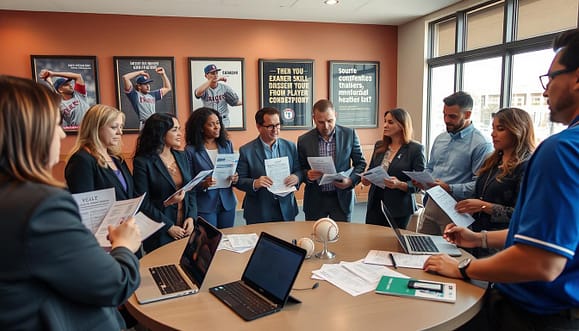
How does this happen? Through structured reports and formal conferences. These are not like the usual post-game talks or YouTube tips. They are planned, data-based talks about the athlete’s overall growth plan.
The report is like a quarterly update for your athlete. It shows how they’re doing against their goals. It talks about hitting, pitching, defense, and strength. It gives facts, not just opinions.
The conference brings this data to life. Coaches, trainers, and sometimes the player meet with parents. They discuss progress, goals, and plans for the future. This does three important things: it sets clear expectations, educates parents, and protects the player’s mental health.
The Academy says, “We’re here to help you and your young athlete have a successful and enjoyable experience.” This clear communication is key to that promise. It turns disagreements into teamwork.
This is diplomacy in sports. It recognizes parents’ passion and brings them into the process. The Texas Rangers Academy focuses on the athlete’s growth, not adult worries.
Case example: 10-week development arc
Want to see a transformation? Meet “Alex,” a 15-year-old high school sophomore. He showed up for his Rangers Youth Academy training with some talent but lots of bad habits.
His first tests were not great. Bat speed? Only 68 mph. Lateral agility? He moved like a slow-moving fridge. He had heart, but his skills were lacking.
The academy didn’t just give him a pep talk. They created a ten-week plan just for him. This plan was all about action, not just words.
Weeks 1-3 were all about shock therapy. In the Hitting Lab, they worked on his slow bat with special drills. The Pitching Lab fixed his mechanics, focusing on hip-shoulder separation.
Strength & Conditioning was about targeted exercises. Sled pushes and med ball throws helped him get stronger. His body was learning new skills.
Defense & Game IQ sessions were his mental training. They worked on quick movements and high-pressure situations. He learned to react without thinking.
The five-week check-in was a turning point. His bat speed improved to 71 mph, but exit velocity stayed the same. They needed to change their approach.
Strength training shifted to elastic strength. Hitting drills focused on speed. Mentorship helped him deal with slow progress.
The last five weeks were about putting it all together. Skills, strength, and strategy merged. His game showed improvement in confidence and skill.
So, what did the scoreboard say after ten weeks of Rangers Youth Academy training? Let’s look at the numbers.
| Performance Metric | Initial (Week 0) | Midpoint (Week 5) | Final (Week 10) |
|---|---|---|---|
| Bat Speed (mph) | 68 | 71 | 76 |
| 60-Yard Dash (sec) | 7.5 | 7.3 | 7.0 |
| Lateral Shuttle Time (sec) | 5.2 | 5.0 | 4.7 |
| Exit Velocity (mph) | 78 | 80 | 85 |
| Vertical Jump (inches) | 20 | 22 | 25 |
The numbers show a big improvement. But the real win was in his baseball smarts and toughness. He learned to handle pressure and frustration.
Did he get a D1 scholarship? That’s the dream. But his real win was growing as a player and person in just one summer.
This story shows the academy’s approach in action. It’s not magic. It’s hard work and smart planning. Theory meets practice, and results follow.
The Rangers Youth Academy training model proves development is possible. It’s a process you can track and improve. For Alex and many others, this process changed their game.
At-home resources and video library
Player development doesn’t stop when you leave the facility. Today’s academy reaches you through digital means. Your living room becomes a part of the training ground.
At-home resources help fill the gap between sessions. They include mobility routines for recovery and mental focus drills. You also get specific film study assignments.
The highlight is the personalized video library. It’s like having a collection of your growth and challenges. Every swing and bullpen session is tagged for your review.
Players can analyze their own mechanics and share clips for feedback. Your phone becomes a tool for coaching, breaking down gym walls.
This 24/7 development environment is the new norm. The Texas Rangers Academy uses tech for constant engagement. It turns downtime into growth time.
Reviewing your video library is like watching your favorite movie. You’re the star and the critic. You see your swing mechanics and pitch command evolve.
The best part? Progress is no longer a mystery. It’s documented, visible, and shared. This digital connection makes the Texas Rangers Academy’s philosophy a part of your daily life, not just during sessions.