Competition coaching in Texas youth baseball is not about louder speeches or harder practices. It is about preparing young players to think, adjust, and compete when the bracket tightens, the dugout gets loud, and one pitch can change an inning. Coaches need a plan that blends high expectations, steady support, specific feedback, and pressure training that still respects age, development, and arm health.
Competition Coaching With Standards And Support
High-level preparation starts with the coach’s daily posture. Players need to know the standard, and they need to believe the coach is still in their corner after a strikeout, an error, or a rough bullpen. The research note on mentor mindset points to a useful blend: high standards paired with high support. That approach is also reflected in reporting on coaching discomfort, grit, and support, where strong demands work best when athletes still feel respected and backed by the coach high standards and high support.
For a Texas youth baseball coach, that means the standard is not vague. “Compete” is too broad by itself. Better standards sound like this: win the next pitch, know the bunt defense before the sign, sprint on and off, throw through the cutoff, and take a breath before stepping in with runners on base. These are behaviors a player can see and repeat.
Competition Coaching Feedback That Players Can Use
Feedback should tell a player what happened, why it mattered, and what to try next. Research summarized by Coach Sidekick reports that detailed, high-information feedback has an effect size of 0.99, compared with 0.24 for simple praise specific coaching feedback. That does not mean coaches should talk nonstop. It means the message should carry useful information.
Instead of “nice swing,” try, “Good job staying through the middle; your front shoulder stayed closed long enough to drive that ball.” Instead of “you have to throw strikes,” try, “Your glove side flew open early. Hold the front shoulder to the catcher for one more beat.” The second version gives the player a target. It also helps the player connect feel, mechanics, and result.
Hold The Line Without Losing The Player
In Texas competition coaching, a coach can be demanding without turning every correction into a public trial. A short, direct correction after a missed sign may be needed. A long lecture in front of the dugout usually is not. The better question is: does this correction help the player execute the next rep? If the answer is no, save it for a calmer teaching moment.
That balance matters in tournament settings, where players may be tired, parents may be tense, and innings can move fast. Coaches who keep their voice steady give players a model for pressure. The dugout often mirrors the adult in charge.
Practice Design For Competition Coaching
Practice should look more like the game as the season moves toward higher-level competition. A team can take perfect ground balls in a quiet setting and still struggle when the tying run is on third. The gap is not always skill. Often, it is decision speed, communication, and emotional control.
A strong plan uses blocks of teaching, then periods of variable practice. For example, start with a focused infield footwork segment, then move into a live decision drill where the coach changes the runner, out count, and ball speed. The player has to read the situation, not just repeat a pattern. That is where practice begins to carry over into tournament play.
If you need help laying out the week so skill work, competition rounds, and recovery all fit, a weekly practice schedule can give coaches a simple structure without cramming every drill into one long night.
Build Pressure In Small Doses
Pressure training does not require punishment. It requires consequence, scorekeeping, and clear time limits. Try a two-out defensive inning where the defense must make three clean plays before the offense scores two runs. Run a base-running read drill where the runner gets one point for the correct read, not just for being safe. Finish batting practice with a runner-on-third round where hitters must get the ball past the infield with less than two outs.
The key is to keep pressure close to the actual demands of baseball. Conditioning after every mistake can teach fear. A competitive drill with a reset teaches focus. Coaches can still expect effort, but the goal is better decision-making under stress.
Use Video Without Turning Players Into Spectators
Video can help when it is short, specific, and connected to the next rep. A coach does not need a film-room setup to gain value. A phone clip of a hitter’s load, a catcher’s transfer, or a pitcher’s direction to the plate can confirm what the coach and player are already discussing. The danger is over-talking. Young players can freeze if they hear five mechanical points before the next swing.
A practical rhythm is clip, question, cue, rep. Show the clip. Ask, “What do you see?” Give one cue. Then let the player move. This keeps learning active and prevents video from becoming a lecture.
Communication Under Tournament Pressure
High-level competitions test the coach as much as the roster. The same coach who teaches well on Tuesday can get too fast, too sharp, or too emotional on Saturday. Players notice. They listen less to the exact words and more to the tone, timing, and body language.
Before bracket play, coaches should decide what messages belong in the dugout, what belongs at the mound, and what belongs after the game. A hitter who just chased two breaking balls does not need a full swing rebuild between pitches. He may need one breath and one simple plan: “See it up. Drive it middle.” A pitcher who walks the leadoff hitter may need a mound visit that slows the inning, not a speech about toughness.
Ask Better Questions Between Innings
Good questions train players to process the game. Ask the catcher, “What did you see from their three-hole hitter?” Ask the shortstop, “Where is the force if the ball is hit to your left?” Ask the pitcher, “What pitch did you trust most that inning?” These questions build ownership without making the player feel alone.
For older youth players, this is where leadership grows. Pairing veteran players with younger teammates can reinforce routines, signs, and dugout habits. Coaches building that kind of culture may find value in a formal baseball mentorship program that gives player leaders a real job instead of just a title.
Game Plans That Players Can Execute
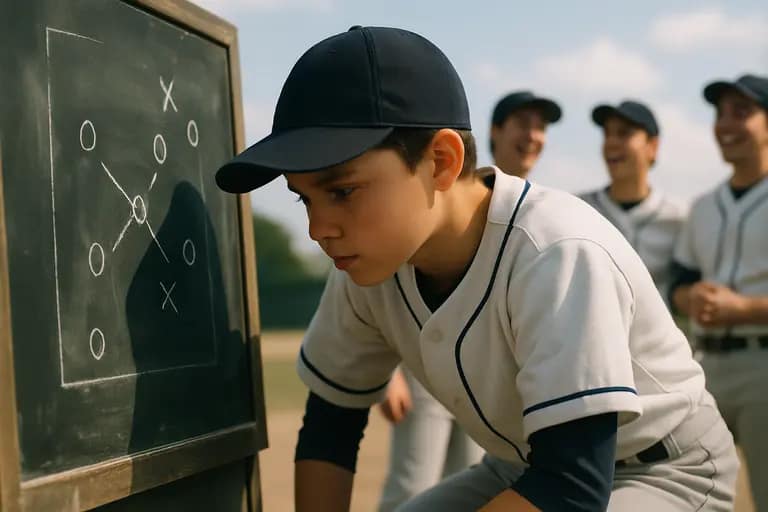
A scouting report is only useful if players can act on it. Youth teams do not need a college-level binder. They need a few clear points: how the opponent runs, which hitters pull the ball, whether their catcher controls the run game, and where the defense gives away outs. Coaches should keep the plan short enough to repeat in the dugout.
For hitters, a plan may be as simple as hunting a fastball early, refusing to chase up, and moving runners with less than two outs. For pitchers, it may mean first-pitch strikes, changing eye level, and trusting the defense. For defenders, it may mean knowing the bunt coverage, cutoff alignment, and steal responsibilities before the ball is live.
Competition coaching works best when the plan fits the age group. A 10U team may need one defensive reminder per inning. A 14U team may be ready for more detail. If the plan is too large, it becomes noise. If it is too thin, players are left guessing.
Review Performance Without Blaming The Result
After a high-level game, the scoreboard should not be the only teacher. A team can win and still miss signs, chase pitches, and throw to the wrong base. A team can lose and still show growth in preparation, communication, and poise. Postgame review should separate controllable actions from outcomes.
Use three categories: what traveled, what cracked, and what needs work. “What traveled” means the skills that held up under pressure. “What cracked” means the habits that faded when the game sped up. “What needs work” becomes the next practice plan. This keeps review honest without turning it into blame.
What Texas Coaches Should Do Before Bracket Play
Before the next tournament weekend, write down the three behaviors your team must carry into bracket play. Then design practice around those behaviors. If the team needs cleaner communication, score the communication. If hitters need better two-strike plans, build two-strike rounds. If pitchers need to respond after walks, rehearse the next-pitch routine.
Treat competition coaching as a season-long teaching process, not a speech saved for the biggest game. Texas youth baseball rewards teams that can adjust across long weekends, different fields, and changing pressure. The coach’s job is to make the standard clear, support the player through the hard parts, and give feedback that turns the next rep into a better one.