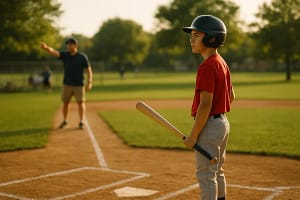
Young Texas Pitchers have a useful case study in Gio Rojas, not because every kid should be compared to a first-round pick, but because his rise to the Texas Rangers shows what steady pitching growth can look like: command, competition, physical readiness, and patience. For Texas families driving between league games, select events, school ball, and weekend tournaments, the lesson is not to chase one radar-gun number. The lesson is to build a pitcher who can repeat good habits under pressure.
Rojas is not a Texas high school product, but his connection to the Rangers makes his story relevant for local baseball families. The Rangers selected the left-handed pitcher from Stoneman Douglas High School in Florida with the 16th overall pick in the 2026 MLB Draft on July 11, 2026, according to the club’s team announcement. That selection gives Texas coaches a fresh teaching point: top pitching development is not one big leap. It is a stack of good training weeks, meaningful innings, and the ability to perform when the moment gets louder.
What The Rangers Saw In Gio Rojas
High School Production With Context
The numbers attached to Rojas are loud, but they should be read with a coach’s eye. As a senior, he went 11-1 with a 0.58 ERA and struck out 124 batters over 72.2 innings, with those figures listed in the Rangers’ announcement. In the 2026 Florida Class 7A state championship game, he threw 6.2 scoreless innings and struck out 12 as Stoneman Douglas won its sixth straight state title, also per the same club release.
For youth coaches, the key is not to tell a 12-year-old to become that stat line. A younger pitcher needs age-fit goals. At 10 or 11, that may mean throwing more first-pitch strikes, staying balanced through the delivery, or fielding the position with confidence. At 13 or 14, that may mean learning how to manage a running game, hold the same arm speed, and compete in the zone after an error. Production matters, but development comes first.
Competitive Reps Without Rushing The Lesson
Rojas also had recognition beyond his school season. He was named the Miami Herald’s Broward County 7A-5A Pitcher of the Year in 2025 and 2026, and he earned All-World Starting Pitcher honors with the Team USA 18-and-under National Team at the 2025 WBSC U-18 Baseball World Cup, where Team USA finished first, according to the Rangers’ release. Those details point to a pitcher who had been tested in several settings.
Texas pitchers can learn from that without forcing a packed schedule. Competition should stretch a player, not drain him. A pitcher who throws for a school team, a summer club, and private sessions needs adults to talk to each other. If nobody is counting the full workload, the athlete pays the price. Coaches should ask simple questions every week: How many competitive pitches? How many bullpen pitches? Any soreness? How did the body respond the next day?
Development Cues For Young Texas Pitchers
What Young Texas Pitchers Can Copy
For Young Texas Pitchers, the most useful piece to copy is not Rojas’ draft slot. It is the structure around his growth. A good youth plan should include repeatable throwing routines, clear rest windows, command work, lower-body strength, and enough live at-bats to learn how hitters react. A pitcher cannot learn sequencing only in a lesson cage. He needs game feedback, but he also needs adults who know when to pull back.
That is where Texas families can use a local player plan instead of chasing every tournament invite. A player pathway should define what the pitcher is working on this month, how it will be measured, and what changes if fatigue appears. For a deeper local framework, the site’s player pathway piece connects evaluation, grouping, and goal setting in a way that fits youth development.
What Families Should Not Copy Too Fast
Families should not copy the volume, travel, or exposure level of an older top prospect too early. A first-round high school pitcher is usually physically advanced, competitively seasoned, and supported by experienced coaches. A 9U or 11U arm is still learning how to move. The better approach is to build the pitcher in layers: play catch well, throw strikes, land safely, recover well, and handle failure without panic.
Another mistake is treating velocity as the only checkpoint. Velocity has value, but it should sit beside command, movement quality, confidence, and health. A young player who adds a few miles per hour while losing the strike zone may not be moving forward. A pitcher who learns to repeat the delivery, compete with two strikes, and stay calm after a walk is building tools that will still matter when the mound gets bigger.
Building An Age-Aware Pitching Plan In Texas
Skill Blocks Before Showcase Pressure
Texas baseball can put kids in front of strong competition early. That is a benefit when handled well. It can also tempt families to treat every weekend like a scouting event. Younger pitchers need blocks of training where the goal is learning, not proving. One week may focus on glove-side fastball command. Another may focus on landing direction. Another may focus on holding runners and getting off the mound as a fielder.
Rojas’ signing also shows the business side arrives only after years of performance. Yahoo Sports reported that he signed with the Rangers for a $4.6 million bonus, below the $5,051,900 slot value for the 16th pick, in its signing report. Youth families do not need to think in bonus numbers. They need to think in repeatable routines, school balance, recovery, and coachable habits.
Arm Care As A Weekly Habit
Arm care should not be a punishment after pain appears. It should be part of the week. That can include a proper warm-up, throwing progressions, light mobility, shoulder and trunk control, and honest rest after heavy outings. Coaches should also watch body language. A pitcher who drops his elbow, changes mechanics, or avoids throwing between innings may be telling you something before he says a word.
Texas heat adds another planning layer. Hydration, shade, and recovery time matter during long tournament days. Catcher innings also matter because catching is not rest for the arm. A player who catches multiple innings and then pitches needs careful handling. The site’s local arm-care article on how to protect young pitchers’ arms is a useful companion for families building a safer season plan.
Training Plans For Young Texas Pitchers
How Coaches Can Set The Week
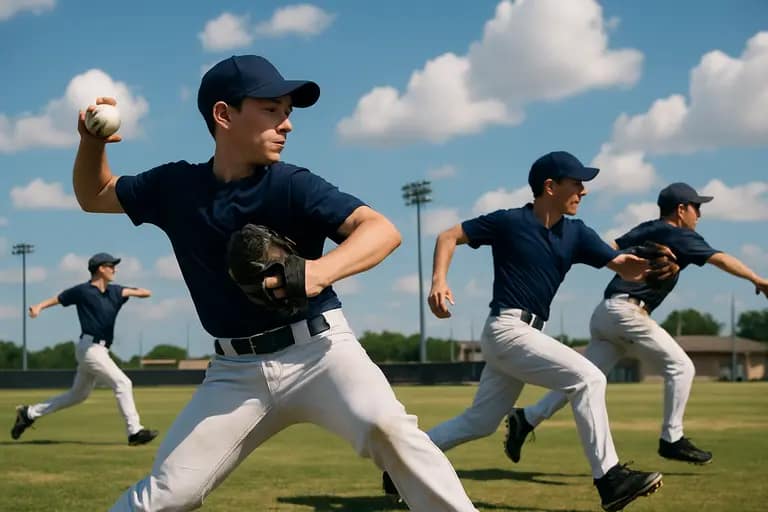
A weekly plan does not need to be fancy. It needs to be clear. After a start, the next day should be built around recovery and light movement, not a full bullpen. Midweek work can include flat-ground command, delivery checkpoints, and fielding practice. A short bullpen can come only when the arm is responding well. Before the next game, the focus should shift to intent, confidence, and a simple plan for attacking hitters.
For Young Texas Pitchers, parents can help by tracking what coaches may not see: sleep, soreness, energy, and mood. A pitcher who is dragging at home may not admit fatigue at practice. Keep notes simple. Was there elbow or shoulder pain? Did the player throw on back-to-back days? Did he catch too? Did he recover well? That information helps coaches make better choices and keeps the player from feeling like he has to hide discomfort to keep his role.
- Command Goal: Track first-pitch strikes and quality misses instead of only strikeouts.
- Movement Goal: Watch balance, direction, and finish before adding harder throws.
- Recovery Goal: Note soreness, sleep, heat exposure, and total throwing days.
- Competition Goal: Give pitchers chances to face good hitters without turning every outing into a tryout.
Why The Rojas Model Fits Texas Player Growth
A Practical Message For Rangers-Area Families
The best message from Rojas’ move into the Rangers system is not that every young arm should chase the same result. It is that development rewards players who can keep improving as the competition rises. The Texas youth baseball scene has the fields, coaches, tournaments, and year-round weather to support growth, but those advantages need structure. Without structure, more games can become just more stress on the arm.
Young Texas Pitchers should be taught to think like athletes, not just throwers. That means learning routines, caring for the body, respecting rest, and competing with a plan. Rojas gives local families a high-level example connected to the Rangers, but the daily work still happens in bullpen lanes, school practices, neighborhood cages, and weekend warm-up areas across Texas. Build the kid first. The pitcher grows from there.