Welcome! Let’s step up to the plate together. We’re starting an exciting journey. It’s about how schools and community groups can work together. They can create transformative experiences for young athletes.
Imagine a rundown lot turned into a perfect baseball field. That’s what happened in East Palo Alto thanks to the Diamond Dreams Campaign. Menlo School and the Diamond Baseball Academy joined forces. They showed us what’s possible when we work together for a goal.
The Texas Rangers Baseball Foundation is another great example. They have a clear mission: “To Develop. To Honor. To Serve.” This focus helps them make a real difference.
Think of us as your coaches on this journey. We’ll help you turn a good idea into a home run partnership. These partnerships help everyone involved—the students, schools, and the community.
Benefits of School-Community Baseball Partnerships
Why should your school join a community baseball partnership? It’s a win-win for everyone. Students, schools, and neighborhoods all benefit. It’s like a triple play where everyone wins.
Let’s explore these benefits. A shared love for baseball creates something bigger than a team.
For schools, the benefits are clear and quick. You get to offer more sports without spending a lot. Partners can provide equipment, know-how, or even money.
Facilities also get a boost. Community groups often help with upkeep or upgrades. This saves your school’s budget.
These partnerships also strengthen community ties. Your school becomes a key spot for local youth. It shows your commitment to the community.
For community partners, the benefits are huge. They get a reliable place to do their work. The Texas Rangers Baseball Foundation is a great example.
Their Diamond Dreams Campaign wants to make baseball fair and accessible. By teaming up with schools, they reach more kids. It turns their dream into reality.
Partnerships help honor military service, promote health, or teach youth values. It’s a win-win for everyone involved.
The biggest winners are the students. They get more chances to play and learn. It’s about access and opportunity.
They learn teamwork, discipline, and resilience. These skills help them in school and later in life.
Students also meet community leaders. This broadens their horizons and shows them new paths. It’s a dynamic way to learn.
So, how does it all work? Successful school baseball partnerships create a positive cycle. Schools get support, partners achieve their goals, and students grow.
This cycle keeps growing year after year. Success isn’t just about winning games. It’s about the growth you see in students.
Navigating School District Policies
Understanding school district policies is key to a successful educational collaboration. Think of the policy manual as the official rulebook. Just like knowing the strike zone in baseball, you need to know the rules here.
Stephen F. Austin High School’s partnership with Pilgrim’s Pride is a great example. It created “Pilgrim’s Park” after a decade. This partnership was built on a solid agreement. This agreement made sure everyone knew the rules from the start.
So, what’s in this rulebook? School districts have policies on important topics. Don’t let this feel like a curveball! Knowing these topics early can save a lot of trouble later.
- External Partnerships: Rules for formalizing relationships with community organizations or businesses.
- Fundraising & Donations: Guidelines on how money can be raised, accepted, and spent.
- Facility Use: Schedules, fees, maintenance responsibilities, and priority access.
- Student Safety & Welfare: Protocols for background checks, supervision ratios, and emergency procedures.
Knowing these guidelines from the start is the single biggest factor in building a lasting partnership. It turns a good idea into a lasting, compliant program that helps students every year.
Who do you talk to? Start with your school’s Athletic Director and Principal. They can connect you with the district’s central office. Key contacts include the Superintendent, the Business or Operations Manager, and the School Board. A clear, well-thought-out proposal shows you’re serious and ready.
What documents will you need? Be ready to discuss and possibly draft a Memorandum of Understanding (MOU). This outlines roles, responsibilities, and expectations. You’ll also need proof of insurance, safety plans, and sometimes a formal proposal for school board review.
By engaging with these policies early, you’re not just following rules. You’re setting up a trusted and successful educational collaboration. This upfront work makes sure your program is safe, supported, and ready to succeed for your community.
Academic Performance Integration
At the heart of any educational collaboration is a key fact: sports should support, not hinder, schoolwork. Your baseball program can help students excel in both academics and sports. It’s not just about staying eligible; it’s about creating a culture of success in all areas.
Think of it this way: baseball should motivate, not distract, from schoolwork. When students know their grades affect their sports spot, they work harder. They aim to keep their grades up to play the game they love.
So, how do you achieve this? Start with simple, effective strategies that any partnership can follow:
- Weekly Grade Check-Ins: Have a coach or academic liaison review progress reports with players. It’s about support and celebration, not punishment!
- Mandatory Study Halls: Set up a quiet, supervised study block before or after practice. It shows you value schoolwork as much as sports.
- Access to Tutoring: Work with the school or local colleges to offer free tutoring. It turns challenges into opportunities for growth.
These steps show everyone: administrators, teachers, and parents. You’re focused on developing the whole person. You’re not just a sports team; you’re a program that values every aspect of a student’s life.
This approach is the essence of a true educational collaboration. It makes your baseball partnership a key part of the school’s mission. You help student-athletes manage their time and responsibilities. The outcome? Better school engagement, higher graduation rates, and players ready for life beyond sports.
After-School Program Development
Creating an after-school baseball program is where your hard work comes to life. It’s the part where students and parents see the fun and learning. It’s your chance to make a kid’s day the best part of their week.
Your program should be both fun and educational. It’s important to mix basic skills with games to keep kids interested. They should leave each session with new knowledge and a smile.
Look at the Diamond Dreams Campaign clinics in East Palo Alto. They combine drills with mini-games. This keeps the energy up and lessons fresh.
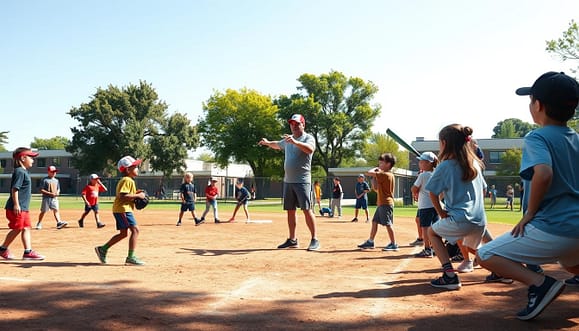
Getting the logistics right is key. You need a schedule that fits families and the school. Finding the right staff is also important. Look for coaches who love working with kids.
Safety is the top priority. You need structured activities, clear rules, and the right equipment. This lets kids learn without fear.
Here’s a simple plan to start your program:
- Design a 6-week curriculum that starts with basics and moves to games.
- Find a consistent time slot, like right after school, two days a week.
- Recruit and check the background of your coaching staff.
- Set clear safety and communication rules for everyone.
National programs, like theafter-school baseball curriculumfrom USA Baseball, can help a lot.
The goal of school baseball partnerships is to make after-school baseball the best part of the day. It’s a win-win for learning and fun.
Facility Sharing Agreements
A clear facility sharing agreement makes a shared baseball diamond a community asset. It’s like a rulebook for your after school baseball partnership. It answers all the important questions before the first game.
This document is key to a successful partnership. It makes sure the field is a source of pride for everyone. Here are the main points to cover.
Scheduling is often a point of tension. Your agreement should clearly state who gets priority. School teams usually have first rights during the official season. Then, community leagues and after school baseball clinics fill in the gaps.
Make a shared calendar well in advance. Include practice times, game days, and buffer periods. This prevents overuse and keeps the field safe and playable.
Maintenance and Upkeep: A Shared Responsibility
A beautiful field needs regular care! The agreement should outline who does what. Will the school’s grounds crew mow and line the field? Does the partner organization handle dugout cleanup and trash removal?
Big projects, like the “Diamond Dreams Campaign,” should also be outlined. These partnerships can fund new scoreboards, irrigation systems, or batting cages. Clearly state how costs are shared and who manages the contractors.
Naming Rights and Community Pride
Facility sharing can lead to community branding. Look at Stephen F. Austin’s “Pilgrim’s Park” deal. A local business or donor might secure naming rights for a field or stadium in exchange for significant financial support.
This not only funds improvements but deepens the community’s connection to the space. It turns the local baseball field into a landmark.
For a real-world example of these principles in action, review the public partnership agreements from Cherokee County. They show how detailed responsibilities are formalized.
Crafting Your Agreement: A Handy Checklist
To ensure you cover all bases, use the following table as a guide. It compares typical responsibilities between a school district and a community partner in a facility sharing agreement.
| Agreement Component | School District Responsibility | Partner Organization Responsibility | Key Notes & Frequency |
|---|---|---|---|
| Scheduling & Access | Primary scheduling during school season; issuing keys/access codes. | Submitting schedule requests 30 days in advance; adhering to gate lock-up times. | Use a shared digital calendar. Review priorities annually. |
| Field Maintenance | Major landscaping, irrigation system repair, infield dirt conditioning. | Daily dugout trash removal, post-game base cleaning, reporting field damage. | Create a joint inspection checklist for after each use. |
| Equipment & Storage | Providing secure storage for school-owned machinery (mowers, tractors). | Supplying and maintaining its own bats, balls, and catcher’s gear; securing its storage bin. | Clearly label all equipment. No shared use without written permission. |
| Capital Improvements | Approving all renovation plans; managing permits and district contractors. | Fundraising for specific projects (e.g., new bleachers, fencing); contributing labor. | See the “Diamond Dreams” model: partner-led fundraising for district-managed work. |
| Safety & Liability | Ensuring stadium lights, fences, and backstops meet code. | Conducting a pre-event walk-through for hazards; providing certificate of insurance. | Insurance requirements are non-negotiable. Update annually. |
Getting these details in writing from the start is your best defense against future confusion. It builds trust and allows your after school baseball program to focus on player development, not property disputes.
Remember, a great agreement is living. Plan to review it together each year. Discuss what’s working and what needs adjustment. This keeps your partnership strong and your field in top shape for every young athlete who steps onto it.
Coach Certification Requirements
A successful educational collaboration relies on top-notch instructors. Coach certification is key in any school-baseball partnership. It’s not just about paperwork. It ensures every adult working with students is highly skilled and caring.
Think of a great coach as a great teacher. Diamond Baseball Academy is built on this idea. Partnering with them means you get professionals who focus on teaching the game right. Proper certification proves this quality.
So, what’s in the certification toolkit? Let’s look at the essential credentials that keep athletes safe and instruction high.
CPR and First Aid Certification is your first defense. Accidents can happen, even in practice. A certified coach can act fast in emergencies, keeping everyone safe.
Comprehensive Background Checks are also critical. They build trust with parents and the school. This step confirms everyone’s history and safety to work with kids. It’s a simple but essential step.
Lastly, Sport-Specific Training from USA Baseball is important. It’s not just about hitting or fielding. It includes age-appropriate drills and injury prevention. This ensures the instruction is up-to-date and safe.
Seeing these requirements as just paperwork misses the point. They show a commitment to professional standards. This commitment keeps kids safe, gives parents peace of mind, and improves play. By demanding certified coaches, your partnership shows respect for the sport and the athletes. It’s how you build a lasting program.
Student-Athlete Academic Support
Imagine a system where a coach knows a player is struggling in algebra before the next test. This is the power of proactive academic support in your school baseball partnership.
This support is more than just checking report cards. It’s about creating a safety net that catches students early. Your goal is to show every player that their success in school is as important as their success on the field.
So, what does this support network look like? It’s like your academic playbook. It has clear drills and players, just like your baseball practice.
- Formal Tutor Connections: Establish a direct link with your school’s tutoring center or specific teachers. This creates a trusted pipeline for extra help.
- Coach-Friendly Progress Reports: Implement a simple, regular check-in system (bi-weekly or monthly) that gives coaches a snapshot of academic standing, not just grades.
- Structured Study Sessions: Organize mandatory “study hall” time before practices or on light workout days. This makes academic work part of the team routine.
The progress report system is a game-changer. Instead of waiting for quarterly grades, a teacher or counselor can send a quick note. It might say, “Johnny missed two homework assignments this week.” Now, the coach can have a supportive chat immediately. This early intervention can solve a small problem before it becomes a big one.
Organized study sessions build team camaraderie off the field. Players can work together, and older students can mentor younger ones. It turns homework from a solitary chore into a collaborative team effort. You’re not just telling them to study; you’re giving them the time and space to do it successfully.
This proactive approach sends a powerful message. It shows players, parents, and school administrators that your program is invested in the whole student. You care about their future far beyond the final out of the season.
When you weave these support threads together, you create a stronger, more resilient program. You develop student-athletes who are prepared for life’s next innings. That is the true mark of a champion-level school baseball partnership.
Transportation & Logistics
The school day ends, and the rush to get to baseball starts. Getting to practice can be a big challenge. Let’s find a way to make it easier for everyone!
Think of your transportation plan as the team’s leadoff hitter. It sets the tone for the whole season. A good plan gets players to the field on time and ready to play. A bad plan can cause frustration and empty spots on the roster.
You have several good options for getting players to practice. The best one depends on your school, location, and the players’ ages.
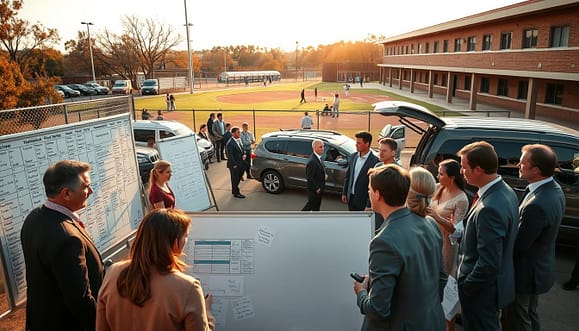
Here’s a breakdown of the most common transportation solutions, so you can compare them side-by-side.
| Transportation Option | How It Works | Key Advantages | Potential Challenges | Ideal For |
|---|---|---|---|---|
| School Buses | Utilizing existing district bus routes or chartering a bus for dedicated team transport. | High safety standards, familiar for students, cost-effective if routes already exist. | Limited availability after school, rigid scheduling, may require early booking. | Programs with a large, centralized group of players and existing district support. |
| Parent Carpool Networks | Organizing a rotating schedule where parents take turns driving a group of players. | Extremely flexible, builds community, low direct cost to the program. | Requires strong coordination and reliable volunteers; liability concerns need clear waivers. | Smaller, neighborhood-based teams where parents are highly involved. |
| Local Transportation Services | Partnering with a local shuttle company, taxi service, or public transit with group rates. | Professional and reliable, frees up parent time, can be scheduled on demand. | Can be the most expensive option; requires vetting for safety and insurance. | Urban areas or programs where parents have limited availability for driving. |
For many programs, a hybrid model works best. Maybe you use a school bus for most practices but organize carpools for make-up games. The key is to communicate the plan clearly and early to every family.
Planning for away games and tournaments adds another layer. You’ll need to confirm directions, arrange for overnight stays if needed, and pack schedules with travel times. Always appoint a trip coordinator! This person handles the itinerary, collects emergency contact forms, and is the point person for drivers.
Don’t forget the power of technology. Group messaging apps can send instant updates about traffic or delays. Shared digital calendars keep everyone on the same page for pickup times and locations.
Smooth logistics are the unsung hero of your after school baseball program. They remove the biggest barrier to participation—simply getting there. When transportation is reliable, kids show up consistently, coaches can plan better practices, and the entire season runs more smoothly.
Start by mapping out your players’ addresses. See where clusters form. Then, reach out to your school district’s transportation office and local community vendors. With a little research and a clear plan, you can turn the post-school rush into a seamless transition to the ballfield.
Insurance & Liability Considerations
Insurance is like a strong catcher’s mitt for your youth baseball program. It protects against unexpected risks. It’s key to keeping everyone safe and focused on fun and growth.
Think of insurance as a safety net for educational collaboration. Without it, one accident could ruin everything. Let’s look at what you need to know to set up that safety net.
For youth sports, you’ll need a few types of liability coverage. General Liability covers injuries or damage. Accident/Medical insurance helps with medical costs if someone gets hurt. Don’t forget Directors & Officers liability for your leaders. And if you share facilities, Property insurance is essential.
Here’s a quick comparison to help you understand the coverage landscape:
| Type of Coverage | What It Protects | Why It’s Crucial |
|---|---|---|
| General Liability | Bodily injury, property damage, personal injury claims from operations. | Covers the most common risks during practices, games, and events. |
| Accident/Medical | Medical expenses for injured participants, often with a deductible. | Ensures players get care quickly without financial burden on families. |
| Directors & Officers (D&O) | Board members and leaders against wrongful act allegations. | Protects volunteers and decision-makers, encouraging strong leadership. |
| Property Insurance | Equipment, uniforms, and facilities against damage or theft. | Vital for any facility-sharing agreement to protect shared assets. |
Once policies are in place, you must know how to review them. Always request a Certificate of Insurance (COI) from every partner. Make sure your school or league is named as an additional insured on their policy. This is a non-negotiable step in a responsible partnership!
Verify the coverage limits are sufficient and the policy dates are current for the entire season. This review process shows your educational collaboration is mature. Sitting down together to understand the paperwork builds immense trust.
Remember, insurance is a shared responsibility. The school, the community baseball partner, and any third-party vendors all need to be on the same page. This alignment is what transforms a simple agreement into a resilient, long-term educational collaboration. It allows ambitious projects, like integrating with elite youth development programs, to proceed with confidence.
Addressing liability thoroughly isn’t about fearing the worst—it’s about planning for the best. It signals to parents, administrators, and the community that you run a professional, secure program. That foundation of safety lets the real magic of baseball, the teamwork and skill development, shine through without a shadow of worry.
Summer Program Collaborations
When school ends, your school baseball partnership can keep going strong. Summer is a great time to help players grow and connect with the community.
Summer is like an extra inning for your team. It’s a chance to keep the excitement from the spring season alive. These programs help players stay sharp and engaged.
You can pick from several models, each with its own benefits. They help your players and strengthen your community bonds.
- Summer Camps: These are fun, week-long sessions that focus on skills and teamwork. They create unforgettable memories.
- Summer Leagues: A competitive option that keeps the game spirit alive. It’s great for players who love regular games.
- Intensive Clinics: These focus on specific skills like pitching or hitting. They’re shorter but can help players improve fast.
Running a summer program doesn’t have to be solo. You can team up with a local group. This way, you can share costs and expertise. Look at the Texas Rangers Foundation for inspiration.
These partnerships also help your players grow. They can become junior counselors or assistant coaches. This gives them valuable experience and helps them learn more.
By adding summer activities to your plan, you create a year-round after school baseball path. This keeps players engaged and shows your commitment to youth development.
Start planning your summer program now. Talk to local baseball groups and create a plan that keeps players involved. A strong summer partnership can make your school baseball partnership even stronger, leaving a lasting legacy.
College Preparation Pathways
Getting into college baseball is where educational collaboration really matters. Your school and community work together to help players. They aim to prepare them for college, not just the game today.
Coaches play a big role in this journey. They use their networks to reach out to college recruiters. They don’t just wait; they create profiles, send videos, and make calls. This shows colleges that your athletes are ready and supported.
Understanding NCAA eligibility can be tough for families. Your partnership can help clear things up. Host workshops to explain the rules, like GPA and test scores. This makes a complex issue simple and helps everyone plan better.
Showing off talent is key. Hosting a joint showcase with your partner can help. Invite college coaches to see your players’ skills. It’s a win-win for everyone.
It’s all about working together. Sports and school schedules must match. That ensures players do well in both. It’s about supporting them in every way.
Creating this pathway is a big promise. You’re saying, “We believe in you and have a plan to help you succeed.” This educational collaboration opens doors and helps dreams come true.
Building Administrative Support
Your vision for youth baseball needs champions within the school system. Building administrative support is the final, key step to make your plan a lasting program.
You must speak the language of principals and superintendents. Create a proposal that is clear and focused on your mission. Show how your school baseball partnerships meet educational goals and manage community risks.
Highlight the direct benefits. Explain how access to quality training facilities supports year-round development. Connect your program to better academic performance, after-school engagement, and safe community spaces. This makes your partnership valuable, not a burden.
We can create strong school baseball partnerships together. A solid proposal covers logistics, liability, and long-term value. It shows you’ve done your homework. Your teamwork can score a home run for students and the community, much like the timeless lessons highlighted in classic baseball literature, which illustrate how preparation, strategy, and collaboration lead to success on and off the field.