Traditional fielding practice can feel like a never-ending task. It’s full of endless grounders and mindless laps. When the coach says “line up,” everyone just sighs.
Then, there’s the Defense & Baserunning Challenge Day. It’s a fast-paced, data-driven, and gloriously competitive event. Imagine “American Gladiators” meets “Moneyball” on a baseball field.
This isn’t just practice. It’s a story. We’re moving from boring repetition to real game pressure. Every catch and slide is counted and studied.
This section is your call to action. We’ll show that competition isn’t bad. It’s what makes skills grow. It brings out the joy of testing oneself. The aim is to turn athletes into active players in their own skill-stories.
Let’s ditch the dullness. We’re creating an event.
Designing Scoring for IF/OF, Catchers, and Baserunning
Scoring a defensive drill is more than just counting points. It’s about measuring a shortstop’s first step or an outfielder’s route. You become a master builder, not just a cheerleader. Your whistle and clipboard are tools for creating a lab, not just for practice.
Each role gets its own scorecard. We move from “good job” to a detailed, multi-variable system. This system rewards both spectacular and fundamental plays. It turns a simple infield/outfield competition into a test of skill.
Infielders need more than just clean picks. We score their first-step quickness and throwing accuracy under pressure. Handling the “bad hop” is also key, showing it’s a skill to be taught.
Outfielders face a different challenge. It’s a mix of physics and art. Their scoring focuses on three areas:
- Route Efficiency: We track the most direct path to the ball.
- Crow-Hop Power: The kinetic chain from catch to throw adds sting to throws.
- Cut-Off Man Accuracy: A precise throw to the relay man can make a big difference.
Catchers have their own scoring system. Pop time is important, but so is blocking efficiency. The pickoff throw to second is also scored, showing tactical skill.
Baserunning is the offense’s counter. We look at lead, secondary distance, and explosive pivot. These moves can turn singles into doubles.
Here’s how scoring variables differ by position:
| Position | Primary Metric | Technical Focus | Game-Speed Trigger |
|---|---|---|---|
| Infield (IF) | First-Step & Bad Hop | Throwing Accuracy | Simulated Double Play Clock |
| Outfield (OF) | Route Efficiency | Crow-Hop & Relay Accuracy | Do-or-Die Flight Path |
| Catcher | Pop Time | Blocking & Pickoff Throws | Steal Attempt / Wild Pitch |
| Baserunner | Secondary Distance | Lead & Pivot Technique | Pitch Release & Ball in Play |
This isn’t a popularity contest. It’s a detailed dashboard. By scoring this way, you create a fair leaderboard. Every player knows their strengths and weaknesses. The infield/outfield competition becomes a data-rich showdown, showing the path to greatness.
Timed Drills: 4-Corner, Do-or-Die, Relay Accuracy, Pop Time
Welcome to the pressure cooker of sports, where drills like the 4-Corner and Do-or-Die turn practice into intense games. Here, we see who can perform under pressure. The stopwatch tells it all.
The 4-Corner drill tests your spatial awareness and quick thinking. It’s not just about moving fast. Athletes must field the ball and throw accurately, all while time is ticking. It shows who can think clearly and act fast.
The Do-or-Die drill is all about theater. A runner sprints home, and a fielder chases a ground ball. It’s a simple yes or no situation. It’s a test of courage and skill in just a few seconds.
Speed is important, but so is accuracy. Our relay accuracy drills focus on both. We’re not just running in relay races. We’re working on precise throws and catches. Any mistake is quickly noticed.
For catchers, it’s all about quick reflexes. The pop time drill measures how fast they can throw to first base. It’s a test of skill, where every fraction of a second counts.
We also set up specific tag plays to practice. We work on swipe tags, blocking tags, and avoiding tags. It’s all about mastering angles and leverage.
These timed drills create exciting moments. But they also give us valuable data. You can’t argue with a stopwatch.
Communication and Cut/Relay Decision Trees
Game-speed defense isn’t played in a library; it’s a noisy, verbal chess match. Timed drills test the engine. This station tests the navigator and the loudspeaker. If your defense is silent, you’ve already lost.
We’re building the mental software that turns panic into procedure. Think of it like a football coach drawing up a blitz package. Runner on first, ball smoked to right-center. Who calls for the cut? Where does the shortstop sprint? What’s the second baseman’s backup role?
Vague encouragement to “talk it up” is useless. We need specific, actionable protocols. This is about moving from reactive chaos to proactive choreography.
The core principles of defensive communication are non-negotiable:
- Loud and Early: The call must come before the ball arrives. Hesitation is contagion.
- Specific Terminology: “I’ve got it!” “Cut two!” “Let it go!” No ambiguous shouts.
- Backup Mandates: Every player has a secondary responsibility. An uncovered base is a systemic failure.
- Eyes on the Runner: Verbal cues must include runner positioning. “Runner stopping!” changes everything.
Let’s codify this. Below is a decision tree for common outfield relay scenarios. Memorize this like your own phone number.
| Situation | Primary Verbal Call | Key Player Action |
|---|---|---|
| Ball in LF-CF Gap | CF: “Ball! I’m going!” LF: “You’re there!” | SS sprints to cut-off depth, 3B backs up 3rd base. |
| Single to RF, Runner on 1st | RF: “Ball in! One down!” 2B: “Cut four! Cut four!” | 2B sets up as cut-off man, SS covers 2nd base. |
| Deep Fly to Center, Runner Tagging | CF: “I’ve got it! No tag!” INF: “Runner, runner!” | All infields yell runner status, 3B prepares for possible throw. |
| Double off the Wall | OF: “Off the wall! Relay! Relay!” | Nearest INF sprints to relay spot, corner INF backs up base. |
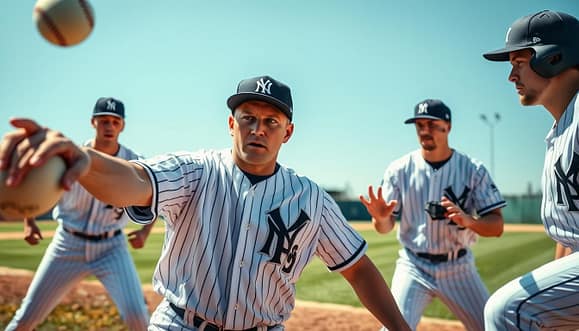
Now, we force it. We run a drill where the only path to success is through crisp, loud communication. Picture a “Do-or-Die” relay, but with a twist: the coach hits a ball to the gap, and the entire defense must execute the perfect relay while narrating their actions. No call? That’s an automatic run scored. It’s brutally effective.
The beauty of a perfectly executed relay isn’t just in the throw. It’s in the symphony of shouts that preceded it. The shortstop barking “Cut!”. The outfielder yelling “Now!”. The third baseman warning “He’s rounding!”. It’s intellectual satisfaction. A lucky web gem is just that—luck. A relay born from a shared decision tree is a team’s signature.
This isn’t just chatter. It’s the operating system for a elite defense. Get the communication right, and the physical plays become almost automatic. Next, we need to make sure this beautiful chaos doesn’t lead to collisions.
Safety and Space Management
Before we name the winners, we need to set the rules. This includes how the space is used and keeping everyone safe. It’s the part that keeps things from getting too wild.
It’s like switching from being a coach to a commander on the field. Your main job isn’t to score. It’s to make sure everyone knows where they are and what to do. A messy field is not just a problem; it’s dangerous.
We plan out the space like architects. No area should mix with another. We have clear “hot” and “cold” zones. This helps players stay focused and safe.
| Zone Type | Purpose | Player Action | Coach Focus |
|---|---|---|---|
| Hot Zone | Active drill execution (e.g., relay, do-or-die) | Full game-speed effort, loud communication | Observing technique, providing immediate feedback |
| Cold Zone | Queue for next drill, hydration, brief rest | Mental preparation, watching peers, staying ready | Setting up next station, giving group instructions |
| Transition Zone | Safe pathways between stations | Controlled jog/walk, equipment in hand | Ensuring clear lanes, preventing collisions |
Getting ready for the game starts long before it begins. We do more than just stretch. We get muscles and minds ready for action. This is key to any structured practice plans.
Then, we make sure everyone follows the rules. No jewelry, helmets where needed, and bases are secure. It’s not about being strict. It’s about being professional. It’s the foundation for teaching foundational skills at any level, as shown in resources like the curriculum goals for 10u teams.
Why focus so much on safety and layout? It creates a safe space. In this space, athletes can push their limits without worry. They can compete aggressively without fear of accidents.
The outcome is clear. We create a safe place for athletes to compete. This way, they can focus on the game without worrying about safety.
Staffing and Rotation Flow
Think of your coaching staff as a key team, like a bullpen for Game 7. It’s not just one person. You need a team for defense and baserunning, each with a special role.
Getting this wrong means athletes might just stand around. Downtime is bad for energy and momentum. A good plan keeps everyone busy and engaged.
We take lessons from baseball’s pitching strategy. Your event staff needs roles like a factory. Here’s how it works:
- The Closer: This is your energetic host. They lead the event, energize the crowd, and give out awards. They’re the heart of the event.
- The Set-Up Coach: These are your station managers. They focus on execution: keeping things on schedule, recording scores, and keeping the pace. They set the stage for success.
- The Specialist: Every team has a detail expert. This coach handles complex tasks like communication drills or accuracy tests. They’re the brain of the operation.
- Long Relief: These coaches work on slower stations. They handle skill reviews, warm-ups, or film analysis. They keep things steady while others shine.
It’s key to have clear roles. But you also need a plan for moving around. That’s where your rotation flow schedule comes in.
Plan the station rotation like a smooth conveyor belt. Team athletes together and map their path. Aim for constant, focused movement. A good plan also includes time for transitions and a backup coach.
This is top-notch organization. Your coaching staff is your most important asset. Use them wisely, with a clear plan, and watch everything work smoothly. Athletes will notice the difference in every minute.
Live Leaderboard and Athlete Engagement
What makes a practice stand out? It’s the audience, even if it’s just a poster. The live leaderboard brings this to life. It turns data into a thrilling event.
Don’t need fancy tech for this. A whiteboard or a poster works great. The magic is the real-time feedback. Seeing their name rise in the rankings motivates athletes more than any lecture.
The drills become part of a bigger story. Athletes wonder who will win the next challenge. The leaderboard adds excitement and healthy competition.
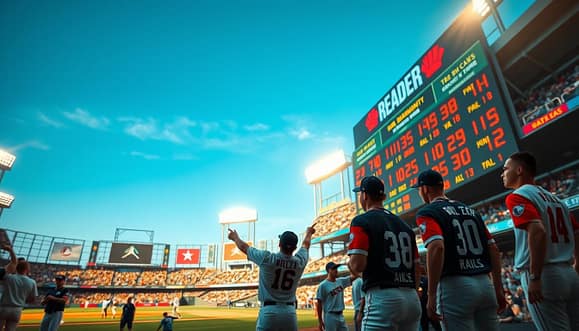
This mindset shift from executing to performing is key. Athletes now race against the clock, not just the coach’s whistle. It’s a natural, exciting pressure.
The live leaderboard makes data into a story. It shows who’s rising, who’s steady, and who shines under pressure. It turns the day into a captivating event where everyone is part of the story.
Film Review & Coaching Cues
Forget the podium for a second. The most valuable medal from your Baserunning Olympics is the insight from the film review. The competition ends, but the coaching? That’s just getting started.
This session is your season’s most powerful teaching moment. Why? Emotions are raw. Attention is laser-focused. Every player remembers exactly what they did, and more importantly, what they felt. You’re not teaching in a vacuum; you’re anchoring lessons to lived experience.
To structure this goldmine, use the IDEAS teaching model. It’s a five-step framework that turns chaotic footage into clear growth.
- Introduce: Set the stage. Highlight the competitive spirit they just showed. “You fought for every tenth of a second out there. Now, let’s see what won—and lost—those battles.”
- Demonstrate: This is where your video clips shine. Show the beautiful relay exchange right next to the botched communication. Don’t just tell; show.
Explain: Here’s the “why.” Break down the scoring rationale. “You lost two points here not because you were slow, but because your first step was in the wrong direction. The clock doesn’t lie.”
Activity: Shift from passive watching to active analysis. Have athletes self-analyze their own clips. Or, run a peer-review session where outfielders dissect infielder footage and vice-versa. Engagement skyrockets.
Supply Feedback: This is where your coaching cues become permanent. Use the “compliment sandwich” technique. Celebrate the hustle first. Then, dissect the technical flaw with clear, actionable language. End by highlighting the growth.
For example: “Love the aggression rounding second. Now, watch your footwork here—see how crossing over cost you balance? Clean that up, and you’re scoring from first on that hit.”
Another potent coaching cue: “See how your ‘I got it!’ call changed the entire play? Your voice is a tool. Use it early and loud.”
This film review isn’t about shaming. It’s about using the heightened state of competition as a permanent anchor for learning. The specific feedback you give in this session—tied directly to the video evidence—sticks like nothing else.
By following the IDEAS model, you transform a simple video recap into a masterclass in player development. The result? Athletes who don’t just run faster, but think smarter the next time the game is on the line.
Awards and Team-Building Wrap-Up
The awards ceremony is like the extra-credit afterparty of the Olympics. It moves from the strict timing of the games to the joy of celebrating. This moment is not just an afterthought. It’s the deliberate, emotional punctuation on a day of intense competition.
Data is for later analysis. Now, we focus on making memories and boosting morale. We aim to make every athlete feel seen, valued, and part of a larger team. So, our awards go beyond just “Best Overall.”
We have a variety of awards to celebrate the unique, the hard work, and the funny moments. It’s like the Oscars, but with awards for “Best Recovery From a Bad Hop.”
- Best Diving Stop (The “Web Gem” Award)
- Most Accurate Arm (The “Laser Beam” Award)
- Best Communicator (The “Air Traffic Control” Award)
- Biggest Improvement (The “Leap” Award)
- Most Infectious Energy (The “Spark Plug” Award)
- Best Relay Pivot (The “Swivel Chair” Award)
The sillier the trophy name, the better. A plastic gold arm on a stand? Perfect. The laughter when the “Spark Plug” is announced boosts team chemistry more than any drill.
With individual awards given, we focus on team-building. This is the end of our sporting drama. We need an activity that’s fun, cooperative, and physically unites everyone. The relay race “Take It Back” is a great example.
Or, we might just have a team huddle. No instructions, no drills. Just a moment to celebrate the team’s effort. We highlight the player who helped a teammate and the cheers from the outfielders. This connects individual efforts to team unity.
It’s the final reminder. The Olympics were about more than finding a single MVP. They were about creating a more skilled, more cohesive, and more resilient unit. We end on that feeling. We end on the shared laugh, the collective breath after a hard day’s work, and the understanding that this group is stronger now. The scoreboards fade, but that emotion? That sticks.
Take-Home Drills and Progression Plan
The podium comes down. The leaderboard gets wiped clean. Now the real work begins.
We built this event not as a one-day spectacle, but as a launchpad. Your scorecard isn’t a souvenir. It’s a baseline. A starting line for the marathon of self-improvement.
Our take-home packet is your progression plan. It’s like the director’s cut of your performance. It shows where you are and where you need to go. It focuses on footwork, glove presentation, and transfer mechanics.
For infielders and outfielders, we have simple layouts for a backyard agility course. Use cones, a ladder, anything. The goal is to repeat that first-step quickness over and over. Turn your lawn into a lab for lateral burst.
For catchers, the grind is about milliseconds. The packet includes daily drills to shave time off your catcher pop time, drawing inspiration from principles often highlighted in classic baseball literature. It breaks down the kinetic chain from receiving to release. Remember, perfect practice makes a faster pop time.
This is the legacy. We’re not just handing out scores. We’re instilling a methodology. Your development is now a system.