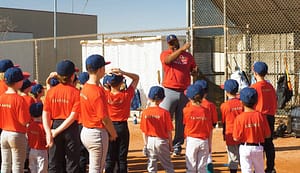
Growing a young arm in Texas’s heat is a big challenge. The first week of June feels like standing on the sun. I’ve seen young athletes, barely 14, get UCLs that look like frayed bungee cords by August.
This isn’t just another guide; it’s a deep dive into youth programs. We’ll look at sleep, recovery, and the basics of pitching. It’s your season-long blueprint, a conversation with the relentless heat.
The real question isn’t “How hard can he throw?” but “Can he throw without pain in July?” If you’re looking for a quick fix, you’re in the wrong place. We aim to build arms that last through the summer, not just impress in February.
Workload standards pitch counts days rest bullpen planning by age
In Texas, pitch counts are more than numbers; they’re a survival guide. Coaches often see pitch counts as a speed limit, not a hard limit. But, a 75-pitch outing in 98-degree heat is different from one in 72 degrees.
Understanding workload standards is more than counting pitches. It’s about intensity, previous rest, and the environment. For bullpens, age-specific strategies are key. A 12-year-old recovers differently than a 16-year-old. Rest is not just sitting; it’s about what that rest means.
Think of a strategic, periodized approach to treat the arm like a high-performance asset. Here’s a quick breakdown of managing pitch counts and rest days by age:
| Age Group | Max Pitch Count | Days of Rest | Active Recovery Activities |
|---|---|---|---|
| 10-12 | 60 | 3 | Light throwing, stretching |
| 13-14 | 75 | 4 | Plyometric exercises, agility drills |
| 15-16 | 90 | 5 | Conditioning, strength training |
By following these standards, young athletes can thrive in Texas’s heat. The key is understanding that Texas pitch counts need a nuanced approach. This balances workload with our climate’s unique challenges.
Arm care micro cycle warm up throw plyo bands recovery and sleep
If your arm care routine is just a few arm circles, it’s time for a change. A modern arm care routine is a daily ritual, as important as a quarterback’s film study. It’s not just about getting ready; it’s about potentiating the nervous system.
Think about adding plyo bands to your routine. These tools can really boost your performance. They’re not just for looks; they’re for real improvement. Are you using them right, or just for show?
Now, let’s talk about the throw itself. Is your warm-up throw a careful, step-by-step process, or just a quick move? This matters a lot. A good throw helps you check if you’re ready and if your technique is on point.
Sleep is also key. While you’re focusing on spin rate, your body is fixing itself between 10 PM and 2 AM. In Texas, where sports are huge, sleep often gets ignored for more practice.
So, what’s a good recovery plan? It includes the right food at the right time and a cool-down. This smart approach is better than just throwing more to get stronger.
| Element | Description | Benefits |
|---|---|---|
| Warm-Up | Dynamic stretches and light throws | Increases blood flow, prepares muscles |
| Plyo Bands | Resistance training for shoulder stability | Enhances strength, prevents injury |
| Recovery | Active cooldown and nutrition | Repairs tissues, restores energy |
| Sleep | Quality rest and recovery | Supports overall health, muscle repair |
For more on arm care, check out this guide on arm care and strength training for Texas youth.
Mechanics checkpoints posture stride trunk rotation glove side rhythm cues
Mastering pitching mechanics is like solving a puzzle. Each part must fit perfectly for top performance. Without clear mechanics checkpoints, we risk chaos, not harmony, on the mound.
Posture is key. Is your spine stiff or flexible? A strong posture is the base for smooth movements. It’s not just about standing up straight; it’s about setting up for fluid action.
Stride length is next. Think of it as a controlled fall toward the plate. It depends on your height and strength. A good stride transfers energy well from legs to pitch.
Trunk rotation is where power is made. A good rotation can boost speed, while a weak one can slow it down. Engaging your core is vital for power.
The glove side is also important. A weak glove arm can hurt your control and speed. It’s like the body’s conductor, and ignoring it can cause problems. Keeping the glove side active helps with balance and focus.
Rhythm cues are the last piece. A pitch without rhythm is awkward. Think of it as a dance; finding your rhythm is key. Here’s a quick table to summarize these checkpoints:
| Mechanics Checkpoint | Importance | Key Focus |
|---|---|---|
| Posture | Foundation for movement | Spine alignment |
| Stride | Energy transfer | Length and control |
| Trunk Rotation | Power generation | Core engagement |
| Glove Side | Balance and command | Active engagement |
| Rhythm | Fluidity of motion | Finding the groove |
Knowing these mechanics checkpoints is vital for pitchers. They’re not just tips; they’re key to success. For more on improving your pitching, see this resource.
Command first training target drills differential command and approach plans
In pitching, precision is key, not just power. Command is what matters most. In Texas, a 90-mph fastball can make a player famous. But, what’s the point if it misses the mark?
We’re focusing on command first. This isn’t about throwing wild pitches. It’s about aiming for the right spot. Target drills show a pitcher’s true skill, not just their speed.
The nine-pocket drill is a great example. It shows if a pitcher can hit the strike zone. It’s not just about hitting the catcher’s glove. It’s about controlling the game.
Then, there’s differential command. This means missing in the right spots on purpose. It’s like playing chess, not a Home Run Derby. A 15-year-old can outsmart a hitter with the right strategy.
With a good plan, pitchers can outsmart opponents. They learn to read the game, not just throw fast. We’re making thinkers, not just throwers.
Velocity safely sprint work med ball power long toss intent days
Want to chase velocity? We’ll use science, not brute force. Your lower half and core are the real powerhouses, not just your arm. We’ll create a sprint program that’s more than just running.
It’s about quick, explosive movements that teach your body to move fast and strong. Think of it as short, powerful bursts.
Medicine ball exercises are our secret for building power. They help your hips and trunk work together, saving your elbow. This way, you can throw better without hurting your arm.
Long toss is more than just stretching. It’s about power and intent. We’ll focus on feeling the energy move from the ground up. This keeps your power while throwing farther.
Here’s a quick overview of our training focus:
- Sprint Work: Short, explosive bursts for fast-twitch fiber engagement.
- Medicine Ball Exercises: Enhancing trunk and hip sequence for better power transfer.
- Long Toss: Focus on intent, not just distance.
This plan isn’t just about speed. It’s about building a strong, lasting engine. So, get ready to take your game to the next level!
Secondary pitches age appropriate grips changeup first breaking ball later
The journey of a pitcher’s skills starts with secondary pitches. For young pitchers, it’s not just about throwing harder. It’s about learning a variety of skills that protect their arm and improve their game.
The changeup is a key secondary pitch. It’s a safe choice that teaches deception without the strain of a breaking ball. Unlike a breaking ball, the changeup doesn’t need a hard grip. Instead, it uses a simple circle motion that keeps the elbow safe.
Now, let’s talk about the breaking ball. It’s tempting to introduce it early, but it’s better to wait. Breaking balls should be introduced after mastering fastball control and physical growth. When we do introduce them, a slurve or spinner is best. These pitches use a fastball arm slot and simple cues, reducing injury risk while adding variety.
Here’s a quick comparison of the two secondary pitches:
| Pitch Type | Recommended Age | Key Benefits |
|---|---|---|
| Changeup | 8-12 years | Teaches feel, deception, and arm speed |
| Breaking Ball | 12+ years | Variety in pitch selection, requires physical maturity |
In summary, introducing secondary pitches is about protecting young pitchers’ arms. It’s not about limiting their skills. Let’s focus on safety and skill-building over showiness. The best pitchers have both power and precision.
Game use charts starter opener relief roles and communication with parents
In youth pitching, the real challenge isn’t the workload. It’s managing what parents expect. The relationship between parents and coaches can be tricky. We need tools like game-use charts to help everyone understand their roles.
Discussing roles can turn into a status issue. But, focusing on growth changes everything. A “relief” role is smart for young pitchers. It lets them pitch hard in a safe way, helping them grow without getting burned out.
The “opener” strategy is another big idea. It saves young arms from too much work. It’s about getting everyone to see the big picture. With clear data and plans, we can ease the stress of pitching in tournaments.
Good communication with parents is key. When parents get why game-use charts and roles matter, they support their kids more. This makes the parent-coach relationship better, helping young pitchers grow.
By using these strategies, we can focus on the long-term health of young pitchers. The goal is to build champions for the future, not just win today.
In season vs off season programming and testing days
Understanding the Texas baseball calendar is key. It’s not just a suggestion; it’s a matter of making it in the game or facing a tough road. In the in-season, the focus is on keeping skills sharp, not on making new ones.
The off-season is when real growth happens. It’s the time to fix physical issues, build strength, and improve mechanics. All without the stress of the next game. It’s a chance to change a player’s path.
Testing days are also vital. Without them, you’re just guessing how you’re doing. They show if your hard work has paid off. Are you improving, or are you stuck?
| Testing Type | Purpose | Frequency |
|---|---|---|
| Movement Screen | Assess mobility and flexibility | Every 4 weeks |
| Radar-Gun Check | Measure velocity | Every 6 weeks |
| Command Challenge | Evaluate pitching accuracy | Monthly |
In conclusion, knowing the difference between in-season and off-season, and the role of testing days, is critical. It’s not just about throwing fast; it’s about throwing well.
Red flags and referral pathway for pain and overuse
In youth sports, knowing about pain is key. The saying “no pain, no gain” is outdated. Not all discomfort is the same. Sharp, localized pain, like around the elbow, is a big warning sign.
If an athlete hears a pop or has pain that lasts, it’s a red flag. These signs need immediate attention.
Ignoring these warnings can cause lasting harm. Coaches and parents must act fast. Instead of calling the pitching coach, reach out to an orthopedic specialist. They know the special needs of throwing athletes.
A specialist will give a detailed check-up, not just tell them to rest. This is important.
It’s vital to teach young athletes about medical literacy. They should feel free to share their pain concerns. Adults must listen and take action. This can stop small problems from becoming big injuries needing surgery.
Let’s focus on keeping our young athletes healthy. Encourage them to talk about pain and know where to get help. This effort can greatly impact their future success and health.