Young Texas Pitchers can learn from Gio Rojas without trying to copy every step of his path. His rise to the Texas Rangers is not a magic formula. It is a clear example of what steady training, strong competition, repeatable delivery work, and poise under pressure can produce when a talented pitcher keeps stacking good weeks.
Why Young Texas Pitchers Should Study Rojas
The Verified Rangers Snapshot
On July 11, 2026, the Texas Rangers selected left-handed pitcher Gio Rojas from Stoneman Douglas High School in Florida with the 16th overall pick in the MLB Draft. His senior season line was loud: 11-1, a 0.58 ERA, and 124 strikeouts across 72.2 innings. He also threw 6.2 scoreless innings with 12 strikeouts in the 2026 Florida Class 7A state championship game as Stoneman Douglas won its sixth straight state title, according to the Rangers draft announcement.
Those numbers matter, but youth coaches should not stop at the box score. A senior with that level of production likely had more than one good pitch, more than one way to get hitters out, and enough control of the running game, tempo, and strike zone to keep innings from getting away. For developing pitchers in Texas, that is the lesson hiding behind the strikeout total.
What The Big Performances Really Show
Rojas was named Broward County 7A-5A Pitcher of the Year by the Miami Herald in both 2025 and 2026. He also pitched for the Team USA 18-and-under National Team in 2025 and earned All-World Starting Pitcher honors at the WBSC U-18 Baseball World Cup after throwing 11 scoreless innings, including a complete-game shutout against Korea, per the same Rangers release.
That kind of record points to more than raw ability. It shows that the player could carry his delivery and command into bigger settings. That is where a youth training program earns its keep. Bullpen work should not live by radar readings alone. Coaches should ask whether a pitcher can repeat his move with runners on, throw a fastball to both sides, land a breaking ball for a strike, and slow the game down after a walk or an error. The mound can get lonely fast. Training has to prepare a player for that moment.
Building A Program Around Repeatable Growth
Young Texas Pitchers Need A Repeatable Routine
A strong youth program starts with routine. That does not mean every 11-year-old needs the same workload as a high school senior. It means each player should know what a normal week looks like: warm-up, catch play, skill work, recovery, and rest. Texas families often face long tournament weekends, hot afternoons, and travel between cities. The plan must fit the age, the season, and the player’s body.
For Young Texas Pitchers, the best training plans connect goals to observations. If a player misses arm-side high, the answer may be posture, stride direction, timing, or grip pressure. If a player loses command late in outings, the answer may involve pacing, conditioning, or workload. A player pathway built around evaluation and goals helps coaches avoid guessing. It gives families a way to see progress that is not tied only to wins, tournament rings, or social media clips.
Competition Should Match The Player
Rojas faced high-level high school and international competition before becoming a first-round pick. That does not mean every youth pitcher needs to chase the hardest event on the calendar. A better question is whether the competition level teaches the right lesson at the right time. A 10-year-old learning to throw strikes may need steady league innings. A 13-year-old with command may need better hitters who do not chase. A high school pitcher may need settings where scouts, pressure, and game planning feel real.
- Ages 9-12: Build strike throwing, athletic movement, basic fielding, and confidence.
- Ages 13-14: Add pitch design carefully, improve tempo, and learn how to face lineups more than once.
- High School: Train for command, strength, recovery habits, and competition against advanced hitters.
The goal is not to rush a player into harder games just because he had one good weekend. The goal is to keep the challenge close enough that the pitcher has to adapt without losing the joy of playing.
Arm Health And Skill Work In Texas Heat
Coaching Cues That Fit Younger Arms
Texas baseball weather can test every pitching plan. Spring can bring cold starts, summer can bring heavy heat, and tournament days can stretch longer than families expected. Coaches should be careful with workload, especially for pitchers who also catch, play shortstop, or throw extra bullpen pitches between games. This is where families should treat arm care for the Texas season as part of training, not an afterthought.
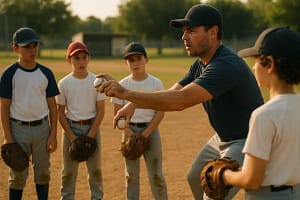
Skill work should start with movement quality. Younger pitchers need balance, direction, rhythm, and a clean finish before they worry about advanced pitch shapes. A simple cue like staying athletic over the back leg may help one player. Another may need to feel the front side stay closed longer. Coaches should use language the child can understand and check whether the cue changes the throw in a healthy way.
Mental Pace Matters
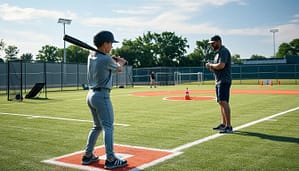
Rojas’ performance with Team USA shows the value of competing outside a familiar local setting. Young players may not get that exact chance, but they can still train the same mental skills. A coach can create pressure with a two-strike drill, a runner-on-third bullpen, or a team competition where the pitcher has to execute after a missed target.
That work matters because pitchers do not develop in a straight line. One week the fastball command feels easy. The next week the release point disappears like a ground ball in a bad sun field. Good programs help players respond instead of panic. They teach breathing, reset steps, and honest post-outing review. The player should leave the field knowing what to work on next, not just whether he won.
From Draft Pick To Development Model
The Signing Shows The Business Side
After the draft, Rojas signed with the Rangers for a reported $4.6 million bonus, below the $5,051,900 slot value for the 16th overall pick, according to Yahoo Sports reporting. For youth families, that number should stay in its proper place. It is part of the professional baseball business. It should not become the measuring stick for a 12-year-old’s season.
The better takeaway is that player development rewards long-term growth. A pitcher has to keep improving while other players are growing, lifting, learning, and catching up. Talent opens doors, but habits keep a player in the conversation. Families in Dallas-Fort Worth, Houston, Austin, San Antonio, the Valley, East Texas, and the Panhandle all see the same issue: there are plenty of games available. The harder part is building a calendar that leaves room for instruction, rest, school, and being a kid.
The Texas Fit
The Rangers connection gives local families a clear reason to pay attention. A first-round high school arm entering the Texas organization makes the story feel closer to home, even though Rojas played high school baseball in Florida. It gives coaches a current example to use with players who dream big but still need to master small details.
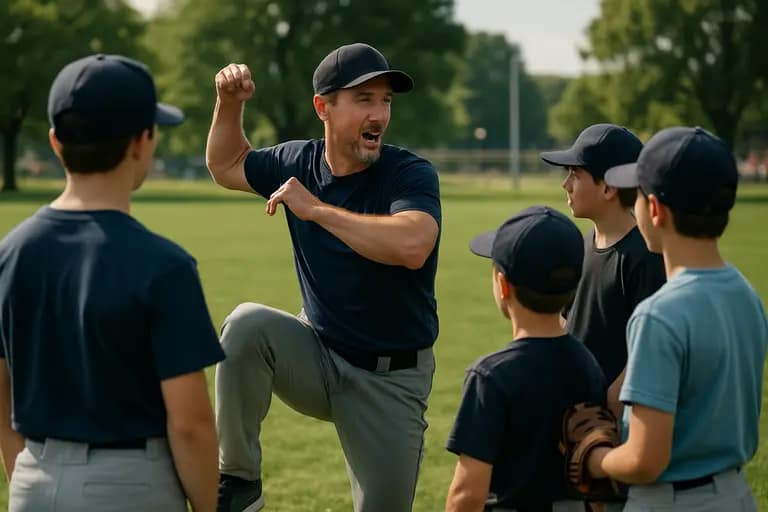
A Texas coach might frame it this way: the pro outcome is not controllable, but the daily work is. Did the pitcher prepare his body? Did he throw with intent and control? Did he compete in the strike zone? Did he recover well after his outing? Those questions fit every age group.
What Young Texas Pitchers Can Take To Practice
Young Texas Pitchers should take three practical lessons from Gio Rojas. First, results come from repeatable skills, not one flashy bullpen. Second, competition should stretch a player without breaking his confidence or his arm. Third, coaches and families should build the season around growth markers they can actually track.
Rojas’ path to the Rangers is rare, and that should be said clearly. Most players will not become first-round picks. Still, the training ideas behind his rise are useful for local baseball. Keep the delivery simple enough to repeat. Protect the arm. Put the player in the right games. Review outings with honesty. If a young pitcher learns those habits early, he is better prepared for the next level, whatever that level becomes.