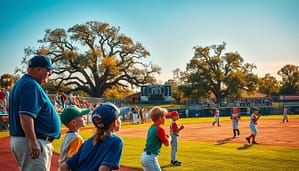
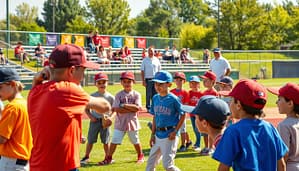
Let me share a secret about youth baseball programs that’s not in the fancy brochures. It’s not just about teaching kids to swing a bat. That’s just part of it. What we’re really talking about is a special way to help kids grow up through sports.
The YMCA Central Texas baseball program is all about fairness. Everyone gets to play. No one gets left out. It’s a pretty cool idea, right?
This group has different levels for kids from Pre-K T-Ball to Junior High Kid Pitch. The smart part is how they organize it. Young kids don’t face tough pitching, and older kids don’t get bored with easy drills.
It’s all about age-based leagues where kids learn new skills. And here’s the amazing part: every kid gets to play. It’s not just about finding the next big baseball star. It’s about helping kids grow through teamwork and learning important values. That’s really fair and cool.
Season windows spring summer fall practice to game ratios
The design of seasonal baseball programs balances player growth with the demands of today’s kids. The YMCA of Central Texas uses a multi-season model. This model breaks the year into spring, summer, and two fall sessions. This way, families can play when it’s convenient for them, not just because it’s always been that way.
Baseball seasons have changed a lot. The old spring-only model is now more flexible. Modern youth rec leagues know that kids have many other activities and commitments.
When you sign up early, you save money. There are different prices for early, regular, and late registration. The Wichita Falls program runs from March 16 to May 22. Late registration closes from February 9-15.
| Season | Games Begin | Season Ends | Practice Start |
|---|---|---|---|
| Summer | June 20 | August 1 | 1-2 weeks prior |
| Fall Session 1 | September 5 | October 10 | 1-2 weeks prior |
| Fall Session 2 | October 31 | December 12 | 1-2 weeks prior |
| Spring (Wichita Falls) | March 16 | May 22 | Early March |
The practice-to-game ratio is 1:1. This means one 60-minute practice and one game each week. It’s designed to improve skills without overloading schedules. Practices start 1-2 weeks before games, giving kids time to get ready.
This ratio works because it balances practice and play. Too many practices can be too much. Too few, and kids might not be ready for games. The 1:1 ratio helps kids learn by doing and builds skills for fun games.
The spring season is perfect in Central Texas before it gets too hot. Summer and fall programs offer more chances to play. Each season follows the same weekly format, keeping things consistent all year.
This approach also lets kids start playing baseball at any time. It’s great for kids who might change their interests quickly. This flexibility is important for kids who might want to try different things.
Skill curriculum throwing receiving baserunning hitting and game IQ progression by level
The YMCA of Central Texas focuses on youth baseball development. They cover throwing, receiving, baserunning, hitting, and game IQ. Their skill development programs build skills step by step, matching each child’s level.
Every game starts with the Youth Sports Pledge. It teaches values like sportsmanship and teamwork. This sets the tone for learning baseball fundamentals and more.
The program understands child development. It starts with basic skills before moving to advanced strategy. This is done in three levels, each for a different age group.
T-Ball Level: Building Blocks of Movement
At T-Ball, we focus on basic skills. Can your four-year-old hit a stationary ball? Can they throw in the right direction?
These skills are key for young children. They help with hand-eye coordination and basic movement.
Drills at this level are fun and repetitive. Catching and throwing are about basic skills, not perfection.
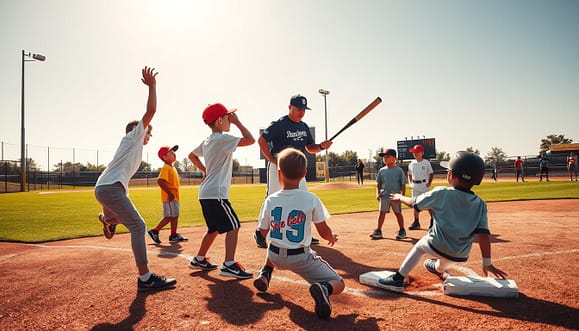
Baserunning is simple at this level. It’s about running in the right direction and stopping on time. These simple actions help build more complex skills later.
Coach Pitch: The Dynamic Element Emerges
Coach Pitch introduces movement. The ball is now moving, not stationary. This changes everything.
Timing and pitch recognition become important. Missing the ball teaches resilience and baseball fundamentals.
Hand-eye coordination improves here. Players learn to track and swing at moving objects. Practice is key to mastering this.
Throwing and receiving become more complex. Baserunning starts to involve decisions, like when to advance.
Kid Pitch: Full Complexity Unlocked
Kid Pitch is the full version of baseball. It includes pitching, defense, and strategy. This level tests players’ understanding of the game.
This level separates those who truly understand the game from those who just like playing. Questions like why a runner is in scoring position are key to game IQ.
The YMCA’s skill development programs focus on mental skills. Baseball is like chess, requiring quick decisions and strategy.
Batting and defense become more complex. Players learn to read the game and make quick decisions.
| Level | Primary Skills Focus | Cognitive Development | Coordination Emphasis |
|---|---|---|---|
| T-Ball | Basic throwing, catching stationary ball, directional running | Following simple instructions, understanding turns | Gross motor skills, basic hand-eye coordination |
| Coach Pitch | Hitting moving ball, fielding ground balls, base advancement | Timing recognition, basic decision-making | Refined hand-eye coordination, reaction speed |
| Kid Pitch | Pitching mechanics, defensive positioning, strategic batting | Game situation awareness, anticipation, tactical thinking | Complex motor patterns, multi-tasking coordination |
Skills Clinics: Focused Instruction When It Matters
Skills clinics focus on specific skills without game pressure. They help with techniques like throwing and batting.
Coaches can give individual attention in clinics. They can fix bad habits and improve technique.
Learning in clinics is stress-free. It’s a chance to try new things without fear of failure.
The Progressive Philosophy
The curriculum’s success comes from its stages. Each level prepares players for the next without overwhelming them.
The program suits all skill levels. It meets kids where they are, whether they’re athletic or coordination-challenged.
Fun and participation are key at every level. We teach baseball fundamentals and game IQ through engaging practices and games.
The goal is to create kids who love baseball and understand teamwork. The skills clinics and curriculum help them become better players too.
Coaching model volunteer onboarding background checks clinics and safety certs
Volunteer coach training at the YMCA is a detailed process. It turns enthusiastic parents into qualified mentors. The YMCA knows that just giving someone a clipboard doesn’t make them ready to manage eight kids.
The YMCA makes youth baseball happen thanks to volunteer coaches. They give more than just their time. They also give patience and a willingness to learn new skills.
Background screening is a must for the coaching model. Every adult working with kids goes through thorough checks. This is because we all agree that child safety is a must.
The February 4th coaches meeting is key. It’s at 7:00pm at the Dillard Early Learning & Youth Academy Cafeteria. It turns new coaches into a united team. Here, expectations are set, and everyone learns they’re not alone.
The YMCA’s approach is different from the “figure it out yourself” model. They offer structured volunteer onboarding. When you coach, you get specific resources for baseball. You learn throwing, baserunning, and teaching the strike zone.
Safety certifications are important in Central Texas. CPR training helps you respond to accidents. Heat protocol and concussion awareness teach you to recognize dangers.
The YMCA of Central Texas youth baseball sees coaching as a way to teach adults too. You model leadership by handling tough situations and teaching kids about sportsmanship.
| Certification Component | Timeline | Purpose | Renewal Requirement |
|---|---|---|---|
| Background Screening | Before first practice | Child safety verification | Every 2 years |
| CPR & First Aid | Within 30 days of season start | Emergency response preparedness | Annual recertification |
| Concussion Awareness | Before coaching debut | Injury recognition and protocol | Every 2 years |
| Heat Safety Training | Pre-season requirement | Texas climate risk management | Annual review |
Coaching certifications focus on teaching baseball skills. You learn how to give feedback and structure practices. This keeps kids engaged and learning.
The YMCA encourages parents to coach, not just watch. Coaching creates a lasting impact. You’re shaping the experience for the whole team.
Coaching clinics help fill knowledge gaps. You might not have played baseball in years. But, youth sports volunteers need to know how to teach the basics.
The model values sportsmanship and character. Winning is important, but how you win matters more. This is taught through all levels of volunteer coach training.
What you’re joining is a program that values accountability and support. The YMCA gives structure, resources, and a community. They expect you to be prepared, qualified, and focused on development.
This isn’t just casual recreation. It’s volunteer work done with professional standards. The kids deserve coaches who know what they’re doing.
Player eval and team formation parity drafts friend requests and play‑ups
At the heart of youth rec leagues lies a beautiful contradiction. Everyone makes the team, yet balanced teams must emerge. The YMCA of Central Texas ensures every child plays, no one goes home disappointed.
But how do you balance teams with kids of different abilities? You can’t just pick names randomly. One team would dominate, while another might struggle to field players.
The solution is the player assessment process. It’s not like traditional tryouts. Coaches observe kids’ skills. They watch them throw, catch, hit, and run.
The parity draft system uses these observations to form balanced teams. It’s like socialism for youth sports. Coaches draft players in rounds, spreading out skill levels to avoid blowouts.
Team formation happens through structured rounds for fairness:
- Initial assessment categorizes players by skill level
- Snake draft format prevents talent hoarding
- Coaches collaborate to ensure balance
- Adjustments occur if needed
The friend request accommodation adds a personal touch. Kids stay engaged when playing with friends. The YMCA allows one or two friend requests per player, balancing social connection with fairness.
This approach prevents lopsided games. Competitive balance is good sportsmanship and smart program design. It keeps families coming back season after season.
| Team Formation Element | Traditional Approach | YMCA Parity System |
|---|---|---|
| Selection Method | Competitive tryouts with cuts | Universal inclusion with skill-based draft |
| Roster Balance | Varies widely by coach preference | Enforced through structured parity process |
| Friend Requests | Rarely accommodated | One to two requests honored per player |
| Advanced Players | Dominate age-group competition | Play-up option available after assessment |
The play-up option is for advanced players. It lets them play at a higher level if they’re ready. This isn’t automatic—it requires assessment and sometimes parental advocacy.
This system values participation and development over winning. But it also acknowledges the need for fair competition. Kids of all ages and skill levels deserve to have fun and learn in a safe environment.
Facilities and equipment fields cages uniforms balls helmets bat rules
Let’s talk about the basics of YMCA Central Texas baseball. This includes the equipment and fields that make the game happen. Good infrastructure means your kid can learn and play without delays.
The field specifications change with age. Young kids play on smaller fields. This makes sense, as it’s easier for them to throw and catch.
Batting cages are great for practice. They help players build muscle and avoid bad habits. This is better than learning in a chaotic game setting.
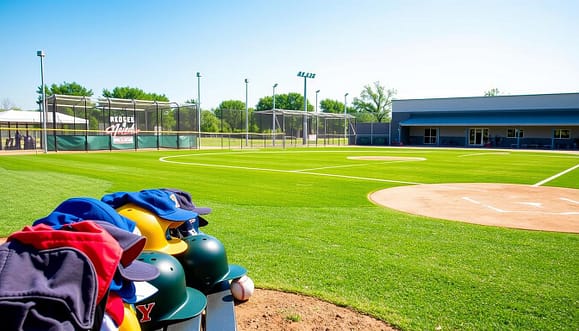
Before you sign up, know the costs. The YMCA Central Texas baseball program needs uniforms from a specific vendor. This keeps everyone looking the same.
Uniforms are a must. They’re the same for all sports, which is good for families with kids in different activities. But, it might not be as exciting for those focused on one sport.
Safety equipment requirements are strict. Helmets are a must to protect young heads from fast balls. This is a no-brainer.
Helmets are provided for team use. But, some families buy their own for a better fit and hygiene. Both are safe and approved.
Bats have many rules. Different ages need different bats for safety and learning. It’s a lot to keep track of.
| Division Level | Approved Bat Types | Length/Weight Ratio | Barrel Diameter |
|---|---|---|---|
| Tee Ball (Ages 4-6) | Foam or lightweight tee ball bats | Maximum -12 drop | 2.25 inches |
| Coach Pitch (Ages 7-8) | USA Baseball certified bats | Maximum -13 drop | 2.625 inches |
| Kid Pitch (Ages 9-12) | USSSA or USA Baseball stamped | Maximum -10 drop | 2.625 inches |
| Advanced Divisions | BBCOR certified bats | Maximum -3 drop | 2.625 inches |
These bat regulations are in place for a reason. With so many options, it’s easy to get confused. But, remember, umpires check for compliance.
Equipment like gloves is up to the family. Gloves come in different sizes and styles. Coaches can help pick the right one for your kid.
Cleats are better than sneakers for traction. But, sneakers are okay for younger kids. They don’t need to run fast.
The YMCA provides balls for games and practices. This keeps everyone playing with the right equipment. It’s not like using tennis balls or adult baseballs.
Using the right balls helps with skill development. It’s hard to improve if the balls keep changing.
The YMCA takes care of the field and equipment. This includes bases, pitching screens, and batting tees. Registration fees help cover these costs.
You’re paying for more than just coaching and games. You’re also paying for the facilities that make it all possible. Families don’t need to worry about this.
YMCA Central Texas baseball has rules for equipment. Some things are included, others you need to buy. But, it’s all about safety and learning.
Knowing what you need before signing up saves money. It also makes sure your kid is ready to play. The facilities might not be glamorous, but they’re essential.
Parent guide code of conduct communication apps and rainout policy
Welcome to the heart of YMCA baseball—the part where we talk about you, the parents. It’s not just about paying fees. The parent guide is a social contract that keeps baseball fun for everyone.
Let’s talk about something important: every youth sports organization needs a parent code of conduct. This is because adults sometimes forget that it’s about kids having fun. The code reminds everyone to behave and respect the game.
The YMCA of Central Texas values family involvement. Parents aren’t just spectators. They’re encouraged to volunteer, support teams, and show good sportsmanship. It’s about being present and engaged in a meaningful way.
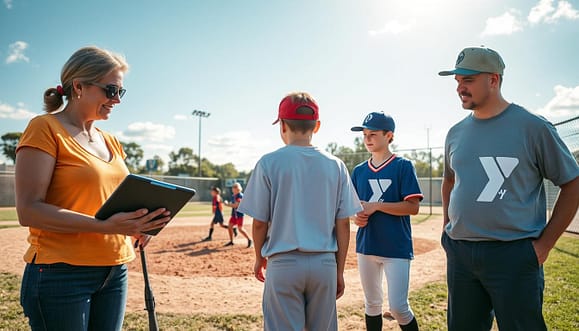
Parent expectations go beyond just being good on the sidelines. Fair play, respect, and healthy competition are key. It’s about participation, not just winning. Character is more important than trophies.
Here’s what the code of conduct requires:
- Respect officials’ decisions without public criticism or confrontation
- Support all players on your child’s team, not just your own kid
- Refrain from coaching during games unless you’re the designated coach
- Model positive language and avoid profanity or aggressive behavior
- Address concerns through proper channels, not parking lot venting sessions
Program communication mainly happens through apps like TeamSnap or SportsEngine. These apps handle schedules, rosters, and updates. You’ll get reminders, confirmations, and weather updates all in one place.
The apps solve the problem of coordinating 40 families across teams. Coaches post plans, admins send announcements, and parents arrange carpooling. It’s the digital system that keeps everything running smoothly.
Now, let’s talk about the rainout policy. Texas weather is extreme, and the YMCA has clear rules for cancellations. League coordinators make calls 2-3 hours before games. Notifications go out right away through the apps.
Makeup games are scheduled based on field availability. Games that affect standings or playoffs get priority. Some games might not be made up if they don’t affect standings.
| Communication Type | Platform Used | Typical Timing | Responsible Party |
|---|---|---|---|
| Weather cancellations | TeamSnap push notifications | 2-3 hours before game | League coordinator |
| Practice schedule changes | Team app + email | 24-48 hours advance notice | Head coach |
| Uniform distribution | Team app message | Week before season start | Team parent volunteer |
| Registration updates | Email from YMCA admin | Ongoing as needed | Program director |
The parent guide answers common questions every season. It covers what happens if your child misses practice, playing time, and how to address coaching concerns. These answers help prevent misunderstandings and keep the team together.
Does every parent read the guide carefully? Absolutely not. Should they? Definitely. Will there be confusion and complaints? Yes. But at least there’s a guide to refer to when disputes happen.
The main point is simple: YMCA youth baseball works best when parents support the team. You’re not just paying fees; you’re investing in a community. It requires teamwork, respect, and realistic expectations about what baseball should be.
Pricing scholarships sibling discounts fundraising options
Every spring, parents across Central Texas face a big question: can we afford another season of youth baseball? The answer lies in understanding the full economic landscape of YMCA programs.
Let’s look at the basics. The YMCA Wichita Falls pricing structure rewards members while staying open to non-members.
| Division Level | Member Rate | Non-Member Rate | Price Difference |
|---|---|---|---|
| T-Ball | $100 | $125 | $25 savings |
| Coach Pitch | $110 | $135 | $25 savings |
| Kid Pitch (3rd-Junior High) | $120 | $145 | $25 savings |
The $25 member discount adds up when registering multiple kids. The registration fees might seem okay compared to travel baseball. But for families on tight budgets, even $100 is a big deal.
The YMCA’s mission is to help. Scholarship programs aim to keep sports accessible for all.
But, you have to ask for help. These programs aren’t always easy to find.
Financial assistance requires showing need. You’ll need to provide income and expense details. It’s not meant to shame, but it does need effort and honesty.
Sibling discounts are another way to save. When you have kids in multiple sports, fees add up fast.
Most YMCA branches offer 10-15% off for second and later kids. This can save $10-20 per child. It’s not a lot, but it helps.
Early bird registration is the best deal. Sign up early to get the lowest rates. Waiting until later means paying more.
Registration has three phases. Early bird offers the best deals, regular keeps prices steady, and late adds extra fees. Planning ahead saves money.
Fundraising is another way to cover costs. Teams sell spirit wear, volunteer at concessions, or hold community events. This can help pay for registration fees.
This is great for families with flexible schedules. A few hours of volunteering can help offset costs. It also builds community ties.
Some parents like this better than paying cash. Others find it too much to handle.
Looking for other sports options? i9 Sports programs have different pricing. Each organization balances costs and accessibility goals differently.
The big question is: how do we fund quality youth sports while keeping them accessible? The YMCA does a better job than commercial leagues, but it’s not free.
Financial assistance, discounts, and fundraising are imperfect solutions. Programs need money for insurance, equipment, and more. But, these options help keep sports affordable.
Even with scholarship programs and discounts, some families can’t afford it. It’s not because the YMCA doesn’t care. It’s hard to balance costs and accessibility.
Understanding your options is key before registration deadlines. Ask about scholarships early. See if membership saves money. Look into fundraising if it suits your family better.
Youth baseball shouldn’t be hard to afford. A little planning can help. The programs are here to serve communities. You just need to know where to start and what to ask.
Heat and lightning policies Texas specific thresholds and hydration plan
In Central Texas, Mother Nature loves to show off with triple-digit heat indexes and lightning storms from May to September. The YMCA Central Texas baseball program takes weather seriously. They have strict safety protocols for every practice and game.
Young athletes face special challenges in the heat. Their bodies can’t handle it like adults do. Heat stress can hit them hard and fast.
Heat Index Thresholds and Activity Modifications
When it gets hot, the program has a plan. They use heat index readings to decide what to do. It’s all about keeping players safe, not just sticking to the schedule.
| Heat Index Range | Mandatory Actions | Activity Modifications |
|---|---|---|
| 90°F – 99°F | Hydration breaks every 20-30 minutes | Normal activity with monitoring |
| 100°F – 104°F | Hydration breaks every 15-20 minutes | Reduce high-intensity drills |
| 105°F – 109°F | Mandatory shade periods, shortened practice | Practice duration cut by 25-30% |
| 110°F and above | Outdoor activity cancelled | No exceptions—complete cancellation |
At 100°F, kids need water breaks every 15 to 20 minutes. Past 105°F, practices get shorter. And if it hits 110°F, games are cancelled.
Heat stroke is a serious risk in youth sports. It’s a decision made with safety in mind.
Hydration Requirements and Electrolyte Strategy
Kids are required to bring their own water bottles. Fields must have shade. Programs also offer electrolyte options to help with hydration.
Coaches learn how to spot dehydration signs. They enforce water breaks, even if kids say they’re okay.
Young athletes often underestimate their need for water. That’s why adult supervision is key.
Recognizing Heat Illness in Young Athletes
Coaches in the YMCA Central Texas baseball program get training on heat illness. It’s important to know the difference between tiredness and heat exhaustion.
Heat can turn dangerous fast, even for kids. Their bodies are not yet good at regulating temperature.
- Heat cramps: Muscle spasms in legs or abdomen, often the first warning sign
- Heat exhaustion: Heavy sweating, weakness, cold and clammy skin, nausea, fainting
- Heat stroke: Hot dry skin, rapid pulse, confusion, loss of consciousness—this is a medical emergency
- Behavioral changes: Unusual irritability, disorientation, or refusal to continue playing
Trained coaches pull players right away if they show symptoms. “Toughing it out” is not safe.
Lightning Safety and the 30-30 Rule
Lightning is another big weather challenge in Texas. The 30-30 rule is used everywhere for safety.
Here’s how it works:
- Count seconds between lightning flash and thunder
- If the count is 30 seconds or less, seek shelter immediately
- Wait 30 minutes after the last observed lightning before resuming activity
- No exceptions—thunder roars, everyone goes indoors
Fields with lightning detection systems offer better monitoring. But the basic rule is strict. Metal bats and open fields are dangerous when storms come.
Dugouts and bleachers aren’t safe. You need real buildings or enclosed vehicles with metal roofs.
Weather Cancellation and Makeup Game Policies
The weather cancellation policy is all about Texas’s unpredictable weather. Games get postponed, makeups are scheduled, and sometimes whole weekends are lost to storms.
It’s tough for everyone involved. Families have to adjust plans, coaches juggle schedules, and league coordinators work hard to fit in makeups.
But playing in bad weather isn’t okay. The schedule changes to keep everyone safe.
The program focuses on safety, fairness, and fun. When weather gets too bad, the schedule adjusts.
Practical Implementation for Parents and Players
For families, bring lots of water to every event. Not just one small bottle, but several large ones. Don’t forget sunscreen, hats, and cooling towels.
Get to events early so kids can adjust slowly. Start monitoring their hydration the day before games, not just during.
Use weather apps to track lightning strikes. Remember, coaches will always choose caution. That’s what good youth sports leadership is.
These weather policies are all about managing risks in youth sports. They help kids play safely, knowing the Texas climate. The rules are strict, measurable, and followed by all.
How to register checklist links calendar and contacts
The registration process starts online, moving away from the old clipboard days. You can find the YMCA of Central Texas website to start. Each division, from Pre-K T-Ball to Junior High Baseball, has its own link.
Early registration opens first, with better prices. Late registration runs from February 9-15. Spring season is from March 16 to May 22.
Parents need to have medical forms, emergency contacts, and uniform sizes ready. If you’re a member, you get a discount. Non-members pay more. Scholarships and sibling discounts need extra paperwork.
The coaches meeting is on February 4 at 7:00pm. It’s at the Dillard Early Learning & Youth Academy Cafeteria. It’s for those interested in coaching and getting background checks done.
For questions or team placement, email the sports director. Division coordinators will handle league details once teams are set. Planning ahead helps avoid waitlists and better team assignments.
Here’s what you need to do: Register, submit medical forms, update emergency contacts, order uniforms, and get equipment. Also, make sure you’re free for the three-month season. The system works well if you’re prepared.