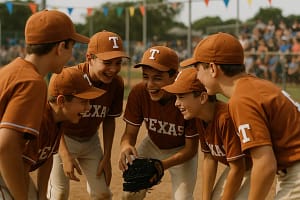
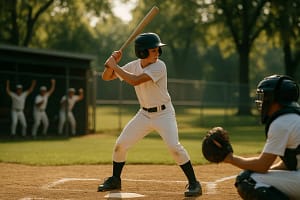
The road from a Houston-area high school field to Omaha is a long bus ride with a lot of quiet innings in between. It starts with summer heat, late cage work, parents folding chairs behind chain-link fences, and coaches trying to squeeze one more competitive rep out of a Tuesday practice.
In 2026, that road runs straight through the Men’s College World Series.
The official 2026 NCAA baseball bracket sends the final eight teams to Charles Schwab Field in Omaha, with the championship stage scheduled for June 12 through June 21 or 22. As these collegiate programs compete for the ultimate prize, they draw intense interest from fans back home—an enthusiasm mirrored by the growing activity across the Texas sports betting landscape as locals follow the championship odds. For the Houston area, the biggest story is not just which teams made it. It is how many local players are in uniform with a title still on the table.
Eleven former Houston-area high school baseball players are part of the 2026 College World Series field, spread across Texas, Alabama, and Oklahoma. Some are trusted bullpen arms. Some are rotation pieces. Some are redshirting freshmen getting a front-row seat to the sharpest baseball classroom in the country. One is sidelined by injury but still part of a championship roster.
For Texas youth coaches building their own summer lineups, this group is a reminder that youth baseball tournament planning is bigger than filling out a bracket. The best programs teach players how to handle travel, pressure, role changes, uneven playing time, and late-season demands. Omaha rewards that kind of baseball maturity.
Houston’s Omaha Lineup Starts On The Mound
The clearest Houston-area imprint on the 2026 College World Series is pitching.
That should make every local coach lean forward a little. Houston has always produced power bats and rangy athletes, but this Omaha group is heavy on arms who learned to compete in high-pressure baseball environments. Zane Adams is a weekend starter at Alabama. Luke Harrison gives Texas a left-handed option who can start or work in leverage relief. Oklahoma has leaned on Jason Bodin and Jackson Cleveland out of the bullpen. Texas has depth arms like Cody Howard and Hudson Hamilton ready for specific pockets of a game.
That kind of staff depth matters in Omaha. The College World Series is not a one-night showcase. It is a bracket grind that tests rotation order, bullpen trust, recovery habits, and whether a pitching staff can keep a season alive after one rough inning.
For youth players, the lesson is plain: the pitchers who survive the longest are usually not just throwers. They know how to accept roles. They can get warm fast. They can recover. They can throw strikes when the crowd gets loud. They understand that a two-inning relief appearance in June may matter as much as a complete game in March.
The 11 Houston-Area Players In Omaha
| Player | College Team | Houston-Area High School | 2026 Role |
|---|---|---|---|
| Zane Adams | Alabama | Porter | Junior left-handed starter and key rotation arm |
| Luke Harrison | Texas | Lutheran South Academy | Graduate left-hander used as starter and relief option |
| Jayden Duplantier | Texas | Summer Creek | Senior utility player with starts across the field |
| Cody Howard | Texas | The Woodlands | Senior right-handed pitching depth |
| Hudson Hamilton | Texas | Grand Oaks | Junior right-handed bullpen option |
| Jonah Williams | Texas | Galveston Ball | Sophomore outfielder sidelined after shoulder surgery |
| Jack McKernan | Texas | Ridge Point | Freshman left-hander redshirting in first year |
| Jack Paris | Texas | Kinkaid | Freshman right-hander redshirting in first year |
| Jaden Barfield | Oklahoma | Pearland | Sophomore left-handed pitcher |
| Jason Bodin | Oklahoma | Orangefield | Junior right-handed reliever and heavy bullpen user |
| Jackson Cleveland | Oklahoma | Deer Park | Senior right-handed reliever |
This table tells a bigger story than a list of hometowns. Texas has the largest Houston-area group, with seven players tied to local high school programs. Oklahoma brings three arms with Gulf Coast or Houston-area roots. Alabama has one of the most valuable individual local pieces in Adams, who has become a major part of the Crimson Tide’s run.
That is a full dugout’s worth of development stories. Different paths, different roles, same stage.
Texas Carries The Largest Local Group
Texas has the deepest Houston-area connection in this College World Series, and it stretches across position groups.
Jayden Duplantier, a Summer Creek product from Humble, gives the Longhorns a flexible senior who has seen time at left field, second base, and third base. That type of player is a coach’s insurance policy in tournament baseball. Injuries, matchups, defensive substitutions, and late-game pinch-hit spots can change a lineup fast. A player who can handle several jobs keeps the batting order from cracking under pressure.
Duplantier’s regional grand slam gives the story some extra juice. A utility player who can change a postseason game with one swing is the type of player young athletes should study. Versatility gets a player on the field. Production keeps him in the lineup.
Luke Harrison brings a different kind of value. The Lutheran South Academy graduate is no longer the young arm trying to prove he belongs. He has moved through college baseball, earned his degree, and is pursuing a master’s in sport management. On the field, Texas can use him as a starter or bring him out of the bullpen in a major spot.
That role demands a steady heartbeat. Starters often like rhythm. Relievers often like quick adrenaline. Harrison has to be ready for both. For youth pitchers, that is a graduate-level lesson in adaptability.
Cody Howard, from The Woodlands, gives Texas another experienced right-hander. His path includes Baylor before Texas, which makes him a good example of how college baseball careers rarely move in a straight line. Transfers, role changes, injury windows, command battles, and staff depth charts are all part of the deal.
Hudson Hamilton, from Grand Oaks, adds another local right-handed arm. His high school résumé included three no-hitters, but the college game asks a different question: can a pitcher find outs against advanced hitters in a smaller role? In Omaha, a bullpen arm may face only three hitters, but those three hitters can decide a season.
Jack McKernan and Jack Paris are redshirting freshmen, but their presence still matters. McKernan was a Ridge Point standout and District 21-6A MVP. Paris came out of Kinkaid after a dominant senior season that included an 8-0 record and 0.64 ERA. They are not chasing outs in Omaha this week, but they are seeing what championship habits look like from inside the dugout.
For a freshman pitcher, that can be priceless. Watch how older arms chart pitches. Watch how they recover after a bad outing. Watch how the dugout behaves after a strikeout, a walk, or a missed call. That is player development without a radar gun.
Jonah Williams, the Galveston Ball graduate and Texas two-sport athlete, is another important piece of the local story, even with his baseball season cut short by shoulder surgery. His freshman baseball numbers showed the bat was real, and his athletic profile made him one of the most interesting players in the state. His 2026 season became a reminder that talent and availability are separate battles.
That is a hard lesson, but every serious program has to teach it. Arm care, workload, football-baseball overlap, strength plans, and recovery windows are not background details. They are part of whether a player gets to keep playing in June.
Zane Adams Gives Alabama A Porter-Built Starter
Zane Adams may be the most direct Houston-area title factor in this group.
The Porter High School graduate is a 6-foot-4 left-hander who arrived at Alabama with a major prep reputation. As a junior in 2026, he has worked as one of the Crimson Tide’s main starting options, with an 8-4 record, 3.96 ERA, and 98 strikeouts across 88 2/3 innings entering Omaha coverage.
That is not a cameo. That is a starter carrying real innings into the biggest week of the season.
Adams’ Game 2 super regional performance against St. John’s gave Alabama exactly what tournament teams need from a starter: length, strikeouts, and enough run prevention to let the offense breathe. He struck out eight and allowed two runs in 6 1/3 innings as Alabama clinched its trip.
For Houston-area pitchers, Adams is a strong example of how left-handed projection, strike throwing, and composure can travel. Porter to Tuscaloosa to Omaha is a long climb, but his role shows that local high school arms can become national-stage starters without needing a fairy-tale script. They need innings, command, health, and the ability to answer the bell after scouting reports get tougher.
Oklahoma’s Houston-Area Arms Give The Sooners Late-Inning Options
Oklahoma’s Houston-area group is all about pitching depth.
Jason Bodin, from Orangefield, has become one of the Sooners’ most-used bullpen arms. His official Oklahoma bio lists him as a 6-foot-3 right-hander from Orange, Texas, with Texas A&M in his background. He attended Orangefield High School, where he struck out 74 over 40.1 innings as a senior.
By 2026, Bodin had grown into a regular relief piece for Oklahoma. He led the Sooners in relief appearances with 25 entering College World Series coverage, with a 5.45 ERA. That ERA may not look shiny on a recruiting graphic, but tournament baseball often asks a simpler question: does the staff trust him enough to keep handing him the ball?
Jackson Cleveland, from Deer Park, brings a winding college path into Omaha. His résumé includes North Central Texas College, Lamar, Miami, and Oklahoma. His Sooners bio lists him as a senior right-hander from Deer Park with previous relief work at Miami and Lamar, including seven saves and a 2.75 ERA during his 2023 Lamar season.
That path matters for young players who think the lineup card has to love them right away. Cleveland’s route was not a straight sprint. It was more like a long at-bat: foul off pitches, make adjustments, stay alive, find the barrel late. Now he is part of a College World Series bullpen.
Jaden Barfield, from Pearland, rounds out Oklahoma’s local trio. The sophomore left-hander had a stronger freshman season in 2025, finishing with a 3.57 ERA over 22.2 innings, three starts, and 18 appearances. His 2026 season has been harder, with a 9.35 ERA in 13 appearances entering Omaha coverage, but he still gave Oklahoma a scoreless inning during regional play against The Citadel.
That may be the most honest development story in the whole group. College baseball does not move upward every month. Some seasons test command, confidence, role clarity, and patience. Barfield’s continued presence on an Omaha roster is a reminder that programs still need players who can be ready after uneven stretches.
What This Means For Houston Youth Baseball
Houston’s 2026 Omaha group gives local coaches a full practice-board lesson.
| Development Theme | Local Example | Lesson For Youth Programs |
| Versatility | Jayden Duplantier | Teach players more than one position before high school ends |
| Left-Handed Pitching Value | Zane Adams and Luke Harrison | Develop command and pitchability, not just velocity |
| Bullpen Readiness | Jason Bodin and Jackson Cleveland | Train pitchers for short outings and inherited pressure |
| Long-Term Patience | Jack McKernan and Jack Paris | Redshirt years can still build championship habits |
| Health And Availability | Jonah Williams | Recovery plans matter as much as skill work |
The biggest takeaway for Houston-area youth teams is that player development has to leave room for more than stars.
Every coach loves the kid who hits third and throws 88. But Omaha rosters need utility players, redshirt freshmen, matchup relievers, injured players staying connected, transfer arms, and veterans who have already been through a few hard baseball years.
That is how real teams are built.
For 10U and 12U coaches, the lesson starts earlier than most people think. Let athletic players catch ground balls at several spots. Let pitchers learn relief routines, not just starting routines. Let bench players stay active in the game. Teach catchers how to lead. Teach outfielders how to communicate. Teach every player how to handle the day he is not in the starting lineup.
The Houston-area players in Omaha did not all get there the same way. That is the point.
The Local Standard Keeps Getting Higher
Texas youth baseball has no shortage of talent, but talent alone does not explain this 2026 College World Series group.
These players came from public schools, private schools, powerhouse programs, and smaller baseball pockets. Some were high-profile recruits. Some moved through transfers. Some are still waiting for their first major college moment. Their shared link is that Houston-area baseball gave them enough competition to prepare for the next dugout.
That matters for every coach running a summer workout in Katy, Pearland, Humble, Galveston, The Woodlands, Missouri City, or Deer Park. The next Omaha player may already be in a local cage, learning how to hit behind a runner, throw a first-pitch strike, or stay ready after sitting six innings.
The College World Series stage can feel far away from a Houston-area practice field. This year’s roster sheet says it is closer than it looks.
Omaha is not just a destination for these 11 players. It is a scoreboard for the region’s development pipeline.