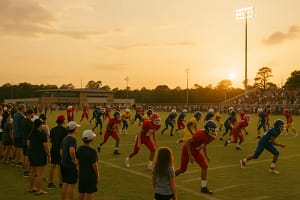
Welcome! Let’s talk about one of the most powerful tools you can have in your career: your own professional coaching network. Think of it as your personal “brain trust.” It’s a group of fellow experts you can call for advice, share struggles with, and celebrate wins.
In the competitive world of youth sports, being a connected mentor means you’re never starting from zero. You have a playbook written by collective experience. Building these connections within your community provides incredible value.
These relationships offer mentorship, guidance, and a strong support system. They turn isolated coaching into a collaborative and supportive journey.
We’ll guide you through how to build and nurture these vital professional relationships. It’s about creating a circle where everyone grows together. Let’s get started on this path to stronger, more connected leadership!
Importance of Coach-to-Coach Connections
Why go it alone when you can tap into a collective brain trust of experienced coaches who’ve faced the same challenges you have? Investing time in these relationships is one of the smartest moves you can make for your career and your team.
Think about it. We constantly preach teamwork to our players. The same principle applies to us on the sidelines. No coach is an island. Your network of peers is your most powerful, yet often underused, tool.
Connecting with other coaches isn’t about admitting you don’t know something. It’s about demonstrating the wisdom to seek out the best answers. This active participation in the baseball coach community turns isolated knowledge into shared success.
What do you get from these connections? Imagine a safe space where you can ask, “How did you handle a player’s sudden slump?” or “What drill fixed that throwing mechanic?” That’s the reality of a strong coach-to-coach network. It’s your direct line to authentic professional development coaching.
Take a lesson from successful coaches like Alan McDougal. He openly discusses learning from legends like Augie Garrido and Skip Bertman. His key insight? “Great leaders play follow the leader.” You don’t have to reinvent the wheel. Your peers have already tested countless strategies.
These relationships provide mentorship, guidance, and support that you simply can’t get from a book or a video. They become a living library of game plans and a support group for when the season gets tough.
More than that, your fellow coaches become your biggest cheerleaders. They celebrate your wins because they understand the effort behind them. This creates a positive cycle that lifts everyone’s program.
So, start seeing your coaching peers not as rivals, but as essential allies. Your collaboration is what wins seasons and builds lasting legacies for the players you both serve.
Texas Youth Baseball Coaching Associations
Imagine having a direct line to every serious coach in Texas—that’s the power of a coaching association membership. In Texas, youth baseball is a big deal. These organizations connect you to a community where support and knowledge flow freely.
Alan McDougal, the head coach at Colleyville Heritage High School, is a great example. His success comes from being part of these networks. Joining an association means you get allies who face the same challenges and celebrate the same victories.
These groups vary from statewide bodies to elite training consortiums. The Texas Baseball Ranch® is a famous example. It’s a hub for advanced skill development and coach collaboration. Being part of such a group expands your coaching network with purpose and direction.
The benefits are immediate and tangible. You get access to meetings where rule changes are clarified. You also get directories of fellow coaches committed to high standards. It’s like getting a trusted map of the local coaching landscape.
This isn’t just about socializing; it’s about professional growth. Associations provide a shared identity and legitimacy. They show parents, players, and other programs that you are engaged and serious. Your local coaching network becomes a source of trusted advice.
For new and established coaches alike, this formal connection is key. It turns isolated efforts into a collective force for improving the game. You move from working alone to being part of a team that elevates the entire region’s baseball quality.
Think of it as your professional home base. From this central point, every other connection—to clinics, mentors, and resources—becomes easier to make. Your association membership is the first, and most important, step in building a powerful, supportive coaching network that lasts for seasons to come.
So, if you’re coaching in Texas, your next move is clear. Find the association that aligns with your goals and join. The relationships you build there will form the backbone of your Baseball Coach Networking success, providing a foundation of shared knowledge and mutual support that makes every season better.
Regional Coaching Clinics & Conferences
Your next breakthrough as a coach might be waiting in the hallway conversation at a regional clinic. These events are the power centers for professional development coaching. They gather hundreds of dedicated coaches under one roof, creating a unique energy you can’t find online.
Think of a clinic as a gym for your coaching mind. You go there to train, learn new drills, and strengthen your strategic thinking. The schedule is packed with sessions from veteran coaches and specialists. You might hear someone like Coach McDougal break down his routines for the mental game, giving you actionable strategies you can use on Monday.
But the learning isn’t confined to the auditorium seats. The exhibit hall lets you get hands-on with the latest training equipment and technology. You can ask direct questions and see what tools could benefit your team.
The formal presentations are valuable, yet the real magic often happens informally. It sparks during coffee breaks, in lunch lines, or while walking between sessions. This is where you connect with the baseball coach community on a personal level.
Striking up a chat with the coach from a rival league about their infield drill can solve a problem you’ve been having for weeks. These spontaneous exchanges turn strangers into trusted contacts and allies. You build a network of peers who understand your specific challenges.
Attending these events sends a clear signal. It shows you are committed to growth and being a lifelong learner. Your presence tells the entire baseball coach community that you take your role seriously. This reputation opens doors and builds credibility.
Here’s a quick look at what you gain from a typical regional event:
- Skill Upgrades: Learn cutting-edge techniques for hitting, pitching, and player psychology.
- Resource Discovery: Find new drills, tech tools, and instructional materials.
- Direct Access: Ask questions face-to-face with experts you normally only read about.
- Network Expansion: Forge relationships that lead to scrimmages, shared practices, and mentorship.
Ultimately, investing a weekend in a conference is an investment in your coaching future. It condenses months of solitary research into a few days of immersive, collaborative professional development coaching. You return to your team re-energized, full of new ideas, and with a phone full of new contacts.
Start by looking for events hosted by your state association or large nearby clubs. Your local baseball coach community will often share the best ones. Take the step, register, and walk in ready to both learn and share. The entire experience is designed to make you better.
Mentorship Programs for New Coaches
Starting as a new coach can be overwhelming. It’s not just about knowing the rules. Managing a team, planning practices, and motivating players is a big challenge. A mentorship program in your coaching network is your best ally.
Imagine having a guide for your first big hike. A mentor is like that, giving you advice, feedback, and encouragement. They help you learn to create your own strategies, not just follow someone else’s.
Industry leaders say these mentorships are key. They offer the support and guidance that courses can’t. Your mentor listens to your challenges and offers solutions.
Mentorship is vital in many areas. It helps you handle tough talks with parents and design engaging practices. It also teaches you how to motivate players and connect with them.
Mentorship is a two-way street. It’s rewarding for both the new and experienced coaches. It helps the veteran coach share their knowledge and sparks new ideas. This sharing is what makes a Baseball Coach Networking community thrive.
| Area of Guidance | Benefits for the New Coach | Benefits for the Mentor Coach |
|---|---|---|
| Practice Planning | Gains time-tested drills and structure; learns to manage time efficiently. | Re-evaluates and refines their own core methodologies. |
| Parent Communication | Develops scripts and strategies for clear, positive interactions. | Enhances leadership and conflict-resolution skills. |
| Player Development | Learns to identify individual strengths and tailor coaching approaches. | Reignites passion for the fundamentals of the sport. |
| Game Strategy | Understands in-game decision-making and player positioning. | Gains fresh perspective by explaining classic tactics. |
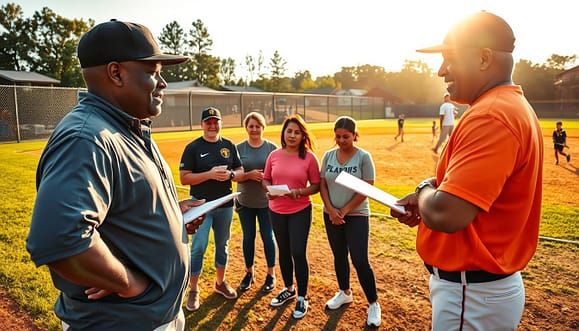
Being part of a mentorship program does more than solve immediate problems. It helps your coaching network grow in the long run. New coaches learn faster, and experienced ones find new purpose. This teamwork improves everyone’s game, making Baseball Coach Networking a key driver of growth.
Online Communities & Social Media Groups
Social media is more than just sharing photos. It’s a key tool for learning and connecting with other coaches. Your baseball coach community now spans the globe, available 24/7.
Ever faced a problem late at night? Maybe a drill isn’t working or a player’s swing has a new issue. Instead of waiting, you can ask online. You might get several solutions from experienced coaches by morning. This is the power of on-demand professional development coaching.
Different platforms meet different needs. Facebook Groups are great for ongoing discussions and sharing videos. Twitter (now X) is ideal for quick tips and live game commentary. Coaches like Mike McDougal use Twitter to share ideas and hold players accountable.
Being an active member is key. Share your successes and knowledge. This strengthens the network and boosts your reputation as a coach.
Not sure where to start? The table below lists popular digital spaces for coaches. It helps you find the right baseball coach community for you.
| Platform | Primary Use | Key Benefit | Best For |
|---|---|---|---|
| Facebook Groups | Long-form discussions, resource sharing, event planning | Built-in community features and file sharing | Local Texas league coordination and multi-media posts |
| Twitter / X | Real-time conversation, quick tips, networking | Direct access to thought leaders and fast information flow | Following game updates, joining live coaching chats |
| Specialized Forums | Deep-dive technical analysis and archived knowledge | Topic-focused threads that remain searchable for years | Solving complex mechanical issues and studying theory |
| LinkedIn Groups | Professional networking, career development, article sharing | Connects coaching to broader career and education paths | Building a professional brand and finding mentorship |
| Instagram & TikTok | Visual drill demos, short-form motivational content | High engagement and visually inspiring clip library | Finding new drill ideas and connecting with a younger audience |
Remember, these groups are what you make them. Your active participation turns them into trusted sources for professional development coaching. Start by joining a few that fit your style. Introduce yourself, ask a question, and share something useful. Soon, you’ll have a digital dugout full of colleagues ready to help you win.
Sharing Resources & Best Practices
The most valuable thing in your Baseball Coach Networking group is the shared knowledge. A strong network is more than just contacts. It’s a place where everyone can learn from each other.
Imagine moving from keeping secrets to sharing tools. This change is key. When you keep a great drill to yourself, it only helps one team. But when you share it, it helps many.
Think about using top player development methods. Ron Wolforth of the Texas Baseball Ranch® suggests a method: Assess, Categorize, Customize, Prioritize. Sharing this approach makes your coaching network more strategic.
Sharing routines is also important. Coach McDougal shares his “DUDES” values and daily habits. These aren’t just tips; they’re proven strategies you can use.
Being open with your resources builds trust. When you share, others are more likely to do the same. This turns exchanging cards into solving problems together.
This cycle is what makes it special. It turns a group of people into a smart, supportive Baseball Coach Networking community. Everyone learns more, and players get better because of it.
Collaborative Training Opportunities
Why stick to your own drills when you can learn from others? Joining your local baseball coach community can help. It’s a chance to grow together, not just in skills but also as a team.
For your players, team practices or camps are exciting. They get to try new things and face different challenges. This helps them grow both physically and mentally.
For you, the coach, it’s a chance to learn from others. Watching another coach work is like getting a lesson in professional development. You see how they manage drills and correct players. It’s a chance to learn new ways to improve your team.
So, what does this look like in action? It can take many forms:
- Joint Practice Sessions: Work with a nearby team for a game or skill day.
- Co-Hosted Specialty Camps: Run a clinic together on pitching, hitting, or defense.
- Shared Facility Access: Use resources like indoor cages or turf fields you can’t afford alone.
Access to better facilities is a big reason to collaborate. It brings elite-level training to your team. The goal is to learn from others and adapt what works for your team.
This cycle of learning and adapting is key to growth. By sharing your space, you help your community and become a better coach. It’s all about continuous learning and improvement.
Cross-League Partnerships
The most impactful coaching network goes beyond your league. It’s about seeing the whole baseball world as a place for teamwork.
Cross-league partnerships are about working together. They’re agreements between different baseball groups. Their goal is to help every coach and player get better.
These partnerships can take many forms. For example, teams can share tournament schedules. This means players face different, tough teams all season.
There are also ways for players to move up or try new things. And, leagues can agree on safety rules like concussion management. This keeps kids safe no matter where they play.
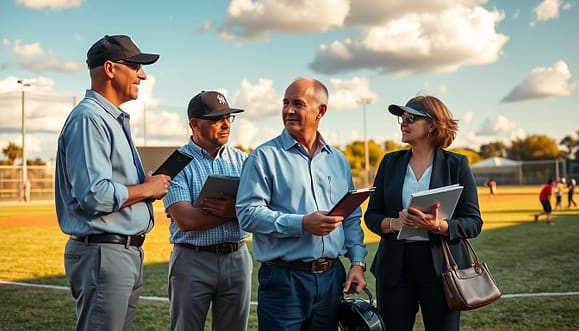
This approach breaks down barriers between leagues. Instead of seeing other towns as rivals, they become friends. This is powerful because it pools resources and promotes the sport together.
Building these bridges is advanced Baseball Coach Networking. It goes beyond small talks to real teamwork. Success needs open communication, a willingness to compromise, and a shared vision for baseball in your area.
| Aspect | Isolated League | Partnered League | Key Benefit for Coaches |
|---|---|---|---|
| Player Competition | Limited to internal teams; repetitive matchups. | Access to diverse teams from multiple leagues; fosters adaptability. | Better gauges team/player development against varied styles. |
| Resource Sharing | Relies solely on internal budget and volunteer pool. | Shared access to facilities, equipment grants, and corporate sponsors. | Reduces individual burden and unlocks new funding opportunities. |
| Developmental Pathway | Path ends at league’s top age group; unclear next steps. | Clear referral system to partner leagues for advanced play. | Provides a tangible roadmap for player advancement you can champion. |
| Operational Efficiency | Creates all policies and schedules independently. | Co-creates common rules, safety standards, and event calendars. | Saves administrative time and creates consistency for families. |
By investing in these regional connections, you do more than just schedule games. You help build a stronger, more sustainable baseball community. Every coach gains a richer coaching network, and every player gets a better, clearer path to follow. That’s the true home run of collaborative Baseball Coach Networking.
Building Referee Relationships
Connecting with coaches is important, but don’t forget about the game’s officials. Umpires and referees are key partners in the sport. Yet, we often overlook them in our networking.
Seeing the game from their perspective is a game-changer. Alan McDougal, a coach who also officiates, shares a valuable insight. He says, “Being a referee has made me a better coach. It helps me communicate clearly and work better with umpires.”
This experience teaches you to handle disputes calmly and clearly. It makes you a more effective leader. Your players will learn to behave respectfully, too.
- Pre-Game Introduction: Say hello and introduce yourself before the game. This sets a collaborative tone.
- Respectful In-Game Dialogue: Keep your talks brief and professional. Ask for clarifications, not accusations. Stay calm.
- Post-Game Acknowledgment: A simple “thank you” after the game strengthens your relationship. It shows you value their role.
This approach does more than just smooth over calls. It creates a positive environment for all. Treating officials as respected colleagues boosts your reputation in the baseball coach community.
You’ll be seen as a wise coach who understands the whole game. This reputation is an asset for your team and your coaching career.
Creating Support Systems
Networking for baseball coaches is more than just sharing drills and strategies. It’s about finding emotional support. Coaching, often a solo job, can be tough. You make tough decisions, face upset parents, and take the blame for losses.
A strong support system within your coaching network is key. It’s your secret weapon. This group of trusted coach-friends offers support when you need it most.
Think of it like a team. The best teams have players who support each other. Coaches need the same camaraderie. Your support system is a small group of coach-friends you can count on.
Building this system is more than just talking shop. It’s about forming real friendships. You should regularly check in, celebrate their wins, and listen without judgment. When you improve communication with players, remember to do the same with other coaches.
Here’s how to create your coaching support circle:
- Start Small: Find 2-3 coaches you connect with.
- Be Vulnerable: Share your challenges first. This builds trust.
- Show Up for Them: Attend their games and send supportive messages.
- Keep it Confidential: What’s shared in your circle stays there. This keeps the conversation real.
This connection turns a basic coaching network into a lifeline. It makes you feel supported, not alone. This system helps you stay passionate and avoid burnout.
Remember, proactive communication is key between coaches too. Building a supportive culture among yourselves creates a positive team environment. For more, check out how proactive communication in youth sports helps development. Your Baseball Coach Networking for support means you’re never coaching alone.
Networking Events & Meetups
Networking isn’t just for big conferences; the baseball coach community thrives in casual meetups. These events are key for your professional development coaching journey. They’re where you make real friends and share ideas freely.
Imagine a “coaches’ coffee” at a local diner on a Saturday. Or a preseason rules review at a sports bar. And don’t forget the post-tournament burger night. These events are great because they’re relaxed and don’t follow a strict plan.
These meetups let conversations flow easily. You might talk about bunt defenses and then share vacation plans. This is how you build strong professional bonds. A casual chat could lead to a new partnership or a shared facility next season.
Many coaching partnerships and opportunities come from these relaxed settings. They’re a vital part of professional development coaching.
Being active in these meetups shows you’re engaged and friendly. Showing up regularly makes you a trusted face. People remember the coach who listens and shares openly.
| Aspect | Formal Clinic Networking | Informal Meetup Networking |
|---|---|---|
| Environment | Structured, scheduled, lecture-based | Relaxed, spontaneous, conversation-based |
| Primary Goal | Knowledge acquisition, certification | Relationship building, trust establishment |
| Conversation Flow | Topic-specific, Q&A sessions | Free-flowing, mixes professional & personal |
| Outcome Focus | Immediate skill application | Long-term collaborative |
| Best For | Learning new techniques & systems | Deepening connections within the baseball coach community |
So, make sure to attend these informal gatherings. Even better, organize one yourself. A good networking strategy mixes formal learning with the real connections of meetups. This balanced approach fuels your growth and embeds you in your local professional development coaching ecosystem.
Maintaining Professional Connections
Building your coaching network is a great first step. Keeping it strong is the real work. Think of your connections as a garden. Without regular care, even the best plants will fade.
Maintenance does not need big gestures. Send a quick text when a fellow coach wins a big game. Share a useful article, like one from Coach Wolforth on training methods. Check in during the quiet off-season. These small acts show genuine interest.
Your efforts build bonds that last. Many Texas youth baseball coaches find friendships formed on the diamond endure for a lifetime. A single email, like the one from McDougal to mental performance coach Brian Cain, can grow into a years-long partnership.
Consistency is your best tool. By regularly nurturing your Baseball Coach Networking, you keep this living resource vibrant. A strong coaching network supports you through every season, much like the lessons found in classic baseball literature, which provide timeless guidance and insight for coaches and players alike. It also lets you lift up others in your baseball community.