Let’s clear up the sports jargon. An individualized player development plan isn’t just a fancy term. It’s not something to impress soccer moms at weekend games.
It’s like the difference between Soviet-era farming and a top chef making your meal. Both feed you, but only one knows what you like.
Team plans are like old communist plans – everyone does the same drills. A PDP is your athlete’s personal plan.
This plan focuses on growth and results. It’s about goal setting that would impress Ayn Rand. The Prospect Development Pipeline takes this seriously.
Their winter camps and PDP League focus on your athlete’s strengths. They don’t just look at what’s common in the team.
This isn’t about making many the same way. It’s about making each athlete special in sports development.
Intake testing for hitters, pitchers, fielders
Think of athlete profiling as assembling IKEA furniture without the leftover screws and existential dread. We’re building a blueprint of your player’s capabilities that actually makes sense.
For hitters, we measure exit velocity with radar guns that would make a state trooper jealous. These numbers tell us more about batting than any coach’s gut feeling.
Pitchers get the DJ treatment – we analyze spin rates like we’re remixing their favorite track. The data shows us which pitches have the most promise and which need more work.
Fielders undergo reaction tests that would challenge a caffeine-fueled air traffic controller. We’re measuring how quickly they process the game – because baseball happens faster than a TikTok trend goes viral.
Our KPIs for youth baseball include cognitive assessments that measure decision-making speed. It’s like seeing how their brain handles the pressure of a full count with bases loaded.
We track everything in dashboards cleaner than a Marie Kondo-organized closet. Progress becomes visible immediately – no waiting for the end-of-season trophy to know if we’re winning.
This isn’t just testing. It’s creating a performance fingerprint as unique as your athlete’s Spotify Wrapped. The data becomes our roadmap for everything that follows.
Without these KPIs for youth baseball, we’re just guessing. And guessing belongs in mystery novels, not player development programs.
Our athlete profiling system mirrors professional assessments without the professional price tag. We’re giving youth players big-league insights on a little-league budget.
Prioritization: pick 1–2 constraints per athlete
Ever seen a kid try to fix everything at once? They’ll change their grip, stance, timing, and follow-through all at once. Suddenly, they can’t hit a beach ball. This is what happens when we give too many corrections at once.
Think of it as athletic triage. We focus on the big issues, not ignoring the small ones. It’s about choosing the right ideas to make a real difference.
Data guides us here. We use intake testing to find the 1-2 constraints that need fixing first. Maybe it’s hip rotation for a hitter or stride length for a pitcher. By focusing on these, we can really help their development.
Workload management is key. Overtrained athletes are like plants drowning in water. We watch their readiness, fatigue, and recovery to make sure we’re pushing them right.
This changes how we think about practice periodization. We build sessions around specific constraints, not random drills. This leads to faster improvement with less effort. It’s like a chef who knows adding too many ingredients confuses the dish.
| Priority Level | Constraint Type | Weekly Focus Time | Expected Impact |
|---|---|---|---|
| Primary (Tier 1) | Major mechanical flaw | 60-70% of session time | Game-changing improvement |
| Secondary (Tier 2) | Supporting skill gap | 20-30% of session time | Noticeable enhancement |
| Tertiary (Tier 3) | Minor adjustments | 5-10% of session time | Incremental gains |
This strategic approach to workload management makes us productive, not just busy. The table shows how we spend time based on what’s most important.
Effective practice periodization means focusing on one thing at a time. This way, we see faster results and keep athletes interested in their development.
Remember, personalized player development uses data to find what’s most important. Then, we build the whole training week around those 1-2 constraints. It’s the difference between random improvement and real change.
Weekly microcycle design with constraints-led sessions
Welcome to a place where we turn limits into wins. Your weekly schedule is like a story, with Monday setting the scene, Wednesday adding tension, and Friday reaching the peak. It’s not just random drills; it’s practice periodization with a plan.
Constraints-led sessions are like creative boundaries. Tell a painter to only use blue, and you get something like Picasso’s Blue Period. Tell a hitter they can’t stride forward, and they find new ways to hit. These limits spark creativity, not hold it back.
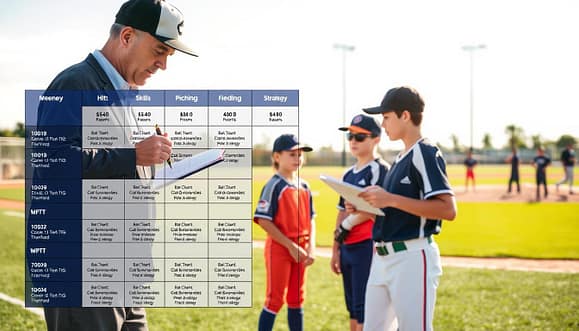
Our three-day microcycle structure packs in focused growth. Each day builds up to game-ready skills, all while keeping mental and physical load in check. It’s like enjoying each episode of a show, not just binge-watching.
Workload management is key to avoiding burnout. We measure effort, not just how many times you swing or pitch. The goal is to challenge you enough to grow, without pushing too hard. It’s finding that perfect balance, like the perfect espresso.
This method combines standard plans with personal touches. Every coach uses the same framework, but each athlete’s challenges are unique. This way, everyone gets the right amount of challenge, tailored just for them.
The magic happens when practice periodization meets constraints-led design. Monday starts with simple tasks. Wednesday adds complexity. Friday puts it all into game-speed practice.
This careful planning ensures athletes are at their best when it matters most. It’s not just about practice; it’s about building skills with purpose. Players learn not just how to do drills, but why they’re important.
It’s like choreographing your own improvement story. Each week is a mini-season, with its own story arc. The limits you set become the characters in your growth journey.
Integrate strength, speed, and skill work
Forget departmental silos – integrated training is where athletic alchemy happens. We’re not building bodybuilders who happen to play baseball; we’re crafting complete athletes whose strength actually translates to the field.
Your Monday-Thursday 6:00-8:00 PM sessions become symphonies of development. Strength work flows into speed drills that immediately connect to skill application. Think medicine ball throws followed by sprint mechanics that translate to stealing bases.
The magic happens when your athlete profiling data dictates how these elements combine. That kid with explosive hip rotation but slow first-step acceleration? His squat jumps immediately transition into reaction drills off the mound.
We measure what matters: not just how much weight they lift, but how that strength converts to bat speed or pitching velocity. Not just 40-yard dash times, but how quickly they get from first to third on a double.
Your KPIs for youth baseball become the connective tissue between disciplines. That baseline exit velocity measurement from initial testing? It now informs both their weight room loads and their rotational medicine ball work.
This integrated approach turns good athletes into great ones faster than you can say “Marvel crossover event.” The Renaissance man concept applied to athletics – players who can hit, field, and run with equal prowess.
Quantified measurements keep us honest. We’re not just “improving strength” – we’re adding 8 mph to exit velocity through targeted lower body work. Not just “getting faster” – we’re shaving 0.3 seconds off home-to-first times.
The result? Athletes who don’t just train hard but train smart. Players whose development across all domains actually makes them better baseball players, not just better exercisers.
Simple Tracking Dashboards (Sheets/Notion)
Most sports tracking systems are too complicated. We’re making something simple, even your tech-challenged uncle can use. It’s all about easy progress tracking.
Think of these dashboards as your athlete’s personal Wikipedia page. It’s always updated and shows their progress clearly. Your individualized player development plan becomes a real, living document.
Why is this important? Goal setting needs tracking to work. Without it, you’re just guessing. With dashboards, you know exactly where you stand.
Good tracking is different from just showing a lot of data:
- Mobile-friendly access for use on the field
- Color-coded progress bars that are easy to understand
- Automatic calculations that save you time
- Shareable links for parents who want to see the numbers
Tools like CoachMePlus offer feedback on strength, speed, and endurance. But you don’t need expensive software. Google Sheets and Notion can do magic with the right formulas.
These systems are addictive. Seeing your progress turn from red to green is motivating. It’s like watching your Netflix queue get smaller.
| Metric Category | Tracking Method | Update Frequency | Visualization |
|---|---|---|---|
| Strength Gains | Weight/Rep Progressions | Weekly | Progress Bars |
| Speed Metrics | Timed Drills | Bi-weekly | Line Graphs |
| Skill Mastery | Coach Ratings (1-10) | Monthly | Radar Charts |
| Overall Progress | Composite Score | Quarterly | Dashboard Summary |
The table shows how simple tracking can be. We track things regularly, but not too often. That way, tracking stays manageable.
Your individualized player development plan should be easy to use. Create something simple and visible. It should be checked often.
The best tracking system is simple and used often. It should update quickly and show clear results. That’s how you make goal setting real. That’s how you turn dreams into achievements. That’s how you create a individualized player development plan that truly works.
Communicating goals with parents and athletes
The game of telephone in sports is a real challenge. Coaches tell athletes to work on bat speed. Then, athletes tell parents they need to swing harder. Parents email coaches, worried their child isn’t playing, even though they swing hard.
We’re working on a shared understanding, like diplomats. We’re focusing on exit velocity and recovery. It’s not about sending more emails. It’s about making sure everyone knows what’s next.
Effective goal setting turns vague dreams into clear goals. Instead of “get better at hitting,” we aim for a 45% hard-hit rate by mid-season. This makes conversations clear and focused.
Managing workload becomes open and clear. When an athlete needs rest, it’s not punishment. It’s like pulling a pitcher after 85 pitches to protect their arm. This turns arguments into team efforts.
Platforms like CoachMePlus help everyone be on the same page. They share progress, plans, and data. It’s like a dashboard for sports, tracking launch angles and sprint times.
When parents become informed partners, not just spectators, things change. They see the progress and goals clearly. This turns disagreements into teamwork, working towards the same goals.
This approach does more than improve sports skills. It builds strong relationships that last long after the season. When everyone works together, everyone wins, no matter the score.
Progress reviews and advancement criteria
Most progress reviews are as exciting as watching paint dry. But what if we could make them exciting for athletes? Something more thrilling than a political debate and clear as a reality show vote?
Our secret is using KPIs for youth baseball as our unbiased judge. No more mood swings from coaches or lobbying from parents. Decisions are based on data that doesn’t favor anyone.
Your player development plan is like a report card. It shows what’s been done and what’s left. These reviews are for guidance, not judgment. They help make changes based on real data, not guesses.
We track three important areas that any data lover would love:
- Readiness metrics: Is the athlete ready or tired?
- Performance benchmarks: Are we meeting our KPIs for youth baseball?
- Recovery patterns: How fast do they recover?
This method is so clear that athletes can check their own progress. It’s like they own their own development plan. They’re not waiting for feedback – they’re already checking their own data.
Our criteria are like GPS, not handwritten directions. We measure everything – from performance to recovery. This gives us a complete picture of progress.
The outcome? A player development plan that really works. Not just on paper or in theory. But in real, undeniable progress that parents can see.
Now, progress reviews are the highlight of the month. Not for trophies, but for real paths to success.
In-season vs off-season adaptations
Training during competition season is like trying to fix a plane while it’s flying. You have limited time, tired athletes, and a lot of pressure. Off-season training, on the other hand, gives you all the time and tools you need.
Our summer data shows athletes are tired from busy schedules. Their performance shows they’re exhausted, not at their best. But in winter, when things slow down, we see their true abilities.
In-season workload management is all about damage control. It’s like air traffic control during holidays – we manage movements carefully to avoid problems. We focus on keeping things stable and recovering from games and travel.
Off-season is when we really build up. This is where practice periodization really shows its worth. We plan and build carefully, without the rush of games.
Think of marathon running versus marathon training. Running is involved in both, but only training makes you better. The difference between in-season and off-season isn’t just about how much you do. It’s about why you do it.
Our strategy is so detailed, it would impress fashion designers. In-season, we focus on survival and making small adjustments. Off-season, we build and develop skills. The data shows athletes need both to reach their best.
Key seasonal differences include:
- Practice intensity and frequency adjustments
- Recovery protocol variations
- Skill development versus skill maintenance focus
- Testing and assessment timing
The smart workload management knows you can’t build during demolition. You reinforce and maintain. Then, when it’s time to build, that’s when the magic happens.
Staffing and logistics with limited resources
Running a youth sports program on a tight budget is tough. It’s like trying to win the Tour de France on a unicycle. You have big dreams but only a small budget. But, this challenge can spark creativity.
Athlete profiling is your key to success. Instead of spreading coaches thin, focus on where they can make the biggest impact. It’s like investing in the athletes who will grow the most.
- Identify priority development areas through initial assessments
- Match coach specialties to athlete needs (no square pegs in round holes)
- Create flexible scheduling that maximizes coach-athlete contact time
Workload management is key for coaches too. Too many coaches burn out trying to do everything. The answer is to delegate and use technology wisely.
Mobile tools help coaches manage teams without losing their minds. They can update drills and communicate with parents on their phones. It’s like having a virtual assistant.
Here’s how we make the most of our staff:
- Cross-train coaches on multiple positions
- Use senior athletes as peer mentors (free development helpers!)
- Cluster sessions by skill level, not age
- Rotate coaching assignments to avoid burnout
This approach saves resources and boosts development. Athletes get focused coaching, and coaches stay energized. It’s a win-win.
Great programs aren’t about having lots of resources. They’re about using what you have wisely. Now, let’s make some magic happen.
Example PDPs by age and position
Ever wonder why a 12-year-old pitcher’s plan is different from a 16-year-old catcher’s? They’re different athletes with different needs. Let’s explore what really works.
For 11-13 year olds, we focus on building the basics. They get a mix of challenge and support. This age group learns fundamental movements and basic throwing skills.
At 13U/14U, things get more serious. Specialization starts, but we keep it balanced. Pitchers learn advanced sequences, while position players work on defensive smarts. The individualized player development plan includes sport-specific strength and tactical training.
By 16U/17U, athletes are almost at college level. Their practice periodization is intense. They work on advanced metrics, position-specific drills, and mental training. Training gets harder, but recovery is just as key.
Position matters a lot, too. Catchers focus on hip mobility and throwing speed. Pitchers work on arm care and sequencing. Outfielders improve their quickness and route efficiency.
| Age Group | Position Focus | Weekly Hours | Key Constraints |
|---|---|---|---|
| 11-13 | Fundamental Skills | 6-8 hours | Basic movement patterns, throwing mechanics |
| 13U/14U | Skill Specialization | 8-12 hours | Position-specific drills, tactical awareness |
| 16U/17U | High Performance | 12-16 hours | Advanced metrics, mental performance |
Success comes when age and position match. A 14-year-old pitcher might work on long toss and learning a changeup. A same-age shortstop focuses on double-play turns and improving their bat path.
Elite development isn’t about magic formulas. It’s about careful, individualized player development plan execution. It respects age and position. The right plan works when followed correctly.
Templates and checklists
Think of templates as Ikea instructions for building athletic success. They give you all the pieces and the exact steps to follow. Our performance plans turn abstract ideas into clear, actionable steps.
Setting goals becomes something you can see and track. It’s not just about talking about getting better. It’s about actually measuring progress through specific plans that fit each athlete’s path.
Managing workload becomes a science, not a guess. These templates help everyone – coaches, athletes, and parents – see the same plan. It’s all about clear communication.
These systems make complex tasks easier, not harder. They’re not strict rules but flexible guides that help coaches focus on coaching. Custom plans keep things consistent while celebrating each athlete’s unique journey.
Good templates make it easy to start, not just dream about. They’re the key to success, like having all the screws and instructions for building furniture.