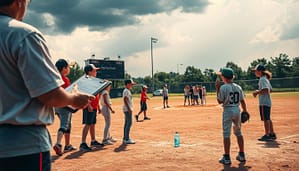
The Summer Slam Tournament in Decatur gives Texas baseball families a useful July checkpoint: real games, age-group competition, and a chance to see how 11U and 13U players respond outside their normal practice routine. The official event page lists the Decatur, Texas event for July 11-12, 2026, at Legacy Park, with National Championship Sports as the organizer and Ranch Baseball connected to the event presentation NCS event details.
Summer Slam Tournament Development Value
For youth players, tournament baseball is not just about the bracket. It is a practical test of skill, attention, pace, and emotional control. A player can look polished in a Tuesday cage session, then speed up in the box when a pitcher works quickly. A young infielder can field clean ground balls in practice, then rush a throw after a loud dugout and a runner moving hard down the line. That is why a local tournament setting can be valuable for player growth.
The listed 11U and 13U divisions give coaches two very different development windows. At 11U, many players are still building basic timing, throwing accuracy, base-running awareness, and confidence against pitchers who are learning to change speeds. At 13U, the game often starts to feel faster. Players are asked to handle bigger fields, stronger arms, quicker defensive decisions, and more defined team roles. Those changes make every inning useful if coaches treat the weekend as a learning lab rather than only a win-loss event.
Summer Slam Tournament Reps For 11U And 13U
The age bands matter because the same drill does not always solve the same problem. An 11U hitter may need a simple plan: see the ball up, stay balanced, and swing at strikes. A 13U hitter may need to track pitch patterns, protect with two strikes, and adjust after seeing a pitcher once. Coaches can use the tournament to write down what each player shows under game pressure. Those notes help shape the next two weeks of practice.
For many Texas families, the Summer Slam Tournament can also show how a player handles travel-day routines. Did he eat enough before the first game? Did he stay loose between games? Did he support teammates while sitting? These are not small details. They are part of becoming a steady ballplayer.
Tournament Structure Coaches Can Use
The event information lists game time limits of 1 hour and 30 minutes for 9U through 14U games, and the posted entry fees are $400 for 9U-12U teams and $425 for 13/14U teams official tournament listing. Those details help coaches plan the weekend in a way that supports development. A 90-minute clock can reward teams that are ready between innings, throw strikes, catch routine balls, and run the bases with purpose.
Time-limited games can also expose a team’s practice habits. If pitchers walk too many hitters, there may not be enough innings for the lineup to get repeated looks. If catchers struggle to block or return throws cleanly, the pace can slow. If outfielders are not aligned before each pitch, one missed angle can cost extra bases and shorten the chance for a comeback. None of that means a player failed. It means the game gave the coaching staff clear teaching points.
Coaching Notes That Carry Past The Weekend
A good coach can leave Decatur with more than a scorebook. Each player should have one or two specific takeaways. For example, a pitcher might need to land more consistently toward the plate. A catcher may need a better target setup before receiving. A middle infielder may need to communicate earlier on steals and cutoffs. A hitter may need to start his load sooner against quicker pitching.
Families can support this by asking calm questions after the game. “What did you learn?” works better than “Why did you swing at that?” The goal is to help the player connect effort, preparation, and adjustment. For more practice ideas around hot-weather events and game-day learning, Texas families can use this local piece on summer tournament skills.
Decatur Training Support Between Games
Decatur also has a useful training angle. Club OODAZU lists indoor batting cages and a turf field in Decatur, which can support year-round practice and controlled skill work away from game pressure Club OODAZU batting cages. For a youth team, that kind of setting can be helpful before or after a tournament weekend, especially when coaches want to work on swing decisions, defensive footwork, or arm-care routines without rushing through a full team practice.
Indoor reps do not replace live competition, but they can make tournament lessons stick. If a 13U hitter is late on fastballs all weekend, cage work can isolate timing. If an 11U player pulls off the ball, a coach can slow the drill down and rebuild balance. If a team struggles with ground-ball footwork, turf space can give coaches a controlled place to repeat first step, fielding position, and throw setup.
Practice Plans After The Summer Slam Tournament
After the Summer Slam Tournament, the best practice plan should be short, clear, and tied to what actually happened in games. Coaches should avoid loading players with ten corrections at once. Pick the habits that appeared most often. Then build the week around those habits.
- Pitchers: first-pitch strikes, repeatable direction, controlled tempo, and recovery between outings.
- Hitters: strike-zone choices, early timing, two-strike approach, and staying balanced through contact.
- Defenders: pre-pitch movement, clean glove presentation, cutoff awareness, and communication.
- Base runners: lead discipline, dirt-ball reads, rounding bases, and knowing the game situation.
Players grow faster when tournament feedback turns into practice design. For families who want a longer-term plan beyond one weekend, this related resource on personalized youth baseball training connects well with the same idea: each player needs a clear next step.
Family Planning For Legacy Park Weekends

Legacy Park being listed as the game site gives parents a starting point for travel planning. Families should build the day around arrival time, warmup space, hydration, food, shade, and postgame recovery. July baseball in Texas can feel long even during a two-day event, so routines matter. A player who is rushed, hungry, or sitting too long between games may not show his best version once the first pitch arrives.
Parents can help by packing simple foods, extra water, towels, sunscreen, a spare undershirt, and any gear that tends to go missing at the worst time. Players should know where their glove, helmet, bat, and water bottle are before leaving home. That sounds basic, but youth baseball weekends are often won by the families that reduce stress before it starts.
Coaches can make the weekend smoother by sending one clear message before the event. Include arrival time, uniform notes, warmup expectations, and how players should handle downtime. A clear plan helps families relax, and relaxed families give young athletes a better chance to compete with confidence.
What Summer Slam Tournament Means For Decatur Players
The Summer Slam Tournament is best viewed as a development checkpoint for North Texas teams and families. The official listing confirms the date, divisions, venue, time limits, and fees, while local cage and turf options give players a way to keep building skills around the event. That combination can serve players well if adults keep the focus on learning.
Wins still matter. Kids want to compete, and they should. Yet the deeper value comes from seeing what holds up under pressure. Can a player recover after a strikeout? Can a pitcher throw a strike after an error behind him? Can a catcher lead the defense when the dugout gets loud? Can a coach give feedback without turning every mistake into a lecture?
If Texas families treat the weekend as both competition and instruction, the Summer Slam Tournament can send players home with better awareness, clearer goals, and a stronger connection between practice and game performance.