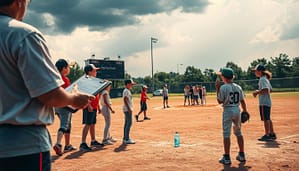
Five Tool Texas tournament play can teach youth coaches a lot, not just about who wins a bracket, but about which skills hold up after a long drive, a hot warmup, and a tight late-inning at-bat. From San Antonio to Houston, the useful lesson is simple: tournament baseball exposes habits. If a player’s footwork, throwing routine, swing decision, or dugout focus is shaky, the game usually finds it.
The available research is limited on city-by-city results, exact event formats, and verified bracket details. What is supported is still useful. Five Tool Players says it was established in 2011 and focuses on teaching young athletes baseball while building pride, discipline, perseverance, and belief through the game, according to the FTP about page. The B2B Elite 9U schedule page lists participation in Five Tool Baseball and Perfect Game tournaments, showing how young teams may use tournament schedules as part of player growth through repeated competition, per the B2B Elite 9U schedule page.
Five Tool Texas Lessons From Tournament Pressure
Tournament pressure is not magic. It is the same baseball skills under more noise, less recovery time, and sharper consequences. A 9U player who throws well in practice may rush across the diamond when the runner is fast. A hitter who looks calm in the cage may chase high pitches after sitting two innings. A catcher who receives well on Tuesday may get tired by Sunday and start stabbing at the ball.
For Texas coaches, the teaching point is not to yell louder. It is to study what broke down and build the next practice around it. The weekend gives the coach a skill audit. Did the outfielders get behind the ball? Did infielders line up their feet before throwing? Did hitters take pitches with a plan? Did pitchers stay balanced after a walk?
Five Tool Texas Skill Cues Coaches Can Track
Use short cues during tournament games, then turn those cues into practice stations. For example, an infielder can hear “right-left-field” before every ground ball. An outfielder can hear “drop step first” on balls over the head. A hitter can hear “yes-yes-no” to train a ready swing decision. These are not slogans for a poster. They are small reminders that help young players carry practice habits into tournament innings.
Coaches should track skill cues on a simple card: one line for footwork, one for throwing accuracy, one for swing decisions, one for mound presence, and one for base running choices. After the weekend, circle the two weakest areas and build practice around them. If everything is a priority, nothing gets fixed.
How San Antonio To Houston Travel Changes Preparation
Texas tournament travel can make warmups feel rushed. Even when families plan well, traffic, parking, heat, and field location can cut into a normal routine. Coaches should not wait until the team reaches the dugout to start preparing players. Ask families to arrive with players fed, hydrated, and in the right gear. Then use a warmup that can survive a tight window.
A practical 18-minute routine works well for youth teams: four minutes of movement, four minutes of throwing progression, four minutes of glove work, three minutes of team defense footwork, and three minutes of hitting rhythm without full swings. If there is more time, expand it. If there is less time, keep the order and shorten each piece. The goal is to start the game with the body awake and the mind settled.
Building Practice Plans From Tournament Games
A tournament weekend should not end with only a group text about the next schedule. The best training value comes on the first practice after the event. Coaches can use that practice to connect game evidence to skill work. That helps players understand why details matter. A missed cutoff is no longer an abstract coaching point. It is the reason an extra run scored in a real game.
For more ideas on using pool play and downtime as teaching space, coaches can connect these tournament notes with summer tournament skills that fit the Texas heat and travel rhythm.
Fielding Stations That Match Game Mistakes
Set up fielding work to mirror what happened in games. If corner infielders rushed throws, build a station with slow rollers, barehand pickups, and one accurate throw target. If middle infielders missed feeds, run short-distance flips with a clear rule: feet first, ball second. If outfielders let balls get behind them, start with drop-step reads before any full-speed fly balls.
- Ground Ball Footwork: Roll ten balls per player with a focus on body position, glove angle, and a balanced finish.
- Throwing Accuracy: Use smaller targets from youth distances before stretching players into longer throws.
- Cutoff Communication: Practice one verbal call at a time so young players learn who owns the ball.
- Outfield First Step: Mix balls in front, over the head, and to each side so players do not guess.
The key is not volume alone. It is quality under a little game-like stress. Put a runner on first. Add a coach yelling a base. Give the fielder a clear job. That small pressure makes the drill feel closer to tournament baseball.
Hitting Work That Trains Decisions
Many young hitters can hit a front toss strike. Tournament arms create a different test. Pitchers change speed, miss spots, and force hitters to decide. A good post-tournament hitting practice should include takes, not just swings. Put hitters in counts. Ask them to call “yes” early, then take if the pitch is not in their zone. This trains the brain before it trains the barrel.
For coach-pitch or machine work, set a hitting zone before the round. For kid-pitch ages, use short rounds with count pressure: 1-1, 0-2, and runner on third with less than two outs. Players learn that the best swing is not always the biggest swing. Sometimes it is a hard ground ball through the middle, a line drive to the opposite field, or a take that keeps the at-bat alive.
Pitching, Catching, And Arm Care Habits
One clear lesson from tournament play is that arms get tested. Coaches need a plan before the first pitch of the weekend. The research provided does not include verified pitch-count rules for these events, so teams should follow their league, tournament, and age-group rules. From a training standpoint, the larger point is clear: young pitchers and catchers need repeatable movement, recovery habits, and honest communication.
Pitchers should learn a simple checklist: breathe, set the feet, eyes to target, move down the slope, finish balanced. Catchers should learn to receive without fighting the ball, block with the chest over the ball, and throw only after the feet get lined up. In long tournament settings, sloppy mechanics often come from tired legs, not just tired arms.
Between-Game Recovery For Young Players
Between games, avoid turning every break into another throwing session. Players need shade, fluids, food, and mental rest. A short arm-care routine can include light band work if the team already teaches it properly, gentle movement, and easy catch before the next game. Do not introduce a new arm-care exercise in the middle of a tournament weekend. Teach it during practice first, then use it on game day.
For teams dealing with bracket pressure, coach communication matters. A calm reminder can keep a young pitcher from speeding up after an error. Texas coaches can pair these ideas with competition coaching built around feedback, poise, and tournament pressure.
Turning Values Into Daily Baseball Habits
The player-development language in the research is not just about being nice. Pride, discipline, perseverance, belief, teamwork, integrity, sportsmanship, courage, and discipline can all be coached through daily baseball actions. A player shows pride by running on and off the field. A player shows perseverance by making the next pitch after a booted grounder. A player shows sportsmanship by handling a close call without showing up the umpire.
For Five Tool Texas teams and opponents, these values should be tied to visible behaviors. Coaches can grade behaviors just like skills. Did the player back up a base? Did he cheer for a teammate after striking out? Did he carry his own bag? Did he listen during mound visits? These details build trust, and trust helps a team play cleaner baseball under stress.
Accountability Without Embarrassing Players
Youth accountability works best when it is direct and private. Instead of calling out a player in front of the dugout, ask one question: “What was your job on that play?” If the player knows, let him say it. If he does not know, teach it in one sentence and move on. The next rep matters more than the lecture.
Team standards should be short. Be on time. Be ready. Respect the game. Support teammates. Compete pitch to pitch. Those standards fit tournament baseball from San Antonio to Houston because they do not depend on the venue, opponent, or umpire. They travel with the player.
Five Tool Texas Takeaways For Texas Coaches
The main coaching lesson from Five Tool Texas tournament settings is to treat games as information. Wins matter, but skill evidence matters too. If a team wins while making poor throws, chasing bad pitches, and missing cutoffs, the coach still has work to do. If a team loses but competes with better routines and cleaner decisions, that can be real progress for youth players.
Build the next practice from what the weekend showed. Pick two skill themes. Keep the cues short. Make drills look like game problems. Give players a chance to respond under mild pressure. Then go back to tournament play and test the habits again. That cycle is where Five Tool Texas can be most useful for local baseball development: game reps, honest review, focused training, and another chance to compete.