For young Texas pitchers, Gio Rojas’ move into the Texas Rangers system is more than a draft headline. It gives families and coaches a useful case study: a high school pitcher can build value through performance, repeatable skill, national competition, and steady development rather than one loud radar-gun moment.
Why Young Texas Pitchers Can Learn From Rojas
Rojas was a standout left-handed pitcher at Marjory Stoneman Douglas High School in Florida before the Texas Rangers selected him with the 16th overall pick in the 2026 MLB Draft, according to the Rangers’ team announcement. That Texas connection matters for local baseball families because the Rangers are now part of his next development step. His path is not a copy-and-paste plan for every kid in Dallas-Fort Worth, Houston, San Antonio, Austin, East Texas, or the Panhandle, but it does show what evaluators can value when a pitcher keeps producing against good hitters.
Young Texas Pitchers And The Patience Behind Results
Rojas’ senior-year numbers were strong: an 11-1 record, a 0.58 ERA, and 124 strikeouts over 72.2 innings. He also helped his high school team win a sixth straight Florida Class 7A state championship, throwing 6.2 scoreless innings with 12 strikeouts in the title game. Those facts are eye-catching, but the training lesson is quieter. Results like that usually point families back toward command, routine, recovery, and the ability to repeat a delivery under pressure.
For young Texas pitchers, the takeaway is not to chase someone else’s timeline. A seventh grader in Waco or a freshman in Midland does not need a pro-style workload. He needs good throwing habits, a clear plan, honest feedback, and adults who can separate long-term growth from weekend tournament emotion.
What The Rangers Pick Signals To Families
The Rangers’ selection of Rojas also marked the first time since 2018 that the club chose a high school pitcher with its initial draft pick. That does not mean every Texas family should specialize early or fill every month with showcases. It does mean that high school development still matters. Scouts can value a player who keeps improving, faces quality competition, and shows he can pitch rather than just throw.
Texas has a deep youth baseball culture, with league play, school ball, select tournaments, private instruction, and summer travel all pulling on the calendar. Rojas’ example should encourage families to ask better questions: Is the player learning? Is his arm bouncing back? Is he competing with a plan? Is the training helping him become a better pitcher in games?
What Rojas’ Record Shows About Repeatable Growth
Rojas was named Broward County 7A-5A Pitcher of the Year by the Miami Herald in both 2025 and 2026. He was also named Florida Dairy Farmers Mr. Baseball in 2025 and 2026. The award has previously been won by players such as Alex Rodriguez in 1993 and Andrew McCutchen in 2005, according to the same Rangers release.
Production With Context
High school awards are not development plans by themselves. They are signs that a player’s work showed up when games counted. Coaches in Texas can use that idea without pretending every player is on a first-round track. A good 13U pitcher who throws strikes, fields his position, controls the running game, and handles a rough inning is building real baseball value. The same is true for a varsity pitcher who learns to set up hitters, change eye levels, and avoid letting one bad call turn into a crooked number.
The best training programs do not treat bullpens, flat-ground work, mobility, strength, and game outings as separate islands. They connect the pieces. If a pitcher misses arm-side in a tournament, the next bullpen should have a purpose. If he loses tempo with runners on base, practice should include that stress. For a local resource that keeps the discussion centered on development habits, Texas families can read more about young Texas pitchers and how a pro signing can still point back to simple daily work.
Competition Without Shortcuts
Rojas also pitched for the USA Baseball 18-and-under National Team in 2025. At the WBSC U-18 Baseball World Cup, he earned All-World Starting Pitcher honors while contributing to a first-place finish. During that event, he threw 11 scoreless innings, including a complete-game shutout with 10 strikeouts against Korea and four scoreless innings against Panama.
That part of the story matters because competition can reveal habits that practice hides. A pitcher may look sharp in a lesson, then rush his delivery when a leadoff hitter reaches second. He may throw a strong bullpen, then struggle to land a secondary pitch after a long inning in Texas heat. Families should see competition as information, not just a trophy chase. The goal is to learn what holds up when the other dugout can play.
Turning The Lesson Into Texas Training Plans
Training young arms in Texas calls for balance. The weather is hot, the tournament calendar can get crowded, and players often move between school teams, select teams, and private coaches. A clear plan helps keep everyone from pulling the player in different directions.
Build Skills Before Chasing Velocity
Velocity gets attention, but it is not the only skill that separates pitchers. Rojas’ record includes strikeouts and scoreless innings, yet the broader lesson for young Texas pitchers is that performance depends on more than raw stuff. A pitcher needs to throw quality strikes, change speeds, repeat his mechanics, recover between outings, and handle the mental side of the mound.
Coaches can build sessions around a few simple checkpoints:
- Command goal: Can the pitcher hit a target area often enough to compete?
- Delivery goal: Can he repeat the move without forcing the arm to do all the work?
- Game goal: Can he make an adjustment after a walk, error, or hard contact?
- Recovery goal: Does the next-day feedback from the player match the workload?
Use Competition As Feedback
Texas tournaments can be helpful when adults keep them in the right place. Games show whether a pitcher can control emotions, execute with runners on base, and compete when the zone is tight. But tournaments should not become a reason to ignore rest, stack innings, or ask a young athlete to perform like a finished product.
A practical training plan should include bullpens with intent, fielding practice, pickoff work, controlled throwing days, and time away from the mound. Families who want more detail on managing workload can use this local arm-care discussion on protecting young pitchers’ arms during a long Texas season.
Arm Care And Family Expectations In Texas
The Rangers officially signed Rojas on July 24, 2026, with a reported signing bonus of $4.6 million, below the $5,051,900 slot value for the 16th overall pick, according to Yahoo Sports. That signing detail belongs to his professional path, but families should be careful not to turn it into pressure for a younger player. Most youth pitchers need patient support far more than comparisons to a first-round selection.
Keep The Calendar Honest
Parents can help by tracking innings, high-stress outings, bullpen work, lessons, and how the player feels after throwing. A player might not complain because he wants the ball. That is where adults need to be steady. Texas heat, long drives, back-to-back tournament days, and multiple team commitments can add up fast.
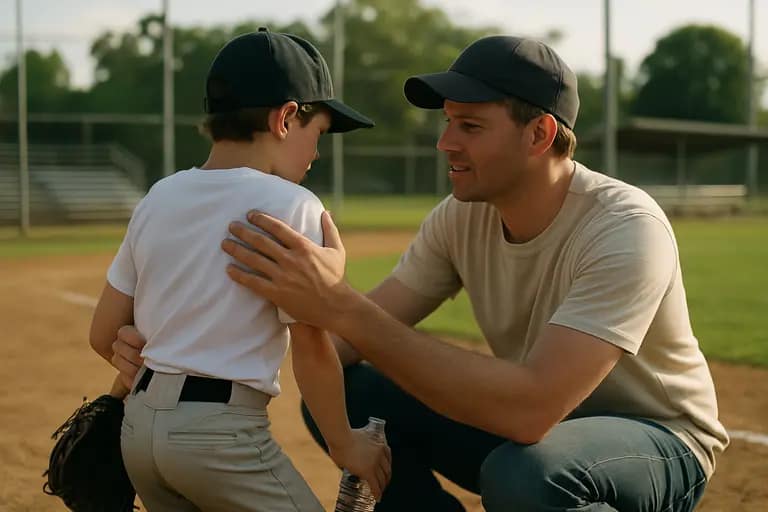
Coaches should talk with families before the weekend starts. Who threw during the week? Who caught several innings? Who had a lesson? Who is coming off soreness? Those questions are not soft. They are part of responsible player development.
Let The Player Grow
Every pitcher grows at a different pace. Some add strength early. Some learn command first. Some struggle with confidence, then take a jump once they understand their delivery. Rojas’ path shows high-level achievement, but it should not make a Texas family rush a player into adult expectations.
The best baseball homes give a pitcher room to compete and room to fail. They praise preparation, strike-throwing, body language, and coachability. They do not make every outing feel like a tryout for the rest of his life. That approach gives a young athlete a better chance to stay healthy, enjoy the sport, and keep improving.
What Gio Rojas Means For Texas Pitcher Development
Rojas is the highest draft selection in Stoneman Douglas High School history, a program that has produced MLB players including Anthony Rizzo and Jesús Luzardo. His move to the Rangers gives Texas baseball families a local reason to watch his development, but the larger lesson sits closer to home: train the player in front of you.
A Local Message From A National Draft Story
For young Texas pitchers, the useful message is not that one award, one tournament, or one showcase decides everything. It is that steady growth can show up over time through command, competitive innings, mental toughness, and smart support from adults. Rojas’ résumé includes major high school success, national-team performance, and a first-round selection. A youth player in Texas may be many steps from that stage, but he can still learn from the habits behind the story.
That means throwing with purpose, resting with purpose, and competing with purpose. It means coaches should teach the craft, not just call pitches. It means parents should protect the joy of the game while helping their child build a routine. If Texas baseball keeps those priorities clear, the next wave of pitchers will be better prepared for whatever level they reach.