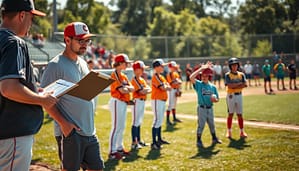
The DF DUB Tournament gives experienced Texas youth baseball coaches more than a weekend schedule to review. The July 25-26, 2026 event in Desoto, Texas, included posted age divisions such as 7U, 8U, and 9/10U, which makes it useful for thinking through development by age group, not just wins and losses DF DUB Youth Sports schedule. For veteran coaches, the teaching value sits in the details: time limits, age cutoffs, tie procedures, equipment rules, discipline standards, and parent communication.
DF DUB Tournament Lessons For Veteran Coaches
What The DF DUB Tournament Reveals About Age Groups
Age-group baseball is not one sport played at different heights. A 7U roster, an 8U roster, and a 9/10U roster need different language, pacing, and success markers. The posted divisions show why experienced coaches should resist building one tournament plan and handing it to every team in the program. Younger players may need simpler pre-pitch cues, shorter teaching blocks, and more help understanding where the next play goes. Older players can handle more responsibility, but they still need clear routines before the game speeds up.
The DF DUB Tournament is a reminder that age divisions are coaching data. If a coach is preparing 8U players, the practice week should not look like a scaled-down high school workout. It should train the exact decisions those players will face: where to throw on a ground ball with runners on, how to get back to the bag on a fly ball, and how to reset after a walk or error. Experienced coaches often know this, but tournaments expose whether the team actually owns those habits under time pressure.
Development Beats One-Weekend Panic
The best tournament coaches do not install ten new plays the night before bracket play. They decide what their players can execute, then commit to it. For Texas teams playing in summer heat and busy weekend windows, that restraint matters. A coach who keeps signs simple, defensive calls consistent, and baserunning rules clear gives young players a chance to compete without mental clutter. If your staff wants to connect weekend play to a longer growth plan, the ideas in DF DUB player development fit naturally with this kind of post-event review.
Reading Age Groups As Coaching Data
May 1 Age Cutoffs And Fair Competition
The research notes list May 1 as the baseball birthday cutoff date. That type of age rule is easy for coaches to skim past, but it affects roster building, parent expectations, and fair competition. A coach should know the cutoff before tryouts, not after a parent raises a question. The practical move is simple: confirm every player’s eligibility early, keep birthdate documentation organized, and explain the cutoff in plain language at the first parent meeting.
This is not just paperwork. Age eligibility shapes player confidence. A younger player in a division may need more patience with velocity, field size, and attention span. An older player may need to be challenged with leadership tasks instead of being allowed to dominate without growth. Experienced coaches can use eligibility rules to teach families that development is not identical for every child, even inside the same division.
Roster Roles Should Match The Stage
In 7U and 8U baseball, a coach may still be teaching the basic rhythm of an inning: three outs, force plays, backing up throws, and listening for the base coach. In 9/10U baseball, players may be ready for more advanced pre-pitch positioning and pitcher-catcher communication, depending on league rules and team skill. The lesson for veteran coaches is to define roles by readiness, not by reputation. The player who looks smooth in practice may still freeze in a tournament inning. The quiet player may be the one who remembers the coverage.
Time Limits Change Coaching Decisions
Six Innings Or One Hour And Ten Minutes
The research notes say 8U pool and bracket games were structured for six innings or one hour and ten minutes. A time limit changes how a coach manages pace. Slow defensive changes, unclear batting order procedures, and long mound talks can turn into lost chances for young players. Coaches should practice inning transitions just like they practice rundowns. Gloves, helmets, catcher gear, and lineup cards need a routine before the first pitch.
Time pressure also changes the way coaches teach emotional control. A walk, overthrow, or missed sign feels bigger when the clock is moving. The coach’s body language becomes part of the instruction. If the dugout hears panic, players borrow it. If the staff uses short phrases, direct eye contact, and calm corrections, players have a better chance to recover before the next pitch. For more on tournament pressure, competition coaching for Texas youth pairs well with this lesson.
Practice The Clock Before The Weekend
A strong tournament week can include short simulated innings: start with one out and a runner on second, give the defense two minutes to get off the field, then rotate. Coaches can run a baserunning inning where players must know the score, outs, and time situation before each pitch. The goal is not to scare kids with the clock. The goal is to make pace familiar enough that players keep thinking when the inning gets tight.
Discipline Is A Coaching Skill
Safe Environment Rules Start With Adults
The posted tournament information in the research notes included strict policies against alcohol and drug use, random searches to maintain a safe environment, a banned list for misconduct, a clear rainout refund policy, a May 1 baseball birthday cutoff, bracket-game tie resolution through a Texas Shootout format, and a bat rule requiring the new BBCOR stamp unless the bat was wooden DF DUB Youth Sports information. Coaches should read those items as more than tournament administration. They are signals about the adult standard around youth baseball.
Players watch how adults handle rules. If a coach complains about every policy, argues around eligibility, or treats sportsmanship as something only the other dugout should follow, players learn that rules are obstacles. If a coach accepts clear standards, explains them early, and holds parents to the same tone expected from players, the team culture gets stronger. Discipline is not just benching a kid after a mistake. It is the daily habit of making expectations clear before emotion takes over.
Parent Meetings Need Real Topics
Many parent meetings spend too much time on uniforms and not enough time on behavior. A tournament with posted conduct rules gives coaches a chance to be direct. Tell families how the staff will handle umpire disagreements, dugout access, weather delays, refunds, and postgame conversations. Make it clear who speaks for the team. Make it clear that no player benefits when adults turn a youth game into a shouting match.
Experienced coaches do not need to sound harsh. They need to sound prepared. A simple parent script might say: our staff will coach effort, body language, and readiness; parents should support players without coaching over the staff; questions about playing time can wait until emotions cool. That protects kids, coaches, and families.
Practice Planning After The DF DUB Tournament
Turn Tie Rules Into Situational Work
The Texas Shootout tie procedure listed in the research notes is a valuable practice prompt. Even if a team does not know every future tournament’s tie format, players should be trained for sudden-pressure situations. Put runners on base. Start with one out. Give the defense a bunt look, then a steal look, then a hard ground ball. Let players make decisions, pause, and repeat. The purpose is to build recognition, not to script every possible ending.
Offensively, coaches can teach players to understand the inning goal. Sometimes the job is to move a runner. Sometimes the job is to hit a ball in the air. Sometimes the job is simply to swing at a strike and avoid helping the pitcher. Young players compete better when they know what counts as a quality at-bat beyond getting a hit.
Equipment Checks Are Part Of Player Care
The bat standard from the research notes should push coaches to audit equipment before tournament morning. Waiting until the plate meeting to discover a bat problem creates stress for the player and staff. Build an equipment check into the last practice before the event. Helmets, catcher’s gear, bats, gloves, and water should all be handled before families arrive at the park.
This is also a leadership chance. Assign older or more responsible players to help younger teammates check gear. That teaches ownership without turning kids into rule enforcers. A player who packs correctly and understands why equipment rules exist is learning the same habits that support safe, organized baseball at higher levels.
What Experienced Coaches Should Carry Forward From Desoto
Use The Event As A Staff Review
Treat the DF DUB Tournament as a coaching mirror. After the weekend, review what the staff controlled: pregame pace, defensive substitutions, pitcher or throwing plans if applicable to the division, parent communication, dugout behavior, and response to tight innings. Do not let the review become a blame session about umpires, weather, or one missed play. Experienced coaches grow by identifying which parts of the weekend can be taught better next time.
A useful staff review has three questions. What did our players understand before the game? What did they only understand after we yelled it? What can we teach in practice so we do not have to yell it again? Those questions keep the focus on instruction. They also separate real coaching from noise.
A Better Standard For Texas Youth Baseball
The best lesson from Desoto is that a tournament is a full program test. Rules, time limits, age groups, tie formats, equipment checks, conduct policies, and refund clarity all touch the coach’s job. None of those items guarantee a win. They do help a staff create a safer, calmer, more prepared setting for kids to compete.
Experienced coaches should carry that standard back to their own teams. Plan by age group. Practice the clock. Teach tie-game situations. Set parent expectations. Check equipment early. Respect conduct rules. When coaches do those things, tournament baseball becomes more than a weekend bracket. It becomes a training ground for players, families, and the adults trusted to lead them.