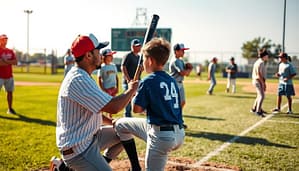
August has become one of the most revealing months on the Texas high school baseball recruiting calendar. The broader sports web can send fans toward everything from tournament coverage to offshore sportsbook listings, but the story that matters for young Texas players is unfolding on fields in Waco, Houston, Tomball and Hurst. Uncommitted upperclassmen are getting measured, evaluated and compared at a point when college programs are building future classes and players are trying to turn a strong summer into a real recruiting opportunity.
Texas Players Are Getting Multiple August Evaluation Windows
The concentration of events says plenty about the size of the Texas baseball pipeline.
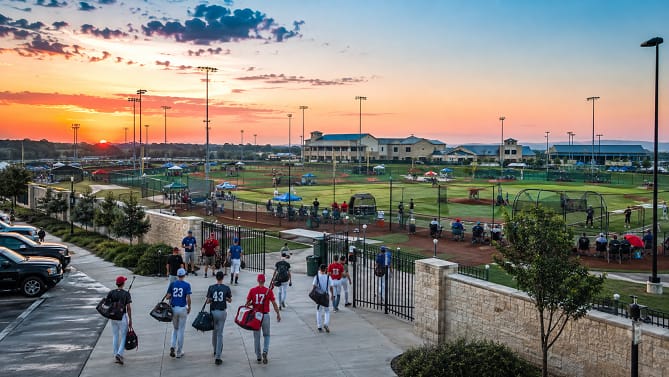
Prep Baseball held its Central Texas Upperclass Uncommitted Games on August 1 at McLennan Community College in Waco. Four days later, the South Texas Upperclass Uncommitted Games took place at Houston Christian University. Prep Baseball published statistical analysis and scouting takeaways from both events during the first week of August.
Perfect Game has created another route. Its South Uncommitted Prospect Showcase ran July 31 through August 2 in Tomball, and the 2026 PG South Central Uncommitted Prospect Showcase is scheduled for August 15–16 at L.D. Bell High School in Hurst. That event is aimed at uncommitted players in the 2027 through 2029 graduating classes.
For Texas families, the calendar shows that exposure no longer depends on one massive national trip. Players can reach meaningful evaluation settings across several Texas regions, often on college or established high school fields.
The Numbers Matter, But Scouts Still Need Baseball Actions
Showcases have become more data-driven. Radar readings, exit velocity, running times and throwing measurements give evaluators fast ways to compare players from different programs.
Those measurements work best when they support what happens during baseball activity.
A shortstop can post an impressive throwing number, but coaches still want to see footwork, transfer speed and whether the arm plays accurately from different angles. A hitter can produce a strong exit velocity, yet his ability to recognize spin and control the strike zone remains part of the evaluation. Pitchers face the same test: velocity attracts attention, but command, pitch shape and repeatable mechanics influence how the complete profile is viewed.
That is why preparation should extend beyond chasing a personal-best number. Our recent Perfect Game Texas training insights examined the value of using showcase and tournament competition as feedback for daily development rather than treating an event as the final product.
The best showcase performance often looks simple: clean baseball actions, controlled effort, accurate throws, competitive at-bats and a player who does not change his entire game when evaluators arrive.
August Connects Summer Baseball To The Fall Recruiting Cycle
The calendar does not stop when August ends.
Prep Baseball already lists its Texas State Games Upperclass event for September 18 at Weatherford College, covering players in the 2027 and 2028 classes. Its Underclass event for 2029 and 2030 graduates is scheduled for September 26 at Sam Houston State University in Huntsville. Fall events are then listed in Tomball, Denton and other Texas locations.
That creates a useful progression for players.
Summer tournaments provide game volume. August uncommitted events offer concentrated evaluation. Fall showcases can give players another opportunity to demonstrate progress before the high school preseason cycle begins again.
For a player who leaves an August event with a weakness exposed, that schedule can be productive. A catcher may need to improve exchange times. A pitcher may need more consistent command of a secondary offering. A hitter might discover that his swing performs differently against higher velocity.
The next event should become a checkpoint, not an excuse to enter another showcase without changing anything in training.
Texas Geography Gives The Recruiting Pipeline An Advantage
Texas has a structural advantage that few states can match: baseball talent and evaluation opportunities are spread across several major regions.
Dallas-Fort Worth, Houston, Austin, San Antonio, Central Texas and smaller baseball communities can all support high-level events. College facilities such as McLennan Community College, Houston Christian University, Weatherford College and Sam Houston State University give players opportunities to compete in environments connected directly to the next stage of baseball.
That matters for families managing travel costs and schedules. A player does not need every event. Choosing the right events for his age, current ability and recruiting status can be more productive than filling every available weekend.
Coaches can help by identifying what a player actually needs from an event. A rising sophomore may need experience and a baseline evaluation. An uncommitted upperclassman may need direct exposure backed by updated measurable data and quality game video.
Those are very different objectives.
Why August Should Be Used As A Development Checkpoint
The busiest Texas showcase calendar can create pressure to collect invitations, rankings and measurable numbers. The better use of August is to find out where a player stands.
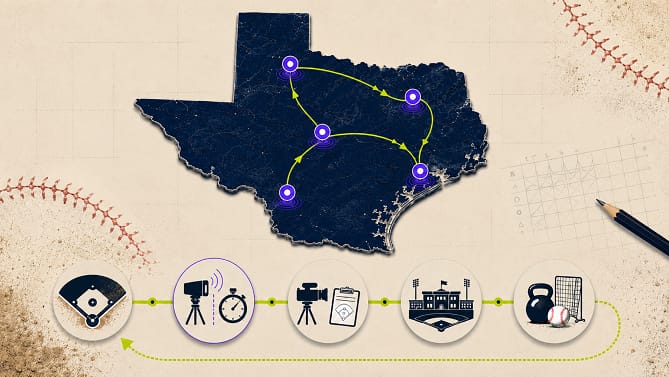
Texas already provides the competition, facilities and event density. The player still has to turn that access into progress.
For families looking at the 2027, 2028 and 2029 recruiting cycles, the current run of Waco, Houston, Tomball and Hurst events provides a clear lesson. Exposure can open a door, but repeatable baseball skill keeps the conversation going.
The Texas players who benefit most from this part of the calendar will not necessarily be the ones attending the most showcases. They will be the players who take the information from one evaluation, return to training with a specific purpose and arrive at the next event with something measurably better.