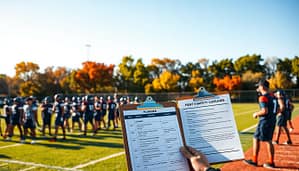
A strong Texas youth baseball practice is not built on one loud speech or one favorite drill. It is built on pace, clear teaching points, and enough repetition for kids to feel the game instead of standing around waiting for it. Recent success in Texas youth baseball training circles points toward the same idea: young players improve faster when coaches plan the work before they step on the field.
For Texas coaches, that means practice should feel organized without feeling stiff. The players need to warm up, throw with intent, handle ground balls and fly balls, swing in stations, run the bases, and compete. The coach needs a plan that fits the age group, the field space, the number of helpers, and the time of year. If the team only has one weeknight slot before a Saturday tournament, every minute has a job.
Texas Youth Baseball Practice Framework
Start With The Skill Goal
The first mistake many youth coaches make is writing a schedule before choosing the main skill goal. A team that keeps missing cutoff throws needs a different session than a team that cannot get bunts down or keeps drifting under fly balls. Pick one main team skill, one throwing focus, and one hitting focus. That keeps the session clean.
A useful Texas youth baseball practice framework starts with three questions: What cost us outs last week? What skill can we improve today? What can every player repeat at home? The answer may be as basic as catching the ball with two hands on routine throws or staying balanced through the swing. Basic does not mean boring. Basic means the skill shows up in every inning.
Texas Youth Baseball Practice Timing
A 90-minute block works well for many youth teams because it gives room for movement without wearing players down. A youth practice model from Concord Sports practice planning lays out a session with dynamic warm-ups, throwing progression, infield and outfield work, hitting stations, base running with situational defense, and team competitions. That structure is useful because it keeps players changing tasks before focus fades.
The Texas twist is simple: build the session around the field you have. If your team practices on a shared city field in Round Rock, Frisco, Katy, Arlington, or a smaller community park, you may not have full use of the cage, bullpen, or outfield. Plan station work that can move. A portable tee, a bucket of balls, and one coach with a fungo can still create a strong session.
Build A 90-Minute Session That Moves
Sample Practice Flow
The goal is not to copy a template without thinking. The goal is to use a dependable rhythm so players know what is expected. Coaches who need a bigger weekly view can pair this field plan with a weekly practice schedule that separates skill days, lighter review days, and game prep.
- 0-10 minutes: Dynamic warm-up with skips, shuffles, backpedals, light sprints, and arm circles.
- 10-25 minutes: Throwing progression, starting close and moving back while checking feet, target, and follow-through.
- 25-45 minutes: Infield and outfield blocks, with one group taking ground balls and another working drop steps or crow hops.
- 45-65 minutes: Hitting stations, using tee work, front toss, soft toss, and short rounds focused on one swing cue.
- 65-80 minutes: Base running and situational defense, such as first-to-third reads or hitting the cutoff man.
- 80-90 minutes: Team competition, short review, and one clear assignment for the next practice.
Keep Lines Short And Reps High
The pace of practice matters. One coach hitting grounders to a line of 12 players is slow baseball. Split the group. Let one coach run glove-side and backhand ground balls while another runs footwork at first base. If there are only two adults, use player leaders. A catcher can feed balls to a tee station. A shortstop can help younger players line up their feet for throws.
Hitting stations should have a purpose. Tee work can train barrel path. Front toss can train timing. A short bat or one-hand drill can train hand control, but only if the coach explains the feel and watches the swings. Do not run stations just to look busy. If a station does not connect to the day’s hitting goal, cut it.
Keep Drills Age-Fit For Better Reps
8U Needs Clear Language
Younger players need short cues, visible targets, and quick turns. Research notes for 8U baseball drills emphasize team communication, game-style repetitions, reaction time, and swing fundamentals, and Veo 8U drill guidance supports simple drills that match young players’ learning needs. That lines up with what Texas coaches see every spring: kids learn faster when the drill looks like baseball and the instruction is short.
For 8U, use words like “ready feet,” “show a target,” “step and throw,” and “eyes on the ball.” A relay drill can teach communication without a lecture. A coach rolls or throws the ball into the gap, the outfielder fields it, the cutoff player calls for it, and the infielder turns to the base. The whole group learns that baseball is a conversation, not a silent test.
Older Players Need Better Decisions
By 10U, 12U, and 14U, the best practices add decisions. A ground ball drill should include where the runner is. A hitting round should include count or situation. A base running drill should make the runner read the ball, not just sprint on command. This is where many Texas tournament teams separate themselves: they practice the decision before it shows up in bracket play.
A strong Texas youth baseball practice for older players can still use simple drills, but the coach should raise the thinking level. During batting practice, call out “runner on second, one out” and ask hitters what middle-away contact does for the team. During infield, add a runner and make the defense choose the right out. The player who understands why a throw matters will make cleaner choices under pressure.
Turn Recent Texas Wins Into Weekly Habits

Use Success Without Chasing Hype
Texas youth baseball has no shortage of strong teams, clinics, academies, and local coaches. The lesson from recent success is not that every family needs the same training path. The useful lesson is that good programs tend to repeat certain habits: planned reps, age-fit drills, individual feedback, competition, and steady review. Coaches can bring those habits to a Little League field, a select team workout, or a school feeder program.
Individual work should not replace team practice. It should feed it. If a player is working on staying closed at the plate, the team hitting station should give that player a chance to feel it against front toss. If a pitcher is working on direction, warm-up throws should support that same movement. A practice plan works best when private lessons, team goals, and parent support are not pulling the player in three directions.
Plan For Texas Field Realities
Texas teams often deal with crowded facilities, weather shifts, school calendars, and tournament travel. That means coaches need backup plans. If the field is wet, move to throwing footwork, dry swings, base running reads, or classroom-style baseball IQ. If heat or storms affect the practice window, shorten the session and keep the main goal. Coaches comparing space options can use this local look at indoor and outdoor training to think through facility choices.
One simple habit is the five-minute coach meeting before practice. Assign each adult one job. One runs catch play, one watches footwork, one tracks station rotation, and one handles safety and water breaks. Players notice when coaches are organized. Parents notice too. More than that, the session runs with fewer dead spots.
Why Texas Youth Baseball Practice Planning Works
Make The Last Ten Minutes Count
The last ten minutes should not be a slow walk to the parking lot. End with competition. It can be a throwing accuracy game, a base running race with proper turns, a two-strike contact round, or a clean-infield challenge. Competition gives players energy and shows coaches who can carry skill into pressure.
After the competition, gather the team and name one thing that improved. Keep it specific: “Our cutoff calls were louder,” or “Our tee swings stayed balanced.” Then give one home assignment, such as 25 dry turns at first base or 20 mirror swings focused on posture. A Texas youth baseball practice should send players home knowing what they did well and what comes next.
The best practice plan is not fancy. It is repeatable. It teaches the game in pieces, then puts the pieces back together. Texas coaches who build sessions with clear goals, active stations, age-fit drills, and short competitive finishes give young players a better chance to grow. That is how a weekday workout starts showing up as cleaner innings on Saturday.