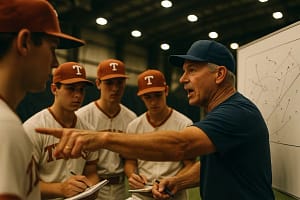
When I started coaching, I thought it was just for the season. I’d show up in spring, get the equipment ready, and enjoy the rush until the summer tournaments were over. But then I realized, coaching is like farming. You’re always working, always ready for the next season.
Winter is clinic season, a time to learn new things. You dive into drills and new ideas, getting ready for the busy spring. Then, spring arrives, and young athletes forget how to slide. Summer is when you analyze every mistake, like a congressional hearing.
This isn’t just a schedule; it’s a way of thinking. The Coaches Corner Continuing Education program keeps you on track. If you don’t plan your year, you’re just waiting for the next delay. It’s like a year-round challenge, with lots of learning and not much rest.
The real question is not about time. It’s about being the coach who knows the infield fly rule is important. To learn more about the role of volunteer coaches, check out this piece on why they’re vital in YMCA.
Core certifications USA Baseball CEP levels, NFHS coursework and Texas specific policies
Coaching legitimacy is a world filled with acronyms. It starts with USA Baseball certification, a series of skill levels. You begin as a Level 1 Padawan, learning to tie cleats safely. As you progress, you become a Level 5 Jedi, able to predict a balk before it happens.
Then, you dive into NFHS courses. These modules cover the basics of high school coaching. They teach you about heat illness and how to fill out a lineup card without trouble. It’s like a digital journey through coaching essentials.
Don’t forget Texas-specific policies. The Lone Star State has its own rules. A UIL waiver is as important as a winning record here. My first certification was a three-day marathon of slides, making me question my choices.
These certifications are essential. Without them, you’re not qualified to coach. It’s like getting a driver’s license—everyone thinks they can drive until they see the test.
But even with the paper, the learning never stops. At least you can now coach legally without the Athletic Director’s disapproval.
Safety credentials CPR AED first aid heat illness concussion plans
In coaching, knowing how to handle emergencies is key. CPR, AED, and first aid are lifesavers. They turn chaos into control. When a player collapses, your training is what keeps everyone safe.
One day, a player got heat exhaustion during a hot doubleheader. My usual jokes about being an EMT didn’t help. I had to act fast, using my CPR training. It’s a reality coaches often face.
Heat illness protocols can be tough to understand. You might wonder if the wet bulb globe temperature is a weather term or an indie band name. When a player turns red, you wish you had a quick guide. This is where coaching’s foundation kicks in—acting fast can save lives.
Concussion protocols add another layer of pressure. You become a neurologist, asking players to count backward from 100. Your knowledge is critical in these situations.
My CPR training became real when a coach collapsed during practice. My training kicked in, but the emotional shock lasted weeks. This shows why CPR first aid for coaches is a must.
So, invest in these credentials and renew them often. Hope you never have to use them. In coaching, being ready is about safety, both on and off the field.
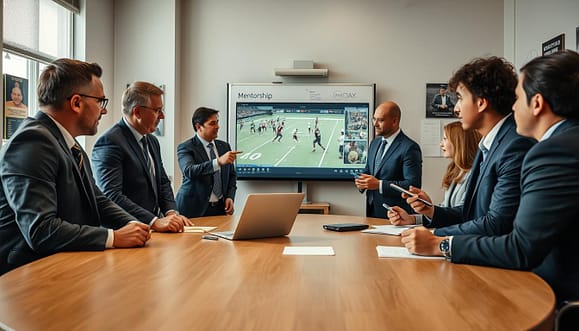
Mentorship how to find a veteran coach and run film review calls
Mentorship in coaching is not quick or easy. It takes patience and a good plan. Finding a mentor is like a treasure hunt, not just a simple search online. You must be careful and respectful, like impressing a veteran coach at a clinic.
I once waited near a seasoned coach at a workshop, waiting for the right moment to talk. When he said, “You gonna stand there or ask me something?” I knew it was time. This led to many insightful film review calls, mixing advice with deep lessons.
Running film review calls is an art. It’s not just about fixing a swing; it’s like analyzing a movie plot. You look for small details, like a dropped elbow, that reveal a player’s mechanics. This is where the magic is.
PCA workshops are great for improving your coaching skills. They offer positive coaching techniques that help you go beyond just yelling “keep your eye on the ball.” You learn what makes a drill effective.
Mentorship is like a buddy cop movie. You have a seasoned coach and a new coach who thinks he knows it all. Instead of car chases, there are sunflower seeds and talks about player development. My first mentor was great at analyzing my swing, teaching me a lot but also making me feel a bit insulted. That’s what makes it special.
Film review is where you really learn, beyond just certification courses. It’s messy, humbling, and leads you to grow from just copying YouTube drills to truly understanding the basics.
| Mentorship Aspect | Benefits | PCA Workshops Role |
|---|---|---|
| Finding a Mentor | Personalized guidance, experience sharing | Teaches effective communication techniques |
| Film Review Calls | In-depth analysis, skill refinement | Encourages positive feedback methods |
| Coaching Techniques | Improved player performance, strategic thinking | Offers frameworks for coaching philosophies |
Book and podcast syllabus monthly topics skill acquisition culture S and C
A good syllabus is key for coaches, packed with resources that reflect your coaching style. It’s like exploring a vast world of knowledge, not just the usual league meeting snacks. We’re talking about books, podcasts, and deep dives into skills, team culture, and strength and conditioning (S&C).
Using ABCA resources is like having the Library of Alexandria for baseball coaches. These resources cover biomechanics to leadership, avoiding motivational poster clichés. My monthly reading list is a mix of graduate seminars and self-help books:
- The Talent Code one month,
- Legacy the next,
- with a side of Range for dessert.
Podcasts are the new talk radio for baseball fans. I pick episodes like a sommelier, matching them to my mood. Whether it’s skill acquisition on the commute, culture during the gym, or S&C while stretching, there’s a podcast for every moment.
Creating this syllabus is like building a record collection. You need classics like Wooden and Lombardi, and deep cuts like motor learning researchers. Remember, culture is more important than strategy, and S&C makes a team durable.
One month, I focused on “how to run a productive practice,” and it changed my season. The key is to be consistent, treating your brain like a muscle. Don’t skip learning, or you’ll be like a dinosaur waiting for the asteroid.
Reflection toolbox practice film habit tracker player surveys
Being a great coach starts with self-reflection. The reflection toolbox is key. It’s not just about the game; it’s about you. Watching yourself coach can be tough, but it’s where you grow.
When I first watched myself coach, it was scary. I said “um” a lot and stood with my arms crossed. It was a big wake-up call. The habit tracker helps you track your actions, turning good ideas into real data.
Player surveys are like the truth serum. I once got feedback saying I explained things like a 1987 textbook. It hurt, but it was necessary. It helps you avoid becoming a bad version of yourself.
The toolbox isn’t for beating yourself up. It’s for getting better. So, grab a camera, use the tracker, and get ready for feedback. Your ego will heal, and your coaching will improve.
| Tool | Purpose | Benefit |
|---|---|---|
| Practice Film | Self-analysis of coaching | Identifies areas for improvement |
| Habit Tracker | Logs coaching behavior | Turns intentions into measurable data |
| Player Surveys | Gathers unfiltered feedback | Provides insights for better communication |

Sharing back present at league meetings build clinic stations
Presenting at league meetings is a key part of your coaching journey. Knowledge hoarding is for dragons, not coaches. It’s important to share what you know. When you present, you show your expertise and learn more about your material.
League meetings are like town halls for sports fans. They offer a chance to share ideas and learn from others. But don’t let that intimidate you! Be ready to share your knowledge and grow.
NFHS courses promote sharing knowledge. They help you learn and grow together. It’s a way to improve the whole coaching community.
My first presentation was tough. I tried to explain bunt defense but it didn’t go well. I learned that teaching is about making complex ideas simple. This led me to create clinic stations.
Creating engaging drill stations is challenging. Young athletes have short attention spans. It’s like giving a TED Talk in a chaotic setting. When you teach others, you reveal gaps in your own understanding.
I once ran a baserunning station that didn’t work. I had trouble explaining “rounding the bag” clearly. The coaches nodded, but I knew I needed to improve. Sharing back is a way to test your knowledge.
So, volunteer to present! Use the silence to grow. Your coaching journey will only deepen as you share your insights with others.
| Activity | Purpose | Benefits |
|---|---|---|
| Presenting at League Meetings | Share knowledge and experiences | Build reputation, foster community |
| Building Clinic Stations | Engage young athletes in drills | Enhance learning, keep attention |
| Running Baserunning Drills | Teach practical skills | Improve understanding, skill application |
Grants and reimbursement where to find support for coach education
Let’s explore the hidden funding for coaches. Coaching can be expensive, but there are ways to get help. Look to local parks, national groups, and crowdfunding sites for support.
It’s ironic that coaches spend a lot of their own money. But, grants and reimbursements can help, like with CPR first aid for coaches.
Imagine talking to a school board like you’re on “Shark Tank.” You’re asking for an investment in safety and youth growth. It’s hard for anyone to say no to that.
Coaches can get money back for things like USA Baseball and NFHS courses. It’s all about knowing where to look. So, don’t pay for your education yourself. It’s a public benefit.
For more help finding these chances, check out this resource on grants for coach education. Your wallet will be happy, and you can save for more important things—like sunflower seeds.
Personal wellness boundaries family job and baseball burnout prevention
Burnout in coaching is real and can steal your passion. Personal wellness is essential, not a luxury. Coaches face a tough balance between work, family, and baseball.
ABCA resources offer help on coach wellness. They go beyond just telling you to sleep more. I hit my wall coaching 40 games in 60 days. My spouse called baseball “the other woman,” a wake-up call.
Setting boundaries is key to saving your sanity. Here are some tips:
- Schedule date nights: Treat them like non-negotiable practice times.
- Say no: Avoid extra tournaments even when the fear of missing out (FOMO) is real.
- Recognize signs of compassion fatigue: Catch yourself before snapping at a kid for dropping a fly ball.
I now have a rule: no game film after 10 p.m. Your body is the only equipment you can’t replace. So, skip the ballpark nachos sometimes.
A healthy coach is a better coach. They are more patient and creative. So, protect your time and remember, baseball will be there tomorrow. Your family might even notice you.
Annual eval create a coach resume portfolio and next year goals
The end of the season is a time for truth: the annual evaluation. It’s not just about celebrating wins. It’s about learning from mistakes and successes. Think of your coach resume portfolio as a chance to show your best side.
Highlight your USA Baseball certification and creative practice strategies. These are the things that made players excited.
I keep a detailed spreadsheet of every game and lesson. It’s my confessional and tactical guide. Your portfolio should show your growth, not just wins. The Coaches Corner continuing education program is key to your story. It shows your dedication to getting better.
Set big but reachable goals for next year. Don’t say “win more.” Say “learn a new skill by March” or “go to a PCA workshop by June.” Treat your annual eval like a New Year’s resolution. Without reflection, you might make the same mistakes again.
So, document your journey and set goals that push you. The next version of you will thank you. For better coaching materials, check out The Coaching Portfolio. It can help you improve and prepare for the future.