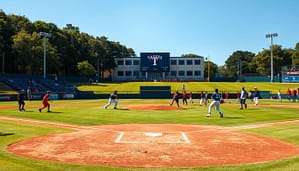
Imagine packed stands, the sound of bats cracking, and a revenue stream that makes your treasurer smile. It’s like the dream from Field of Dreams for sports organizers.
But, reality is different. You face a tough challenge with permits, insurance details, bracket problems, and budget spreadsheets. These can scare even a Wall Street expert.
Thinking about hosting a youth sports tournament in Texas? That first “Is this even possible?” feeling is just the start.
This is your ultimate guide. We’ll cover everything from getting municipal approvals to the financial review after the event. I’ll mix official data with practical, sometimes sarcastic advice you won’t find in official guides.
Think of me as your guide through event-planning challenges. I’ll offer witty comments along the way. Ready to turn your idea into a real event? Let’s get started.
Feasibility & Sanctioning Options
Starting a youth baseball tournament in Texas means doing a detailed feasibility study first. It’s like checking off a list before launching a rocket. Skip a step, and your event could end up being very costly and public.
You’ll need a team to check four key areas. This team isn’t for socializing. It’s a group that carefully examines each area.
Your facilities, community setup, people, and money need a thorough check. If any area fails, the whole event falls apart. Let’s be honest. Are your fields ready for a big tournament, or are they more like dusty lots?
Can local hotels, restaurants, and roads handle a big crowd? Do you have enough volunteers, or will parents just disappear like they did at the last bake sale?
The financial side is very serious. You can’t just raise money. You need to know how much you need to break even and make a profit before selling tickets. Baseball Canada’s guide is clear: all areas must meet standards.
| Feasibility Pillar | Critical Audit Questions | Common Red Flags |
|---|---|---|
| Facilities | Field quality, lighting, restrooms, parking capacity? | Poor drainage, inadequate seating, no backup fields. |
| Community Infrastructure | Hotel rooms within 20 miles? Restaurant capacity? Traffic flow? | Only one overpriced motel, limited dining, gridlock on two-lane roads. |
| Human Resources | Number of reliable volunteers? Certified umpires/scorekeepers? | Volunteer sign-up sheet is empty. No trained medical staff. |
| Finances | Detailed budget? Realistic revenue from fees, sponsors, concessions? | No line item for insurance. Unrealistic sponsorship expectations. |
After your team says it’s okay, you start the bid process. This is a formal process with strict deadlines. You might need to show interest two years early. The full bid could be due by September 15.
Partnering with your local government can help. They can add credibility and resources. But be prepared for a bid deposit, usually around $1000. It’s like buying a ticket to the big leagues.
Sanctioning is key in Texas. It’s not just a nice-to-have. It’s the official approval from bodies like USSSA or Perfect Game. This turns your event into a real, sought-after tournament.
Why is this important? Sanctioning offers a trusted framework. It includes insurance, standard rules, and national rankings. For hosts, it’s a big marketing plus. Teams want to play in sanctioned events, not just any local game.
To host a successful youth baseball tournament in Texas, you need to do two things well. First, a thorough feasibility audit. Then, get sanctioning. Do these, and you’re not just hosting. You’re creating a tournament.
Facilities: Permits, Field Prep, Lights, Maintenance
Getting field permits is more than just filling out forms. It’s like going on a diplomatic mission to City Hall. You’re asking the local government for permission to use their space. They have many rules and safety checks to follow.
You’ll need to show them your safety plan and explain why you chose certain dates. You’ll also have to pay fees that might seem high. This process teaches you patience and how to deal with bureaucracy.
After getting the permits, the real work starts. Preparing the field is a detailed process. It’s not just about mowing the grass. You need to know about soil, moisture, and geometry.
The infield needs the right mix of clay to be firm but soft. The pitcher’s mound and home plate must be perfectly graded and packed. The outfield must be safe and free of hazards.
Lighting is also important if you play games at night. You need a plan and a budget for the electricity. The right lighting is key to a good atmosphere, whether it’s natural or artificial.
Maintenance is essential for a smooth tournament. Crews must keep the infields smooth and the bases filled with clay. They also need to re-chalk the foul lines and batter’s boxes.
Trash cans need to be emptied regularly. This keeps the event looking professional. Neglecting this can make your event look amateurish.
Your facilities are the stage for your tournament. The field permits give you permission to use them. Preparation sets the scene, lights set the mood, and maintenance keeps everything running smoothly. Master these, and you’ll have a top-notch event. Fail on any one, and the whole thing suffers.
Safety/Medical: ATC, First Aid, Lightning, Heat Plan
Your insurance policy is like a parachute. But safety protocols are the plane you’re trying to keep safe. It’s not just about financial protection. It’s about being proactive and smart about risks.
First, hire a certified Athletic Trainer (ATC). They’re not just for minor injuries. An ATC handles everything from taping ankles to spotting concussions. They’re like a Swiss Army knife for your team’s health. Check out the Athletic Training Guidelines for more.

Next, set up first-aid stations like you would supply lines. They should be easy to find and well-stocked. This way, you can handle everything from minor injuries to serious ones without needing to use your coverage options.
Lightning and heat are big challenges. Your lightning plan must be clear and strict. Use apps or services to detect lightning. Always seek shelter in buildings, not under trees or tents, and wait 30 minutes after the last thunderclap.
The heat plan is a constant battle. In hot places, it’s your main enemy. Your plan should include:
- Mandatory cooling breaks: Schedule them every 20-30 minutes.
- Misting stations: Place them in busy areas to keep everyone cool.
- Unlimited water: Make sure water is always available. Dehydration can hurt your team’s performance and increase liability.
Being strict with your safety plan can save you money. Insurers offer “medical payments: $10,000” coverage for a reason. This coverage is for unexpected costs, not for ignoring safety.
A good safety plan makes your event safe and professional. It’s like a silent partner to your insurance policy. It helps you avoid problems and focus on the game. With a strong safety plan, your event will be a success.
Insurance & Waivers: What to Collect and Store
Insurance isn’t about being paranoid; it’s about being prepared for the unexpected. At a youth tournament, anything can happen. Think of insurance as your financial safety net. You hope you never need it, but it’s better to have it.
You need two types of protection: insurance for financial safety and waivers for legal safety. Without one, your event is at risk. It’s like driving without a safety net.
Let’s talk about insurance first. Companies like K&K and Duuo offer easy-to-buy packages online. You get a combo of Commercial General Liability and Participant Legal Liability. These cover injuries to spectators and players.
Some policies also include Medical Payments coverage. This helps pay for small medical bills right away, without needing to figure out who’s at fault. It’s a nice gesture that might prevent lawsuits.
How much coverage you get matters. Duuo offers a good starting point of $5 million in general liability. But for big events with lots of kids, you might need more. Always choose the highest limit you can afford.
| Coverage Type | What It Protects | Typical Limit (Example) | Key Exclusions to Watch |
|---|---|---|---|
| General Liability | Spectators, vendors, property damage | Up to $5 Million | Injuries to participants, “amusement devices” (e.g., bounce houses) |
| Participant Legal Liability | Registered athletes during activities | Often $1-2 Million | Non-sanctioned activities, extreme sports |
| Medical Payments | Immediate, small medical costs | Often $5,000 – $25,000 | Not a substitute for health insurance; has per-person caps |
| Host Liquor Liability (Add-on) | Incidents involving alcohol served | Varies by policy | Required if you sell or provide alcohol; excludes drunk driving |
Now, let’s look at the fine print. Many hosts get caught off guard by exclusions. That fun bounce house or rock-climbing wall? Most policies exclude them. Reading the fine print is key to avoiding surprises.
Underwriters are not your enemies. They’re experts who analyze risks. They might ask for details about your event. This helps them price your insurance correctly.
Waivers are also important. They’re a legal agreement between you and parents. A well-written waiver can protect you from lawsuits. It acknowledges the risks of sports.
Collecting waivers is essential. No waiver, no participation. Use digital platforms for e-signatures. Paper forms can get lost or damaged.
Storing waivers is important for years to come. A cloud-based system is the best option. You’ll avoid the hassle of finding a waiver from years ago.
Insurance and waivers might seem boring and expensive. But they’re key to managing risks. They turn a big “what if” into a manageable task. That’s not red tape; that’s smart planning.
Budget Build-Out: Break-Even and Profit Targets
Forget hoping for a sunny day and full stands. The real game is played in the spreadsheet long before the first pitch is thrown. Hosting a Texas travel tournament demands a Moneyball mindset—obsessing over the data that leads to profitability.
This isn’t about vague optimism. It’s about constructing a fiscal fortress. Your budget is the blueprint. Let’s build it.
Start with the non-negotiable pillars: your fixed costs. These are the expenses that don’t flinch, no matter if ten teams or fifty show up. Think permit fees, the base insurance premium, and your retainer fee for the head umpire. They are your foundation. Lock them in first.
Next, layer in the variable costs. These scale with your ambition. Concession inventory, extra game balls, awards, and those volunteer appreciation t-shirts. The more teams you attract, the higher these climb. But here’s the key: you control this scaling with your pricing.
On the other side of the ledger lies your offense: revenue streams. Team entry fees are your star player, the primary driver. Then you have the supporting cast: concession sales, vendor booth rentals, and sponsor cash injections. A diversified revenue lineup is far more resilient.
Now, find your holy grail: the break-even point. This is the exact number of teams needed for total revenue to cover total costs. It’s your non-negotiable benchmark. Calculating it isn’t rocket science. It’s simple division: Total Fixed Costs divided by (Team Fee minus Variable Cost per Team).
Everything beyond that line is pure profit. This is where you set your targets. Aiming for a 20% margin? Fantastic. Now, reverse-engineer your entire event. How many teams do you need at what price point to hit it?
This financial model isn’t a one-time exercise. After the last trophy is handed out, you compare your projections to reality. Where did you overspend? Which revenue stream outperformed? This post-event analysis is how you learn, adapt, and grow profits next season.
To make this tangible, here’s a sample blueprint. Treat it as a starting point for your own tournament budget.
| Category | Item | Projected Cost/Revenue | Notes |
|---|---|---|---|
| Fixed Costs | Field Permit Fees | $2,500 | Paid to city parks department |
| Event Liability Insurance | $800 | Base premium for the weekend | |
| Umpire Coordinator Retainer | $400 | Guaranteed fee for head official | |
| Variable Costs | Concessions Inventory | $25 per team | Burgers, dogs, drinks, snacks |
| Game Baseballs | $15 per team | Assuming 2 new balls per game | |
| Champion Awards | $200 total | Trophies for 1st & 2nd place | |
| Revenue Streams | Team Entry Fee (Primary) | $650 per team | Main driver for tournament profitability |
| Concession Sales | $50 per team (est.) | Profit from food & drink markup | |
| Title Sponsor Cash | $1,500 | Exclusive branding package |
See the story the numbers tell? With this model, if your fixed costs are $3,700 and you net $610 per team after variable costs, you need just over six teams to break even. Every team after that is profit. That’s the power of planning.
So, stop guessing. Start modeling. Hosting a travel tournament successfully means controlling the finances as expertly as you manage the bracket. Your bottom line will thank you.
Registration, Refund, and Communication Policies
In today’s world, a bad registration process is like asking for a fax number. It shows you’re not up to date. It’s your first chance to impress customers. Make it easy, or you’ll lose them right away.
Choosing the right platform is key. Use a modern system that handles everything from payments to digital waivers in one go. It’s not just about being convenient; it shows you’re reliable. Coaches and parents don’t have time for slow forms.
Now, let’s talk about refunds. Will you give full refunds a month before, partial, or none at all? Decide and be brutally clear. Put this policy on the registration page, in emails, everywhere.
This policy protects you from last-minute dropouts. A “no refunds after two weeks” rule is smart, not harsh. It helps you plan your budget and operations better. Being unclear leads to problems.
Good communication keeps everything running smoothly. After you get paid, staying silent is a bad move. You need to communicate well.
This means having a dedicated email for the tournament. It means a simple website with up-to-date schedules. It means keeping social media active with news about weather, delays, or parking.
Even bad news is better than no news at all. A rain delay email sent out early is a small issue. But finding out at the gate is a big problem.
Your registration sets the tone. Your policies protect you. Your communication builds trust. Get these right, and you’re off to a great start.
Marketing: Social, Email, Local Partners, Hotels
Marketing a youth baseball tournament is not just about shouting. It’s about creating a story that teams can’t resist. Even with perfect fields and brackets, without a good marketing plan, it’s just expensive practice. Think of it as a multi-channel war, where each platform has its own role.
Social media is your hype machine. Use Facebook, Instagram, and Twitter for teasers, behind-the-scenes, and updates. This builds excitement. A photo of field prep or a graphic about a top team can spread the word fast.
Email is your direct line. It’s for sending out schedules, waivers, and check-in details to teams. Also, a drip campaign for prospects is key. It tells your tournament’s story and gets teams to sign up.
Local partners are powerful. Working with stores, restaurants, and sports radio boosts your reach and credibility. A special deal at a restaurant or a remote broadcast adds to your event’s community feel.
Getting hotel block agreements is smart. It helps teams and can earn you money. Hotels often give you a commission for filled rooms. It’s a win-win.
Every marketing piece should tell the same story: “Come to our town for a top baseball experience.” This story makes your tournament special.
To do this well, you need a clear plan. Each channel has its own role. The table below shows the main parts of your marketing plan.
| Marketing Channel | Primary Function | Best For | Key Metric to Track |
|---|---|---|---|
| Social Media | Generate hype & community engagement | Visual teasers, real-time updates, broad awareness | Engagement rate (likes, shares, comments) |
| Email Campaign | Direct, detailed communication & nurturing | Driving registrations, providing key info to teams | Open rate & click-through rate (CTR) |
| Local Partnerships | Extend reach & build local credibility | Cross-promotions, ticket giveaways, community support | Referral traffic & partner promo code use |
| Hotel Block Agreements | Service for teams & possible revenue | Helping traveling teams and earning affiliate income | Room nights booked & commission earned |
The goal is not just to make noise. It’s to create a symphony of messages that lead teams to commit. Your marketing plan connects your planning to a successful, profitable tournament weekend.
Schedule Generation and Bracket Management
Creating a schedule is like a high-stakes meeting. It involves field availability, game length, and Texas weather. This is when your tournament comes to life. But, it can also be chaotic.
This task is like solving a complex puzzle. You’re not just setting up games. You’re balancing field capacity, game length, rest, and travel.
- Field Capacity: How many games can each field handle before it gets ruined?
- Game Clock & Buffer: A 70-minute game needs a 90-minute slot. Games can go long.
- Mandatory Rest: Teams need time off between games. Too little rest can cause problems.
- Travel Realities: Moving teams around can cause delays and anger.
Choosing a format is a big decision. Pool play offers more games, while a double-elimination bracket is tougher. This choice affects the player’s experience.
But, things don’t always go as planned. Weather can ruin your schedule. Games can end early, leaving fields empty. Bracket management is a live, dynamic beast. You need a backup plan.
Specialized tournament software is essential. It helps manage the complex schedule. It sends updates to coaches’ phones. This keeps things running smoothly.
The stakes are high. A bad schedule or bracket can upset coaches and parents. No waiver can protect you from a bad reputation. Your success depends on making everything seem easy.
Officials, Scorekeepers, and Volunteer Ops
Managing a youth tournament is like conducting an orchestra. Each part has its role. When they work together, the event goes smoothly. But if one part is off, the whole thing can fall apart.
Your team is your most important asset. They make the event happen.
Let’s talk about the conductors: your game officials. They are the heart of your event’s credibility. You can’t just pick the cheapest official. It’s like casting a random person in Hamlet.
Instead, hire from a reputable local umpire association. They offer certified, experienced officials. Pay them well and on time. A happy official does a better job.
Now, let’s look at the scorekeepers. They are often overlooked. They keep the official record accurate. A small mistake can cause big problems.
Make sure they know your system well. Give them a quiet place to work. Check their work often. They are like your event’s accountants.
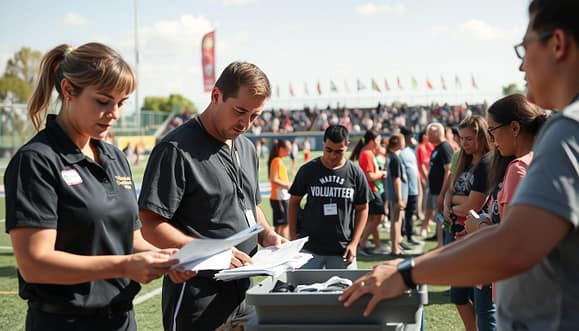
Then, there’s the volunteer crew. They handle parking, gates, and more. Get them early from local groups. Give them clear instructions and thank them a lot.
Happy volunteers are loyal. A no-show can cause big problems. Show them you appreciate them with food and t-shirts.
To see how these groups work together, here’s a breakdown:
| Role | Key Responsibility | Common Pitfall | Best Practice |
|---|---|---|---|
| Officials / Umpires | Enforce rules, manage game flow, ensure safety. | Hiring based on lowest cost, leading to inconsistent or poor calls. | Contract with a certified association. Pay above market rate for reliability. |
| Scorekeepers | Accurately record all game data, runs, and stats. | Assuming anyone can do it, resulting in standings errors. | Use dedicated, trained individuals. Audit scores after each game round. |
| Volunteers | Execute logistical tasks (parking, gates, field prep). | Vague instructions and lack of appreciation causing no-shows. | Create specific role descriptions. Provide perks like meals and swag. |
Tournament management is all about people. Your software and fields can’t solve problems. It takes a good team. Invest in your officials, empower your scorekeepers, and value your volunteers. They make your event unforgettable.
Vendor Rows, Concessions, and Sponsor Activations
Think of your tournament field as the main stage. The vendor row is like the festival grounds. It turns games into a weekend destination, blending profit with atmosphere.
Setting up a row of vendors adds a professional touch. Picture a Louisville Slugger bat truck, a local shop for glove repair, or a custom jersey printer. These attractions bring in rental income. But, don’t forget about insurance. Independent concessionaires and vendors often need their own coverage.
Concessions are a classic way to make money, but they’re complex. Will you run them yourself or hire a specialist? Selling burgers and Gatorade is easy, but getting health department permits and managing inventory is a challenge. Each choice affects your profits and stress levels.
Sponsor activations are more than just a logo. They create experiences. For example, a local car dealership might sponsor a radar gun booth. A community bank could host a speed pitch game. These activities engage families and make lasting memories.
Mastering this area makes your tournament stand out. It adds a layer of community and commerce to the competition, much like the rich storytelling and legacy captured in best baseball biographies. Manage these elements well, and you’ll have a vibrant, profitable event that everyone remembers.