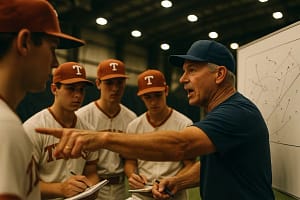
You’re in the box, and the pitcher is winding up. The fastball is coming in hot. But you’re not in a stadium; you’re in a climate-controlled, perfectly lit tunnel. The crack of the bat isn’t just a sound here; it’s a metric.
This is the difference between just swinging and structured, measurable improvement. Finding that perfect batting cage is a universal struggle. It’s for every player, from aspiring high school shortstops to weekend warriors.
It’s more than just a cage rental. It’s about finding a facility that understands a good swing is built, not bought. You need a space that feels like a training partner, not a public utility.
You need a private batting cage for focused sessions, dedicated team practice, or one-on-one coaching. The search for quality, accessible, and intentional practice time is the real game.
That’s where a structured DFW lane rental guide becomes your playbook. It’s the blueprint for moving from taking hacks to taking names. Forget just renting a lane; it’s about booking a personal training environment where every swing is an investment in your at-bat.
This isn’t just about renting a cage. It’s about renting progress.
What to Expect: From Batting Cages to Bullpens
Forget the dull, fluorescent-lit cages of your local arcade. A top indoor facility offers a unique experience. The sound of a bat hitting a fastball, the hum of machines, and the smell of pine tar—it’s far from the usual batting cage rental.
This is where training gets serious. The environment is designed for improvement, not just for practice.
Modern training facilities have changed a lot. They’ve moved past the basic batting cage rental to offer special zones for each sport. It’s not just about hitting in a dark box. It’s about choosing the right lane for your training.
Hitting Lanes: The Batter’s Laboratory
The hitting lane is like a lab for batters. It’s a place without distractions for improving your swing. Unlike a basic batting cage rental, a modern hitting lane helps you fine-tune your game.
The surface is even, the lights are perfect, and the focus is on quality. It’s where you work on your swing, timing, and mental game. The pitching machine’s hum helps you keep a steady rhythm, and hitting the ball right gives you instant feedback.
Bullpen Lanes
The bullpen lane is for pitchers. It’s a place to work on your mechanics in a controlled setting. The distance is set, the mound is official, and the focus is on mastering your pitches.
It’s where you can try new grips, perfect your change-up, or build your endurance. It’s all about the specifics to make progress.
To understand the purpose of each space, here’s a quick breakdown:
| Lane Type | Primary Use | Key Equipment | Typical Session Length |
|---|---|---|---|
| Hitting Lane | Batting practice, swing mechanics, timing, facing live pitching machines. | Pitching machines, L-screens, multiple tee stations. | 30-60 min (Individual focus) |
| Bullpen Lane | Pitching mechanics, bullpen sessions, working on specific pitches. | Regulation mound, catcher’s target, radar gun (often as add-on). | 30-60 min (Pitcher/Catcher focus) |
So, when you’re looking for a batting cage rental, you’re getting a tool for a specific task. A hitting lane is for improving your swing; a bullpen lane is for mastering your pitches. The best places, like 415 S. Nolen Dr., offer both. Choosing the right lane turns practice into a science.
Booking: Peak/Off-Peak Times, Recurring Slots, Cancellations
Think of the booking calendar as a dynamic chessboard. Your wallet, calendar, and the facility’s rhythms guide your next move. Booking your time at DFW Indoor Sports is about strategy, not luck. It’s about understanding the economics of supply, demand, and the psychology of amateur athletes.
The key is to book strategically. The difference between peak and off-peak times is more than just a few dollars. It’s the difference between practicing like an amateur and training like a pro who values every dollar.
Peak vs. Off-Peak Rates: The Economics of Cage Time
Your batting cage rental cost changes based on the time. Peak hours, like weekdays after 4 PM and weekends, are in high demand. The rates are higher, reflecting the premium for prime-time access.
Off-peak hours, like weekday mornings and early afternoons, are a secret. The facility’s hours (Mon-Fri 12-9, Sat 9-5, Sun 12-6) guide you. The advice? Book when others are not, like a contrarian investor.
| Time Slot | Peak Rate (per 30 min) | Off-Peak Rate (per 30 min) |
|---|---|---|
| Weekday Evenings (4 PM – 9 PM) | $40 | N/A |
| Weekend Mornings (9 AM – 12 PM) | $45 | N/A |
| Weekday Mornings (12 PM – 4 PM, Mon-Fri) | N/A | $25 |
| Weekday Afternoons (12 PM – 4 PM, Weekends) | N/A | $28 |
| Weekday Evenings (Post 8 PM) | $35 | N/A |
Booking a recurring slot is like a gym membership for your swing. It’s about consistency. DFW Indoor Sports offers recurring time slots for dedicated athletes. It’s not just a batting cage rental; it’s a commitment to improvement.
The cancellation policy is important. Life can change, and sometimes you need to reschedule or cancel. The pros give 24-hour notice as a courtesy. It frees up the cage for others and avoids a fee.
Think of it as part of your batting cage rental strategy. Planning ahead and communicating changes is key. View your lane time as a recurring investment in your development. Book the recurring slot, respect the cancellation window, and watch your consistency—and batting average—improve.
Add-Ons: Machines, Radar, Video/Analytics
Renting a lane is just the start. The real magic happens with the tech. It turns a simple bullpen session into a clinic.
The right add-ons don’t just measure your work. They make your work count. They give you the feedback you need to improve.
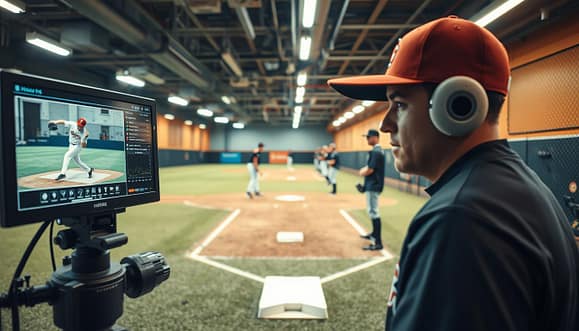
Think of these tools as a coaching staff in your pocket. They provide data your own perception can’t. They help you see flaws in your swing or release point.
This is where practice becomes deliberate. It’s about making every swing count.
Pitching Machines & Tech: Your Programmable Practice Partner
The modern bullpen is dynamic. It’s not just about hitting a static tee. It’s about creating the right pressure.
- Variable-Speed Pitching Machines: The great equalizer. Program a sequence of fastballs, change-ups, and breaking balls to simulate a live at-bat. It’s the difference between hitting a stationary target and reacting to a pitch.
- Pitch Location Targets: Combine a machine with a target net or strike zone. This isn’t just about making contact; it’s about training to hit the ball where it’s pitched, driving the ball to all fields with intent.
The ROI here is specificity. You’re not just getting swings; you’re getting quality swings against the exact pitch types and locations you need to master.
Video Analysis Packages
This is where practice moves from subjective feel to objective fact. A standard bullpen lane gives you a session. Video analysis gives you a PhD in your own mechanics.
- Dual-Angle Capture: High-speed, multi-angle cameras capture your swing or pitching motion in forensic detail.
- Side-by-Side Playback: Compare your mechanics to a pro model or to your own form from a previous session. The difference between what you think you’re doing and what you’re actually doing can be staggering.
- Frame-by-Frame Analysis: Is your lead foot opening up too early? Is your arm slot dropping? The video doesn’t lie, turning subjective feelings into solvable mechanical problems.
Think of it as a merciless, objective coach. It won’t console you with platitudes; it will show you the 2-inch dip in your back shoulder that’s sapping your power.
The Data Dashboard: Radar, Metrics, and Feedback Loops
If video is the “what,” then the data is the “so what.” This is where bullpen lanes transform into a high-feedback environment.
| Tech Tool | What It Measures | The “Aha!” Moment It Provides |
|---|---|---|
| Radar Gun / Pitch Tracking | Exit Velocity, Pitch Velocity, Spin Rate | Is your “fastball” really getting on the hitter faster, or does it just feel that way? Data is truth. |
| Launch Monitors | Launch Angle, Exit Velo, Spin Axis | You crushed that ball, but was it a 350-ft. home run or a 280-ft. warning track out? The data doesn’t hype. |
| Pressure Sensors | Force Plate Analysis, Weight Shift | It shows the 60/40 weight distribution in your stance that’s robbing you of power, visualized. |
This isn’t just about getting a number. It’s about creating a feedback loop. You make an adjustment—say, a grip change or a leg kick adjustment—and you get an immediate data point on its effect. This turns a practice session into a series of quick, measurable experiments.
In the end, these add-ons are investments in your athletic intelligence. They shift the conversation from “I think I’m doing this” to “I know I’m doing this.” The lane is your canvas, but the technology is the brush that lets you paint a much clearer picture of the athlete you’re becoming.
Team Packages & Clinics: Maximizing Value Per Hour
Think of practice time as a fixed resource. You have two hours and twelve players. The clock is your opponent. The goal is to make every minute count with swings, throws, and drills.
Moving to a team package is more than a discount. It’s a strategic shift. It’s like moving from a pick-up game to a professional playbook. We help you create a system of practice.
Structuring Team Practices: The 2-Hour Blueprint
You’ve booked a two-hour block for your 12-player squad. The old way was one lane, one batter, eleven waiting. The team package way is a practice plan as efficient as a double-play pivot.
Instead of a single-file line, you become a coach-conductor. Split the group. While six players hit in one lane, the other six do fielding drills, video review, or huddles. Every player is engaged, every minute is used. This “cooperative practice model” is the secret to maximizing your team package value.
For a 12-player team in a 2-hour block, consider this 6-station rotation model:
- Station 1 (Lane 1): Live batting practice with a coach or machine.
- Station 2 (Lane 2): Tee and soft-toss station for swing mechanics.
- Station 3 (Open Area): Fielding and throwing mechanics.
- Station 4 (Cage Wall): Video analysis and swing review on a tablet.
- Station 5 (Open Area): Strength and agility drills (e.g., ladder, medicine ball).
- Station 6 (Pitcher’s Mound): Bullpen session for pitchers (if cage allows).
Rotate every 15-20 minutes. The result? Zero standing, zero dead time. Every player gets 120 minutes of focused, station-specific work, not 120 minutes of waiting. You’ve just 4x’d your practice density.
Clinic Formats for Groups
Clinic formats are the strategic power-up for groups. This is where a team package transcends practice and becomes a targeted skill acquisition lab. Forget the one-size-fits-all approach. Clinics are where we move from repetition to refinement.
We structure clinics around specific, high-impact themes. This isn’t just “hitting practice.” It’s a surgical strike on a single skill.
| Clinic Focus | Target Skill | Typical 90-Minute Clinic Flow | Max Group Size |
|---|---|---|---|
| Two-Strike Approach | Contact, Plate Discipline | 20 min drill, 25 min live pitching, 45 min situational BP | 8 players |
| Two-Strike Approach | Contact, Plate Discipline | 30 min drill, 30 min live pitching, 30 min situational BP | 10 players |
| Two-Strike Approach | Contact, Plate Discipline | 30 min drill, 30 min live pitching, 30 min situational BP | 10 players |
| Opposite-Field Power | Driving Outside Pitches | 20 min drill, 40 min targeted machine work, 30 min live | 6 players |
| Two-Strike Approach | Contact, Plate Discipline | 30 min drill, 30 min live pitching, 30 min situational BP | 10 players |
This isn’t just practice; it’s targeted, outcome-driven training. The clinic format creates a focused, collaborative environment. Players learn from an expert while feeding off each other’s energy. It’s the most efficient way to level up a specific skill across your entire roster in a single, power-packed session.
So, stop thinking in terms of renting a cage. Start thinking in terms of acquiring a high-density, high-focus training environment. That’s the real value of a team package. It’s not a discount; it’s a force multiplier.
Safety & Etiquette: Helmets, Screens, Ball Retrieval, Flow
Using a shared practice space is more about understanding each other than following rules. In a batting cage, wearing a helmet shows respect for everyone. It’s not just about safety; it’s about being considerate of others.
Personal Safety Gear: Your First and Last Line of Defense
Wearing a helmet is not optional. It’s a sign of respect for yourself and others in the facility. It shows you’re serious about your practice and aware of your surroundings.
Wearing protective gear is a sign of respect in the cage. It makes you look like a regular, not a beginner. Your gear is your badge of honor in this space.
Lane Etiquette for Shared Spaces: The Unspoken Rules
The rules of a batting cage are not written down. They are understood by everyone. Good manners keep the practice smooth and enjoyable for all.
Before you start, look around. Check if someone is swinging or if a ball is being picked up. A little awareness can prevent trouble.
Respecting the flow of the facility is key. When you’re done, let the next person know it’s their turn. Don’t hold up others to film your swing. It’s a team effort.
Here’s how to be a good sport in the cages:
| Poor Cage Etiquette | Exemplary Cage Courtesy |
|---|---|
| Leaving a mountain of practice balls for the next person. | Retrieving and neatly piling balls at the end of your session. |
| Letting your bucket of balls scatter into adjacent lanes. | Keeping your projectiles in your own lane and alerting neighbors if a ball goes astray. |
| Taking a 10-minute phone call while occupying a lane. | Keeping transitions tight and being ready when it’s your turn. |
| Offering unsolicited swing advice to strangers. | A simple “heads up” if a ball rolls into your neighbor’s space. |
Good etiquette in the cages means being considerate and efficient. It’s about respecting the space and the people in it. Follow these rules, and the cages will be a better place for everyone.
60-Minute Lane Plans (Tees → Flips → Machine)
Think of your next batting cage rental as a three-act play. Every great performance needs structure. Your 60-minute cage session is no different. It’s not just swinging at pitches; it’s directing a scene where you’re the star, the director, and the critic.
Like any good story, a productive cage session needs a beginning, middle, and end. It’s the difference between a player who just takes hacks and a hitter who builds a plan. We’re not just renting a cage; we’re directing a blockbuster practice, and every swing has a purpose.
The 20-20-20 Framework
Forget the old-school “swing until your hands bleed” approach. Modern hitting is about quality, not just quantity. Enter the 20-20-20 framework, a rhythm that mirrors the three-act structure of a great film.
Act I: The Foundation (Tee Work – 20 minutes). This is your setup. It’s not glamorous, but it’s where championships are built. Use the tee to lock in your stance, load, and the all-important connection point. It’s not about power here; it’s about precision.
Act II: The Complication (Coach/Machine Flips – 20 minutes). The stakes are raised. Now you have a moving ball, but it’s a controlled, predictable feed from a coach or a soft-toss machine. This is the “raising the stakes” middle act. The pitch isn’t random; it’s a consistent, hittable strike.
Act III: The Climax (Pitching Machine – 20 minutes). The final showdown. The machine is your antagonist, firing pitches with machine-like (because it is a machine) consistency. This is the “live-fire exercise.” The velocity is up, the spin is real, and there’s no coach saying “here it comes.” This is where you execute the mechanics you drilled in Acts I and II under game-like pressure.
Sample 60-Minute Practice Flow
Ready to direct your own blockbuster? Here’s a script to follow for a productive hour in the cage. This plan assumes you have a partner or coach for the flip portion. If you’re solo, you can substitute the flips for more focused tee or machine work.
| Time Block | Activity | Focus/Goal | Pro-Tip |
|---|---|---|---|
| 0-5 min | Dynamic Warm-up & Mental Prep | Increase blood flow, mental rehearsal of swing keys. | Don’t skip this! Visualize your swing path before you touch a bat. |
| 5-25 min | Act I: Tee Work (3-4 tee stations) | Mechanical mastery. Focus on one mechanical cue per station (e.g., load, connection, extension). | Use your phone to film a few swings. The gap between feel and real is often a shock. |
| 25-45 min | Act II: Coach/Machine Flips | Timing and path adjustment. Focus on hitting the ball where it’s pitched. | Call your shot before the pitch. “This one is a line drive to right-center.” |
| 45-55 min | Act III: Machine Work | Reaction and execution under pressure. Mix of fastballs and off-speed. | Have a goal (e.g., “Hit 5 line drives to the opposite field”). |
| 55-60 min | Cool Down & Review | Light stretching, mental review of what worked. | Write down one thing that felt great and one thing to work on. |
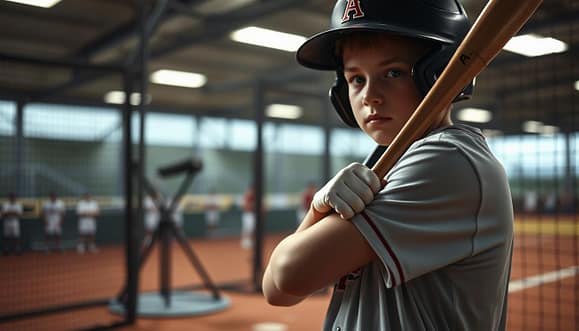
This flow isn’t just about getting swings in. It’s about building a repeatable, high-pressure swing. The tee is your script, the flips are your rehearsal, and the machine is opening night. Each act builds on the last, ensuring no minute of your batting cage rental is wasted on mindless repetition. You’re not just renting a cage; you’re directing your own improvement.
Remember, the quality of your practice in a batting cage rental isn’t measured by how many swings you take, but by how many quality swings you take with a clear, progressive purpose. That’s the analytical, results-driven approach that turns cage time into game-time results.
Rotations for 8–12 Players (Station Timing)
Every second counts when you have 12 players in a 60-minute session. It’s not just about taking turns; it’s a complex dance of time and efficiency. Think of it like a high-stakes pit stop in a Formula 1 race. A five-second delay is a swing missed, a rep lost forever.
The goal is to create a smooth flow, like a well-oiled swing. This ensures every moment is used to its fullest.
Coaches face a big challenge: managing 12 players in 60 minutes. The math is simple but tough: 60 minutes, 12 players, and limited equipment. The wrong rotation can turn practice into a waiting game. But the right one, a meticulously timed 6-station rotation, is a logistical miracle.
6-Station Rotation Example
A structured 6-station rotation is key. It creates a logical flow that minimizes downtime and maximizes equipment use. Each station focuses on a specific skill to keep players engaged.
Imagine splitting a 12-player team into two groups of six. While one group is in the cage, the other is at a station. The clock controls the flow. Here’s a blueprint for a 60-minute session, designed to maximize reps and minimize downtime.
| Station | Activity | Duration | Key Focus & Notes |
|---|---|---|---|
| 1. Tee Work | Fundamental swing mechanics off a stationary tee. | 8 min | Focus on form, weight transfer, and contact point. The feel station. |
| 2. Front Toss | Live, soft-toss from a coach or partner. | 8 min | Hand-eye coordination and timing against a moving ball. |
| 3. Pitching Machine | High-velocity, consistent pitch simulation. | 8 min | Timing and bat speed against consistent velocity. |
| 4. Soft Toss / Reaction | Quick-hands and bat-to-ball skills. | 8 min | Emphasis on bat speed and quick decision-making. |
| 5. Video Analysis (Stationary) | Reviewing swing mechanics on a tablet. | 8 min | Immediate feedback and visual learning. |
| 6. Soft Toss / Overload Training | Weighted bats or resistance training. | 8 min | Building strength and muscle memory. |
This rotation keeps everyone busy. While one player analyzes their swing, another is hitting fastballs. It’s a symphony of controlled chaos.
Timing the Clock for Maximum Reps
Managing time is critical. A smooth 60-minute session with 12 players and 6 stations requires precision. The math is simple: 60 minutes / 6 stations = 10 minutes per station, including transition. This is not a suggestion; it’s a must.
The secret is the 2-minute handoff. When the timer goes off, it’s time to move. The new group must be ready to go before the previous one has left. It’s a choreographed changeover, like a NASCAR pit stop for hitters.
The most efficient flow is a simple rotation: Station 1 -> 2 -> 3 -> 4 -> 5 -> 6 -> 1. This creates a continuous loop where players always know where they’re going next. The coach’s job is to keep the transitions smooth. The payoff? In a 60-minute block, players can get 40-50 quality swings across various drills.
This level of organization makes a big difference. It’s what separates a good team practice from a great one. For teams looking to get the most out of our team packages, this blueprint is essential.
Prep & Pack List for Lane Sessions
Forget the frantic, last-minute scramble in the parking lot. A seasoned player knows that success starts before the first pitch. Packing your bag is the first drill of the day. It’s a mental shift into the focused world of the batter’s box.
Forgetting something important isn’t just a hassle; it’s a missed chance. This is your pre-game, and your checklist is your guide.
Think of your gear in two parts: must-haves and extras. The first gets you started; the second makes your session great.
Gear: From Essential to Pro-Tip
Your bat, helmet, and glove are key. But the extras make you stand out. Let’s look at the basics and the top picks.
The Non-Negotiables:
- The Primary Bat: Your go-to. But, a smart player brings a spare. A dead bat can ruin your session.
- Helmet: Essential for safety and etiquette. It shows respect for the facility and others.
- Batting Gloves: Carry two pairs. One for the game, another for when the first gets wet. A good grip is key.
- Grip Enhancers: A towel and rosin bag. They help keep your grip dry and strong under pressure.
Pro-Tip Gear (The 1% Edge):
- Sensor-Laden Batting Gloves: Some gloves track your swing. This data can help you improve.
- Portable Swing Analyzer: A small tool that gives instant feedback on your swing. It’s like having a coach in your pocket.
- Microfiber Towel Trio: Use one for your bat, one for your face, and one for your bat handle again. Dry hands are essential for quick reflexes.
The “Forgotten Items” Checklist
This list is for after you think you’ve packed everything. Missing these items can cause frustration.
- Extra Socks: Changing into dry socks after a session is a luxury. It feels like first-class treatment.
- Hydration Multiplier: Electrolyte packets or sports drink mix. They help prevent dehydration from sweating.
- Basic First-Aid: Athletic tape, pre-wrap, and band-aids. They can fix minor issues without ending your day.
- Phone Charger/Battery Pack: If you’re filming your swing, a dead phone is a problem. It’s important for analysis.
- Spare Laces: A broken lace can stop you from playing. A quick fix can save a lot of time.
- A Small Towel, Specific for Your Batting Helmet Visor: Fogging can distract you. A clean microfiber for your visor helps you see the ball better.
Packing with this level of detail shows you’re in control. It’s a sign of a prepared mind. When you enter the cage, your gear is ready. You’ve already solved many problems before you start.
This is the etiquette of the prepared athlete. It shows respect for the game, your time, and others training with you. The right gear makes the session better for everyone.
Contact, Parking, and Check-In Tips
The final test of a prepared athlete isn’t just in the cage; it’s in the logistics. Knowing the where, the where-to-park, and the how-to-check-in are key. They make the difference between a smooth start and a frantic, gear-laden scramble.
Location & Parking Intel
We’re at 415 S. Nolen Dr., Southlake. Parking is the first drill. Arrive early, scope your spot, and secure your gear. It’s like knowing your terminal at DFW: a little pre-planning prevents a last-minute, gear-dragging sprint.
Our lot is your first transition; make it smooth.
The Smooth Check-In Process
Check-in is your first at-bat. Have your confirmation ready. Our staff will confirm your lane and time, ensuring you step into the cage without a wasted minute.
This isn’t red tape; it’s the playbook. Just as a pilot has a pre-flight checklist, your lane time starts the moment you arrive prepared. Have your gear, your plan, and a clear head. The game starts before you step in the box.