Navigating youth sports in Texas is like playing a high-stakes board game. The state is vast, your players are your pieces, and your resources are limited. You have only so many weekends and a budget to manage.
Every tournament from El Paso to Beaumont promises “elite competition” and “college exposure.” Your inbox is flooded with flyers. How do you pick the right ones?
This isn’t just another list. It’s your strategic briefing. We’ll dive deep into the world of youth baseball. We’ll explore traditional tournaments, the rise of travel ball, and new opportunities.
Our aim is to provide you with an analytical framework. A guide to cut through the hype and make informed decisions. Your team’s success will be worth it.
Statewide Event Landscape (league vs. travel vs. rec)
Choosing a Texas youth baseball tournament is like picking a political party. Each has its own rules and goals. Your choice affects your team’s season, budget, and identity.
The League structure is like the “West Wing” of youth baseball. It’s traditional and follows strict rules, like Little League. The Texas Little League World Series is the top event here. It’s a tough competition that leads to Williamsport.
The Travel Ball circuit is like the wild west. It has flexible rules and lots of travel. The focus is on getting noticed, with games designed to showcase talent. It’s a high-risk, high-reward option.
Rec Ball is the grassroots movement. It’s focused on development and is less intense. But it’s changing, like with the new RBI Girls Baseball divisions. This shows rec ball is becoming more competitive and inclusive.
Coaches and parents need to think carefully. They’re not just signing up for games. They’re choosing a whole ecosystem.
- League Ball offers a structured path with a clear goal (Williamsport).
- Travel Ball is flexible, with a focus on exposure and travel.
- Rec Ball focuses on skill-building and is growing to include more players.
Your choice affects your summer, budget, and the athlete you develop. Picking the right Texas youth baseball tournaments means understanding your team’s place. Get it wrong, and you’re in a different game.
Event Types and What They Develop
More than just dates and places, a Texas youth baseball tournament’s true essence lies in its bracket format. This isn’t just a schedule; it’s a hidden syllabus for your season. Are you enrolling your team in a seminar on high-stakes pressure, a masterclass in sustained consistency, or a lab experiment in strategic depth?
We have three main philosophies in tournament formats, each with its own followers and outcomes. Think of them as the political parties of youth sports: one favors dramatic revolution, another a two-stage electoral college, and the last a pure, participatory democracy.
Single-Elimination is the “Hunger Games” model. The stakes are brutally simple: win or your season is over. It’s a pressure cooker that forges a clutch mentality and teaches finality. But let’s be honest—it can also sacrifice developmental reps on the altar of drama. One bad inning, and a kid’s tournament is done. Is that the lesson we want to teach?
Then there’s the Pool Play into Bracket system, the college football playoff of youth baseball. Teams play a preliminary round-robin to seed a knockout stage. It offers more games, which is good. But it has a dark side: a tough pool draw can sink your championship hopes before the “playoffs” even start. Savvy coaches can sometimes game this format, making the early rounds a strategic chess match.
The Guaranteed Round Robin, like the 4-team model by RBI, is the Swiss-style democracy of tournaments. Every team plays each other, then the top two advance to a final. This format isn’t about “win or go home.” It’s about “play and learn.” Data shows this model maximizes guaranteed reps, eliminates fluke eliminations from a single bad game, and promotes competitive balance. Most importantly, it lets you manage pitching health like a sane person, not a desperate gambler.
| Format | Core Philosophy | Develops… | The Catch |
|---|---|---|---|
| Single-Elimination | Survival of the Fittest | Nerve, Clutch Performance | Minimizes playing time; high-risk. |
| Pool into Bracket | Earn Your Seed | Consistency, Early-Round Strategy | Pool draw can be unfair; can be “gamed”. |
| Guaranteed Round Robin | Democratic Participation | Depth, Pacing, Strategic Rotation | Less “do-or-die” drama; requires more schedule time. |
So, when you scan that tournament calendar, you’re not just picking a weekend. You’re selecting the silent curriculum for your team. Do you want a seminar on surviving pressure, a course in navigating a flawed system, or a workshop on building sustainable, deep-roster success? The bracket format holds the answer.
Age Divisions & Sanctioning Considerations
Sanctioning bodies in youth baseball are like rival streaming services. Each has its own rules and fees. Your first mission is figuring out age divisions. Is your team 8U, 10U, or 14U? The ‘U’ means ‘and under,’ but it’s more than just age.
Deciding to play with your age or up is key. Staying in your bracket builds confidence. But playing up can grow your team faster than any practice.
After choosing your division, you must know whose rules apply. This is where sanctioning bodies come in. Pick the wrong one, and you might face problems.
To understand the two main governing bodies, let’s compare them. Your choice affects everything from rules to national titles.
| Consideration | Little League International | Travel Ball (USSSA, Triple Crown) |
|---|---|---|
| Core Philosophy | The institution. It’s the MLB of youth ball, with its own World Series (ages 10-12). | The showcase circuit. Built for exposure, travel, and weekend warrior glory. |
| Rulebook & Roster | Strict residency proofs, mandatory play rules, and ironclad pitch counts. | More flexible roster rules. Often allows for guest players and wider geographic draws. |
| Event Focus | Community-based, tournament play culminating in the iconic LLWS path. | Weekend showcases and tournaments designed for maximum games and scout visibility. |
| Path to a “Title” | Linear: win your district, section, state, region, and advance to Williamsport. | Non-linear: accumulate points at sanctioned events to qualify for larger national invites. |
Little League is strict but legendary. If you want that iconic journey, you must follow their rules. Their age divisions are strict, and their 10-12-year-old bracket is the crown jewel.
The travel ball sanctioning bodies are different. USSSA, Triple Crown, and others focus on volume and flexibility. Want to stack your 12U team with 11-year-old phenoms? Often permissible. Need a pitcher from another town for a big weekend? Usually an option. It’s a different game.
New players are changing the game. Organizations like MLB’s RBI are creating their own pathways. They’re launching dedicated Girls Baseball age divisions from 6U through 14U. This isn’t just another tournament; it’s building a parallel structure for underserved groups.
So, how do you choose? Align your goals with the governing body’s mission. Seeking tradition and a defined path? Little League. Want high-level reps and flexibility? The travel ball sanctioning bodies are your arena. Ignoring this alignment can lead to problems.
Selection Criteria Matrix: Competition Level, Travel, Cost, Exposure
Choosing tournaments is more than a gut feeling. It’s about using a simple four-axis matrix. Forget the online promo’s shiny trophies. You’re managing a portfolio, and each travel ball event is an investment. Picking wrong can hurt your record and derail your season.
Let’s break down the variables.
Competition Level is your first filter. Is this a “tune-up” or a “measuring stick”? Your player development goals decide. Young teams need wins to build confidence. Veteran teams need tough challenges.
A balanced calendar is key. It places tough events between easier ones.
Travel is a silent budget killer. A local event is a sprint. But a multi-city trip is a marathon with hotels, logistics, and meals on the go.
That six-hour drive isn’t just a line item. It’s dead legs in the second game. Local events offer community vibes that distant ones can’t match.
Cost adds up fast. Entry fees are just the start. Add gas, hotels, and meals for the team and families. Budgeting for tournaments is essential.
That $2,000 weekend could fund three local events with money left for new equipment.
Lastly, Exposure is tempting. Does this tournament attract college scouts? For older teams, this matters. But for 10U, it’s a fantasy. Be honest. Chasing exposure at the wrong age is costly.
| Criterion | Key Considerations | Questions for Coaches |
|---|---|---|
| Competition Level | Tune-up vs. measuring stick; impact on team confidence. | Does this challenge us appropriately for our current phase? |
| Travel | Player fatigue, family logistics, hotel costs, total time commitment. | Is the competitive benefit worth the travel wear and tear? |
| Cost | Entry fees, transportation, lodging, meals. The full trip cost. | What is the true per-player cost, and does our budget allow it? |
| Exposure | Scout attendance, event reputation, age-appropriate relevance. | Is scout exposure a realistic goal for this team at this age? |
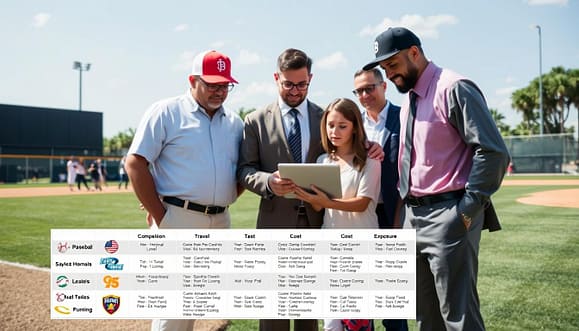
The magic happens in the synthesis. You weigh a high-cost, high-travel event against its competition level and exposure. A perfect calendar has a mix: local tune-ups, regional measuring sticks, and maybe one “destination” travel ball event. The bad calendar? It’s the one where you spend $2,000 for three blowout games. Let the matrix guide you.
Periodized Training Plan: 6–8 Week Ramp to a Key Tournament
Preparing for a big tournament is like fine-tuning a race car. You don’t just go full speed right away. It’s about making small adjustments over time. Peaking is not just luck; it’s based on science.
A haphazard approach before a tournament can leave your team exhausted. Instead, use a periodized ramp. This method, used by Olympic athletes, builds up effort over 6 to 8 weeks. It’s based on how our bodies work best.
Ignoring this science is like hoping for a miracle. But following it can lead to success.
Let’s look at the four phases of this training plan. Each phase has a specific goal that helps reach the season’s player development goals.
Phase 1: Foundation & Volume (Weeks 1-2)
This phase is like spring training. It’s not about winning games yet. Practices are longer, but not too intense. Focus on drills that build strength and muscle memory.
Building arm strength and muscle memory is key. We’re saving up for later. It might not be exciting, but it’s essential.
Phase 2: Intensity & Integration (Weeks 3-5)
Now, we start to connect the dots. The intensity goes up, but the volume goes down a bit. Practices become more like real games.
It’s time to learn when to do things, not just how. This phase builds your team’s game IQ. It’s where skills under pressure are honed.
Phase 3: Taper & Specificity (Week 6)
Don’t overwork your team here. The taper is your secret weapon. Practices are shorter, but more focused.
Work on specific skills for your tournament. If you face a small-ball team, practice bunting. For elite velocity, focus on quick reactions. This phase is all about precision.
Phase 4: Activation & Mental Prep (Final Week)
This week is all about being crisp and confident. Practices are short and positive. Focus on mental preparation and game plans.
It’s time to activate what you’ve built. Aim to arrive at the tournament feeling fresh and ready to go.
| Week Block | Phase Name | Primary Focus | Sample Drills / Activities | Player Development Goals |
|---|---|---|---|---|
| 1-2 | Foundation & Volume | Build muscular endurance & technical skill memory | High-rep fielding drills, long-toss programs, tee work | Establish fundamental proficiency and base fitness |
| 3-5 | Intensity & Integration | Execute skills under simulated game pressure | Live at-bats, situational scrimmages, pick-off plays | Develop game IQ and decision-making under stress |
| 6 | Taper & Specificity | Sharpen skills tailored to opponent/event | Opponent-specific defensive sets, velocity batting practice | Enhance tactical awareness and competitive readiness |
| Final Week | Activation & Mental Prep | Peak mental focus and physical freshness | Light defensive “pencil” drills, team strategy meetings | Cultivate confidence and a focused tournament mindset |
This plan has a double benefit. You peak for your event and also improve your team’s skills. It’s not just about the tournament; it’s about building better athletes.
It prevents burnout, where teams look tired in the first game. By following the plan, the first pitch of the tournament feels like the start, not the end.
Roster Building & Roles (Pitching Depth, Utility Players)
Think of your tournament roster like a movie crew. Each member has a special job. Success depends on everyone working together. It’s not just about picking the best athletes.
Building a winning roster strategy means creating a tactical puzzle. Each piece has a specific role.
The modern tournament meta-game is tough. You need a deep roster for a three-day weekend, not just a single game. A single-elimination mindset won’t last long.
Let’s break down the blueprint.
The Cornerstone: Pitching Depth
Pitching is key in tournament baseball. Having one ace is not enough. You need a strong pitching depth.
A typical tournament book asks for your roster details early. It’s a strategic declaration. You need to know your starters, closers, and relievers.
Having enough arms is essential. You must protect young players’ health. Pitch-count rules are in place for a reason.
Here’s a practical framework for structuring your pitching staff for a standard weekend event:
| Role | Primary Function | Tournament Value |
|---|---|---|
| Game 1 Starter | Set the tone, go 4-5 innings. | High. Establishes momentum. |
| Game 2 Starter | Handle the mid-day heat, manage pitch count. | Critical. The “bridge” game. |
| Game 3 Starter / Closer 1 | Either start a possible bracket game or shut down a close one. | Extremely High. Your most flexible arm. |
| Setup Reliever | Provide 2-3 innings of middle relief. | Underrated. Saves your closers. |
| Lockdown Closer | Get the final 3-6 outs in a tight game. | Priceless. The mentality is as important as the stuff. |
This structure assumes you have at least three kids who can start and two who can close. It’s about roles, not just names.
The Swiss Army Knife: The Utility Player
The utility player is your secret weapon. They can solve multiple problems. Can they catch? Play a solid third? Maybe give you two innings on the mound in a pinch?
This flexibility is priceless. When a starter gets hurt or your catcher’s knees hurt, this player is your savior. They let you manage substitutions and matchups like a chess grandmaster.
The Role Players: Specialists Win Championships
Beyond your core, you need specialists. These players might not start every game but will win you a specific game.
- The Defensive Specialist: For late leads, you insert this kid at short or center. His glove is an insurance policy.
- The Pinch-Runner with Elite Speed: In a tie game in the 6th, he’s the difference between standing on second and scoring from first on a gap shot.
- The Lefty Bat: Facing a tough right-handed pitcher? This bat off the bench can change the complexion of an inning.
Your roster strategy must account for these specific, high-leverage moments. It’s about having the right tool for the right job, not just 12 hammers.
Building a tournament roster is about foresight. It’s not just listing names. You’re engineering a machine for a weekend grind. Every piece, from your ace to your pinch-runner, has a purpose. That’s how you move from just showing up to actually competing.
Pitch-Count Policies and Rotation Planner
Think of tournament pitch limits as the rules of a game of roster strategy. You’re not just a coach; you’re a guardian of young arms. The rules from bodies like Little League are clear for a reason—player safety is the ultimate non-negotiable. But within those boundaries lies a battlefield of decisions.
Smart coaches don’t just follow the rules. They find ways to gain an edge. Your tool? A Rotation Planner. This isn’t just a list. It’s a detailed plan for the whole tournament.
Your planning changes with the tournament format. A four-game round robin is a math problem. You can distribute innings fairly, keeping everyone fresh. It’s the format that helps manage pitcher arms evenly.
Single-elimination is a high-stakes game. You need a “Game 1” ace and a “save the season” bullpen plan. The entire roster strategy is about surviving today and being ready for tomorrow.
The key is to plan backwards. Start with the championship game and work your way back. Ask: “If we get there, who will be eligible, rested, and most effective?” This requires knowing the mandatory rest rules—often 1-4 days of rest after crossing specific pitch thresholds.
This careful planning means having tough talks with players and parents. A pitcher might be physically able to go, but is he legally cleared? Losing a tournament stings. Losing a pitcher to a preventable injury is a legacy failure.
| Tournament Format | Core Strategic Challenge | Rotation Planner Tactic |
|---|---|---|
| Round Robin (Guaranteed Games) | Managing workload across a known number of games. Avoiding overuse while maintaining competitiveness in each. | Assign innings/pitch limits per game in advance. Use your #3 and #4 starters early to save aces for later rounds. Focus on consistent, manageable outings. |
| Single-Elimination (Win or Go Home) | Maximizing today’s chance to win without completely sacrificing tomorrow’s arms. High volatility. | Deploy your true ace in Game 1. Have a “closer” or #2 starter ready for mid-game relief. Develop a “next man up” list with strict pitch limits for emergency use. |
| Double-Elimination (The Safety Net) | Planning for a possible two-game day. Balancing the need to win in the winner’s bracket with survival in the loser’s bracket. | Split your top two pitchers between the first two games. Keep a deep bullpen of low-pitch-count specialists. Always know the minimum rest requirements for a pitcher used in an early game. |
The table is more than a guide; it’s a starting point for team discussions. Fill it with your players’ names, their limits, and their rest status after each game. This visual tool turns abstract rules into a clear roster strategy.
In the end, the best planners respect the spirit of the pitch count—protecting young arms—while mastering its letter to build a sustainable, tournament-tough team. That’s the mark of a wise coach.
Practice Plans: Pre-Tourney Week and Game-Day Activation
Think of pre-tourney practice as the final dress rehearsal before opening night on Broadway. The months of skill-building are done. Now, it’s time for the hyper-specific simulation that turns preparation into performance. This shift is non-negotiable.
Your broad player development goals must temporarily narrow. The focus becomes eliminating “first-time” experiences. You’re running a Mission: Impossible briefing, not holding a general skills clinic.
Practices get shorter and faster-paced. Volume decreases, but intensity and specificity skyrocket. Why? You’re hardening neural pathways for exact scenarios you expect to face.
Run defensive drills based on the tendencies of your first-round opponent. Practice managing the 90-minute clock between games. Execute walk-off bunt and last-inning, down-by-one situations until they feel routine.
The goal is to make the tournament feel familiar before it even starts. This builds a calm, operational confidence that pure skill work cannot provide.
Game-Day Activation: The Ritual of Readiness
Game day is not about showing up. It’s about activating. I’ve watched more teams lose in the chaotic hour before first pitch than during the game itself. Lack of a ritual creates anxiety.
Your job is to be the calm conductor. Establish a non-negotiable routine: arrival time, structured warm-up (dynamic stretches, light throwing, situational defensive reps), and a quiet mental focus period.
This transforms scattered, pre-game nerves into a unified, focused energy. It signals that business time has started.
For a library of drills that support this phase, check out this drill book for structured practice plans. It’s a fantastic resource for turning simulation into success.
Ultimately, this entire process—the sharp pre-tourney week and the deliberate game-day launch—serves your deepest developmental objectives. You’re teaching players how to prepare, focus, and execute under pressure. That’s a life skill far beyond the baselines.
In-Game Strategy: Lineup Logic, Bullpen, Baserunning Pressure
Your roster strategy is always changing in tournament play. It’s like playing chess at 90 miles per hour. Every move can affect the whole weekend.
Each game is like a chapter with its own rules. In pool play, run differential might decide the tiebreaker. You’re playing not just to win today, but to set up for tomorrow.
Do you start with your power hitters or your table-setters? Early games often see nervous pitching. Using your big bats early can demoralize opponents and save your bullpen. But in elimination games, every at-bat is precious. That’s when a high-OBP leadoff hitter becomes invaluable.
Your batting order should have different roles. Some lineups aim to hit home runs, others to chip away. The smart coach knows the opponent’s starter in the first inning. If they’re wild, move up your patient hitters. If they have one strong pitch, sit your players who can’t lay off it.
This is where strategy meets poker face. You’re not just managing players—you’re managing matchups, momentum, and the psychological game of tournament baseball.
Bullpen Management: The Weekend Marathon
Managing pitchers in a tournament is like budgeting with an unknown bank balance. You know you have X innings to cover, but you don’t know when emergencies will happen. Using your set-up man in a close pool game might cost you the championship.
Every pitching decision has big effects. Win today’s battle but lose the war? That’s the eternal dilemma for tournament coaches. You need a plan but be ready to change it when needed.
The table below shows how your strategy should change between game types:
| Strategic Element | Pool Play Approach | Elimination Game Approach |
|---|---|---|
| Lineup Construction | Balance scoring with player preservation | Best available players, maximum offense |
| Bullpen Usage | Manage innings, avoid overexposure | All hands on deck, win now mentality |
| Baserunning Aggression | Calculated risks, avoid unnecessary outs | Maximum pressure, force defensive errors |
| Defensive Substitutions | Rest starters when safe lead established | Best defensive alignment regardless of fatigue |
| Risk Tolerance | Moderate – playing for tournament position | High – season ends with this loss |
Baserunning Pressure: The Hidden Weapon
In tight, low-scoring games, forcing errors is your strategy. Aggressive baserunning can turn singles into doubles and shake inexperienced catchers. It’s about knowing when to test an arm versus when to preserve an out.
Tournament defenses crack under pressure. A stolen base here, an extra base there—suddenly a 2-1 game feels like a 5-1 lead. The psychological toll on young pitchers watching runners move is immense.
This isn’t reckless abandon. It’s calculated aggression. You’ve scouted their catcher’s pop time. You know which outfielders have weak arms. You’ve practiced first-to-third reads until they’re automatic. Now you deploy that intelligence like military reconnaissance.
The beauty of tournament baseball? One perfectly executed hit-and-run can change the whole weekend. One stolen base in the seventh inning can send you to the championship. While everyone watches the pitcher and batter, smart coaches win games 90 feet at a time.
Your strategic decisions create a story. Will you be the cautious general or the riverboat gambler? The answer changes with every scoreboard update, every pitching change, every baserunner. That’s why we love this maddening, beautiful game.
Logistics: Hotels, Meals, Heat Plan, Parent Communications
Forget the suicide squeeze; the real challenge in travel ball events is months before. You’re booking 20 hotel rooms with a pool view. Strategy wins games, but logistics win weekends. Fail here, and your brilliant in-game moves are just theoretical musings.
Let’s start with the war room: the hotel. Securing a block rate isn’t just about saving money; it’s about unit cohesion. Having your team clustered on two floors builds camaraderie and simplifies coach’s curfew checks. Proximity to the fields is tactical, reducing pre-game stress. And the pool? Treat it as a non-negotiable line item for morale.
Napoleon was right about armies and stomachs. Your nutritional game plan must extend beyond the concession stand’s mystery meat. Organize team meals. A pre-game pasta dinner or a post-victory pizza feast isn’t just about calories; it’s a ritual that bonds players. Provide parents with simple nutritional guidance—complex carbs for energy, lean protein for recovery.
Then there’s Texas. The sun here isn’t a celestial body; it’s an opponent. Your Texas Heat Plan is a survival manual. A shade tent is your first line of defense, not a luxury. Coolers must be stocked with ice and water, not just soda. Implement an electrolyte schedule—pass out packets like candy at specific innings. Most importantly, educate everyone on the signs of heat exhaustion: dizziness, nausea, confusion.
All this planning is useless if communication fails. Your parent group is a delicate ecosystem. Confusion breeds mutiny. This is where you run your PR campaign. Use a dedicated app; TeamSnap is the industry standard for a reason. It handles schedules, maps, and chat in one place. Over-communicate. Send the weekend itinerary, then send it again. Update game times the instant you hear.
Remember, tournament books often include community info on places to stay and eat. Use it. This isn’t just a weekend of baseball; it’s a complex operation involving sleep, fuel, safety, and diplomacy. Mastering these logistical details transforms a chaotic road trip into a focused campaign. It’s the unglamorous work that makes the glamorous moments on the field possible.
Budget Template & Fundraising Ideas
Managing the finances of travel ball events is more about survival than spreadsheets. You’re not just a coach; you’re a CFO in cleats. The first step is to create a budget. It’s as important as your lineup card.
Forget this step, and your season could be a financial disaster.
Registration fees and a detailed cost breakdown are key. So, what’s in this magical template? It’s like your expense roster. Every cost gets a position.
Let’s break it down. A smart budget faces the pay-to-play reality head-on. It covers all costs, not just the obvious entry fee.
| Cost Category | Typical Items | Pro-Tip Estimate |
|---|---|---|
| Tournament Fees | Entry, umpire, gate fees | Always add 10% for last-minute ‘admin’ costs |
| Travel & Logistics | Van rental, gas, tolls | Price rentals months early; summer rates are brutal |
| Accommodation | Team hotel blocks | Negotiate a late checkout. Trust me. |
| Food & Fuel | Team meals, snacks, water | Allocate a per diem. Teenage appetites are a force of nature. |
| The Contingency Fund | Rain-out pizza, emergency equipment | Never dip below 5% of total budget. This is your financial closer. |
Now, look at the total. Feel that panic? Good. That’s the gap between your dream season and what families can pay. This is where strategic fundraising comes in.
We’re moving past the tired bake sale. That model has a low batting average. Modern fundraising is about value exchange and community engagement.
Here are a few ideas that work:
- Online Crowdfunding Campaigns: Platforms like GoFundMe let you share your team’s story. Set clear goals—”Fund our hotel for the state finals”—and share progress. It’s transparent and taps into extended networks.
- Local Business Sponsorships: Offer jersey logos, field signage, or social media shouts. A local auto shop might fund your gas in exchange for your team photo in their lobby. It’s a win-win.
- Host a Skills Clinic: Charge a fee for younger players to learn from your athletes. It builds community, gives your players leadership experience, and generates revenue. Pure genius.
- “Parents vs. Kids” Game: Sell tickets, concessions, and maybe even pride. The entry fee is worth the comedy alone, and it turns a fundraiser into a memorable event.
The arithmetic is simple. A strategic budget exposes the need; creative fundraising bridges the gap. This approach transforms travel ball events from a financial burden into a collectively invested mission. You stop being a money collector and start being a program builder. And that’s a championship-level mindset.
Success Metrics & Post-Event Review Forms
So, you’ve packed the gear, tallied the wins and losses. What did you actually win? The trophy is just metal and wood. Real victory is measured against your team’s player development goals.
The final, critical play happens after the last out. Before everyone scatters, you conduct the Post-Event Review. Think of it as a forensic analysis, not a blame session. Create a simple form. What did we do well? Baserunning aggression? Defensive communication? What needs work? Our two-strike approach? Closing out games?
This is where data tells the story. Organizations like Perfect Game structure events for this very purpose, tracking growth over years. Their camps and showcases, like the PG Select Fest ID Camps with nearly 700 participants, exist to help young players build their resumes. A standout performance, like a .750 batting average at a 14U showcase, becomes a concrete data point for review.
Logistics get a scorecard too. How were the hotels? Did the heat plan work? This debrief turns weekend experience into institutional knowledge. It ensures this tournament’s lessons aren’t forgotten by the next one.
Your player development goals set the standard. Did we develop? Did we compete? Did we handle adversity with grit? Answering these questions closes the loop. It’s the smart step that makes your entire program sharper, turning raw experience into coached wisdom for the next season’s calendar.