Welcome! We’re exploring what makes youth sports strong. It’s the community that gives the real strength and spirit.
Think of leagues like ORWALL or CPYL, with a history of five decades. Their success shows us: lasting support comes from local roots. It’s time to move beyond car washes and bake sales.
Picture your fundraising as a community project. Imagine working with the local hardware store, family-owned restaurants, and every fan in the stands. Their help turns a simple campaign into something big.
This approach does more than fill your budget. It makes your team a part of the neighborhood. You’re building trust and shared pride, leading to reliable support year after year.
The outcome? Your athletes get a stable foundation for their sport and growth. Let’s see how to make your program the heart of a supportive network. The journey is exciting!
Modern Fundraising Landscape for Youth Sports
If you run a youth sports program today, you face a big financial challenge. Leagues like ORWALL are growing fast, with over 1,100 players. But the costs of keeping up with this growth are skyrocketing.
Parents want safe fields, quality uniforms, and professional umpires. Leagues like Cedar Park Youth League (CPYL) try to keep fees low. But the gap between what fees cover and actual costs is growing every year.
Old-school team fundraising ideas like bake sales and candy sales don’t cut it anymore. They can’t raise enough money for things like field lighting or new equipment. Relying only on these methods could hurt the quality of the program.
So, what’s the answer? It’s time to think differently about fundraising. It’s not just a chore; it’s what makes the program work. A great experience keeps kids coming back, building a strong community like ORWALL.
You need a modern, multi-faceted approach to fundraising. This includes community engagement, using technology, and finding sustainable ways to make money. It’s about making sure fundraising supports player growth, like improving baseball skills through better facilities and coaching.
Your main goal is to fund a top-notch, accessible program that makes every player feel important. The new landscape calls for creative, dependable team fundraising ideas that go beyond the usual. Let’s dive into what that means.
Traditional vs Digital Fundraising Methods
Think of your youth baseball fundraising strategy as a batting order. Both traditional and digital methods have a spot. You wouldn’t send only power hitters to the plate, right? A balanced lineup wins games. The same logic applies to filling your team’s financial coffers.
On the traditional side, you have the proven veterans. These are the methods that build community spirit right in your hometown.
- Concession Stands: The smell of popcorn at the ballpark is a classic fundraiser.
- Merchandise Sales: Hats, jerseys, and spirit wear let fans wear their pride.
- Local Event Nights: Think car washes, spaghetti dinners, or family fun days at the field.
These approaches create a tangible, local connection. You see your supporters face-to-face, and the funds often come in right on the spot.
Then, you have the digital rookies with explosive potentials. This toolbox opens up your reach far beyond the neighborhood.
- Online Crowdfunding Pages: Platforms like GoFundMe allow relatives across the country to chip in.
- Social Media Drives: A single, compelling post can be shared by hundreds, spreading your cause virally.
- Virtual Events: Live-streamed games or online auctions engage a remote audience.
Digital tools offer tracking, easy sharing, and the ability to collect donations 24/7. So, which do you choose? The secret isn’t choosing one over the other—it’s about integration!
Let’s look at a real-world play. The Texas Mustangs Baseball Foundation hosted a “Home Runs & Hold ‘Em” event. It was a traditional, in-person poker night and home run derby. But they supercharged it digitally by live-streaming the action and using an online platform for real-time donation tracking.
This hybrid model meant local attendees enjoyed the live event, while out-of-town family and alumni could watch and donate online. The result? They amplified their reach and total funds raised dramatically.
To help you visualize the strengths of each approach, here’s a quick comparison:
| Aspect | Traditional Methods | Digital Methods |
|---|---|---|
| Reach | Local, community-based | National, even global |
| Upfront Cost | Often lower (supplies, permits) | Can be low, but platform fees may apply |
| Donor Engagement | High-touch, personal interaction | Convenient, shareable, and trackable |
| Fund Collection Speed | Immediate (cash, local card sales) | Fast, but may have processing delays |
| Primary Example | Concession sales at a Saturday game | A Facebook fundraiser for new equipment |
See? Each column has clear advantages. The truly powerful team fundraising ideas weave these threads together.
Start with a traditional event, like a tournament. Then, add a digital layer: create an event hashtag, set up a crowdfunding page linked to the event, and live-stream key moments. This way, you capture the community feel and the broader reach simultaneously.
Your playbook doesn’t have to be all old-school or all new-tech. By blending the classic charm of in-person gatherings with the efficient power of online tools, you create a sustainable, impactful baseball fundraiser that scores runs for seasons to come.
Local Business Partnership Campaigns
Imagine local shops and restaurants as partners in your youth sports program’s success. This is the heart of team fundraising ideas. When done right, these campaigns benefit both your team and local businesses.
Local owners often want to support young athletes. But they need to see a clear return on their investment. Your job is to create sponsorship packages that show this value.
Think beyond just a logo on a t-shirt. Good partnerships offer different levels of visibility. A business can start with a banner along the outfield fence. The next level might include a digital scoreboard ad.
Top-tier partners get all that plus social media recognition and vendor opportunities. This isn’t just advertising; it’s community citizenship.
To help you visualize, here’s a breakdown of common sponsorship tiers. This table can serve as a template for your own team fundraising ideas.
| Package Tier | Key Features | Business Benefits | Suggested Investment |
|---|---|---|---|
| Single Banner Sponsor | One season banner at a high-traffic field location | Logo visibility at all games for one season, mention in program | $250 – $500 |
| Scoreboard Sponsor | Digital ad spot on main scoreboard, social media thank-you post | High-impact visual advertising, online engagement with families | $750 – $1,200 |
| “Grand Slam” Partner | Premium banner, scoreboard ads, social media spotlight, vendor day at park | Maximum brand exposure, direct sales opportunity, presented as community leader | $1,500+ |
| Custom Partnership | Tailored combination of features (e.g., event naming rights, team meal sponsor) | Unique alignment with business goals, highly personalized recognition | Varies |
Don’t forget vendor days! Businesses can sell food or merchandise during tournaments. This turns their sponsorship into a direct revenue opportunity.
Now, how do you make the ask? Be professional and prepared. Schedule a short meeting. Bring a one-page sheet outlining the packages. Focus on the benefits for them.
Remember, customization is key. A restaurant might value providing team meals. A printing shop might want to be the “official program printer.” Listen to their goals and craft a package that fits.
Start by making a list of 10-15 community-minded businesses. Then, reach out. You’ll be amazed at how many want to support your team.
Tournament & Event Fundraising
The Texas Mustangs’ “Home Runs & Hold ‘Em” event is a great example of mixing sports with fun for youth baseball fundraising. It combined a home run derby with a casino night. This created a memorable event that raised a lot of money for the team.
Why does this work so well? A good event turns people into active participants. It creates excitement that simple donations can’t. Your fundraiser becomes a community event, not just a request for money.
Choosing the right theme is key. Think about what your community loves. Is it an alumni game, a casino night, or a home run derby? The theme sets the mood for the whole event.
- Budget First: Know your costs for venue, permits, food, and entertainment. This helps you figure out how much to raise.
- Ticket Strategy: Sell early-bird tickets to see interest. Offer family packs or VIP packages for more money.
- Sponsor Integration: Local businesses want to be seen. Offer sponsorship tiers with logo placement, thanks, and booth space.
- Promotion: Use social media, local newspapers, and team networks to share the story, not just the ticket.
Don’t just count on ticket sales! Layer your income. Add a silent auction with local items. Run a 50/50 raffle and sell branded merchandise or concessions at a markup. These extras often bring in the most money.
A well-run tournament does more than cover costs. It makes your team known as a vibrant community part. Families talk about it for months. This goodwill makes future youth baseball fundraising easier. You’re not just collecting money; you’re building lasting support.
Online Crowdfunding Platforms
Your team’s journey to the championship needs funding, and online platforms offer a powerful way to rally support far beyond your hometown. Think of it as your digital dugout—a central place where your team’s story meets the generosity of a global community. This approach is one of the most effective team fundraising ideas for the modern age, turning heartfelt narratives into tangible resources.
Setting up a compelling campaign page is your first step to success. Let’s look at what works. Successful campaigns, like the ORWALL capital campaign or the Texas Mustangs’ event page, share key ingredients. They start with a clear, emotional “why.” Why does your team need new uniforms or travel funds? Tell that story simply and powerfully.
Next, set a specific financial goal and show progress with a tracker. A visual progress bar does wonders. It builds momentum and shows donors they’re contributing to a winning effort. Make donating effortless. Include multiple payment options and, importantly, a QR code. A QR code lets supporters donate in seconds by simply scanning with their phone—no typing required!
Crafting your narrative requires thought. Use photos and videos of your team in action, during practice, or celebrating small victories. These elements build connection. Set a realistic timeline—30 to 45 days is often ideal. It creates urgency without feeling rushed.
Now, how do you get people to your beautiful campaign page? Promotion is everything. Share it through every channel in your team’s network.
- Email: Send a personalized launch email to all team families with a direct link.
- Social Media: Post regularly on Facebook, Instagram, and Twitter. Use team photos and short video clips.
- Text Messages: A quick text with the link and QR code can have a huge open rate.
- Community Boards: Share the QR code on posters at local libraries or coffee shops.
To see how online crowdfunding transforms the process, let’s compare it with older methods. The differences are striking and highlight why this is a go-to strategy for teams today.
| Aspect | Traditional Fundraising | Online Crowdfunding |
|---|---|---|
| Reach | Limited to local community, face-to-face interactions. | Global reach; friends and family anywhere can donate instantly. |
| Storytelling | Verbal explanations or printed flyers with limited space. | Rich multimedia: videos, photo galleries, and detailed written stories. |
| Donation Ease | Cash, checks, or in-person card payments. | Secure online payments, recurring donations, and QR code scans. |
| Tracking Progress | Manual tallying; progress is not visually shared in real-time. | Live progress bars and public supporter counts motivate everyone. |
| Promotion | Word of mouth, physical flyers, and local events. | Integrated social sharing, email blasts, and digital word-of-mouth. |
Remember, your campaign page is your team’s home online. Update it weekly with new photos or a short “thank you” video from the athletes. This shows donors the impact of their gift and keeps engagement high.
By combining a powerful story, clear goals, and smart promotion, online crowdfunding unlocks new levels of support. It empowers every player’s family to become an ambassador for your cause. Embrace this digital tool, and watch your team fundraising ideas come to life, connecting your players’ dreams with a community ready to help them succeed.
Merchandise & Concession Strategies
Merchandise and concession programs can be key to your team’s financial health. They turn everyday moments into a steady income. Let’s look at how to make the most of these areas for lasting support.
Go beyond the usual. Uniforms are needed, but branded gear and jerseys make a big difference. A well-designed hoodie or cap with your team’s logo is more than clothes. It’s a way to show pride and earn money all year.
Concession stands also have great possibilities. Instead of just chips and soda, try local pizza, bakery, or coffee. Fresh, quality options make the game better and encourage more spending. This helps local businesses too.
Manage your stock wisely. Avoid being stuck with unsold items. Start with pre-orders for new items to see interest. For concessions, track sales to know what’s popular. This helps reduce waste and increase profits.
Set prices to make a profit, but keep them fair. Your prices should cover costs and help reach your goals. Market these items as a way to show team spirit, not just a sale.
See how a simple change can make a big difference. The right strategy turns sales into a strong way to fundraise all year.
| Aspect | Traditional Approach | Optimized Strategy |
|---|---|---|
| Product Range | Basic t-shirts and standard snacks. | Branded gear (hoodies, bags) and premium local food options. |
| Pricing Model | Set to barely cover costs. | Value-based pricing that supports profit goals while giving value. |
| Vendor Relations | Purchasing from large wholesalers. | Partnering with local businesses for unique products and mutual promotion. |
| Marketing Angle | “Buy this to help the team.” | “Wear your pride and fuel our season with every purchase.” |
| Community Impact | Transactional, one-time support. | Builds lasting identity and fosters continuous fan engagement and funding. |
By using these strategies, you create more than just a cash box. You build a model that strengthens the bond between your team and supporters. This turns sales into enthusiastic support that lasts all year.
Grant Writing for Youth Programs
When planning a big project, framing your fundraising as a grant proposal can boost your success. Think of grants as targeted investments in your league’s future. This approach makes your youth baseball fundraising efforts clear and compelling, showing donors the value of their contribution.
The ORWALL capital campaign is a great example. They faced old facilities and growing participation. Instead of just asking for money, they presented a clear plan with five phases. Each phase had a specific need, goal, and budget, turning their ask into a fundable proposal.
So, what makes a winning proposal? Let’s break it down into five key parts you need to master.
1. The Executive Summary: This is your elevator pitch. In one page, summarize who you are, what you need, why it matters, and how much it costs. Make it so compelling that a busy reader understands your mission instantly.
2. A Clear Statement of Need: Use data and stories. Show how many kids are on waiting lists and the safety issues with old bleachers. Paint a vivid picture of the problem your project will solve.
3. Measurable Objectives: What will success look like? “Build two new batting cages” is good. “Increase player capacity by 30% and reduce practice wait times by 50%” is better. Funders love concrete, measurable outcomes.
4. The Detailed Budget: This is non-negotiable. Every dollar must be accounted for. A transparent budget builds trust and shows you’ve done your homework.
5. The Sustainability Plan: Explain how you will maintain the new facility or program after the grant money is spent. This shows you’re thinking long-term, making your project a safer investment.
| Proposal Component | Traditional Foundation Grant | Capital Campaign (Grant-Style) | Why It Works |
|---|---|---|---|
| Core Focus | Specific program or research funding | Large-scale facility or infrastructure projects | Aligns donor interests with tangible, lasting outcomes |
| Budget Detail | Line-item for direct costs | Phased, multi-year capital budget | Provides a clear roadmap for fund allocation |
| Success Metrics | Program participation, reports | Construction milestones, capacity increases | Offers visible, trackable progress for stakeholders |
| Audience | Foundation review boards | Major donors, community, local businesses | Broadens your funding base significantly |
Using this structured approach turns your dream into logical, fundable steps. It’s how you move from hoping for donations to securing investments. Many organizations offer grants for youth sports. Start by exploring state-specific youth baseball grant listings to find opportunities tailored to your location.
Mastering grant writing is a powerful skill for any league organizer. It brings professionalism to your youth baseball fundraising and opens doors to resources you might have thought were out of reach. View your next big project as a grant proposal, and watch how it changes the conversation with supporters.
Seasonal Fundraising Calendar
A well-planned seasonal calendar makes fundraising predictable and manageable. It helps you stay ahead of budget shortfalls. Instead of worrying about broken equipment, you’ll have resources ready.
Think of it like coaching. You wouldn’t go to a game without a plan. Your financial strategy is just as important. A year-round schedule helps spread out work, prevents burnout, and matches activities with the team’s energy.
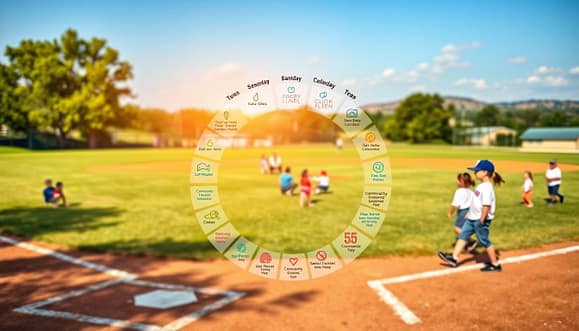
Let’s break down the year using the common baseball season as our guide. This rhythm works for many sports, and you can easily adapt it!
Spring (Pre-Season & Registration): This is your planning and launch phase. Players are excited to sign up.
- Sponsor Drive: Local businesses plan their annual budgets now. Pitch them on season-long sponsorship packages.
- Registration Kick-Off: Include a small, optional “boosters” fee on top of standard registration to create an initial fund.
- This is the perfect time to plant seeds for future team fundraising ideas by surveying parents on what events they’d support.
Summer (Season Kick-Off & Mid-Season): The team is in full swing, and community spirit is visible.
- Opening Day Merchandise: Sell team hats, shirts, and decals at your first home game. Everyone wants to show pride!
- Concession & Tournament Hosting: Mid-season tournaments are goldmines. Run the concession stand or charge a small gate fee for spectators.
- These activities fund immediate needs like travel and uniforms.
Fall (Playoffs & Post-Season): Capitalize on the season’s climax and the back-to-school mentality.
- Crowdfunding Push: Use the excitement of playoffs to launch an online campaign for next year’s big goals (new bleachers, field upgrades).
- Team-A-Thon or Skills Challenge: Host a fun, family event where players get pledges for goals scored or miles run.
- This season is about building a financial cushion for the off-season.
Winter (Off-Season & Holidays): Stay connected and leverage holiday spending.
- Holiday Sale: Partner with a local vendor for wreaths, cookie dough, or gift wrap. People are already in a buying mood.
- Planning & Grant Writing: Use the quieter time to research grants (as discussed earlier) and finalize next year’s calendar.
- A simple “year-in-review” email with financial highlights maintains transparency and goodwill.
By staggering different team fundraising ideas across these seasons, you create a reliable cash flow. You’ll always have an activity either running or in the pipeline. This method transforms fundraising from a stressful chore into a seamless part of your team’s culture. Start mapping your next year today—your future treasurer will thank you!
Volunteer Recruitment for Events
For youth sports leagues like ORWALL, getting 100% player participation starts with community help. Your volunteers are the MVP off the field. A successful community support fundraising event needs the energy and dedication of its people.
We need to recruit, organize, and thank this team. Start by making clear, easy roles. Think about scorekeepers at a baseball game. ORWALL is upgrading their scorebox with air conditioning. A comfy volunteer is a happy and focused one.
First, list every job needed. From setting up tables to managing donations online. Be clear about how long it takes. Is it a short shift or a long-term role?
Next, make signing up easy. Use online tools like SignUpGenius or VolunteerLocal. These platforms let people pick their role from home. They also send reminders, reducing no-shows.
Have a “team parent” network. One parent per team can be your go-to person. They help communicate and rally parents. This makes managing easier.
Most importantly, make the experience positive. Say thank you often. Provide snacks, water, and clear instructions. A good experience turns a one-time helper into a regular supporter.
| Volunteer Role | Key Responsibility | Typical Time Commitment | Support You Provide |
|---|---|---|---|
| Event Coordinator | Oversees all volunteer activities day-of. | Full event duration + planning. | Master schedule, contact list, walkie-talkie. |
| Concession Stand Manager | Handles cash, inventory, and food service. | 3-4 hour shift. | Cash box, price list, stocked supplies. |
| Scorekeeper / Timer | Officially records game stats. | Duration of a game. | Trained spot (like a scorebox), scorebook, pen. |
| Set-up / Clean-up Crew | Arranges tables, chairs, banners; cleans after. | 1-2 hours before/after event. | Layout map, trash bags, gloves. |
| Team Parent Liaison | Communicates with their team’s families. | Ongoing, low-touch. | Email templates, roster, clear asks. |
When you involve parents and neighbors, they become your biggest supporters. They talk to friends and share online. This word-of-mouth promotion is powerful. It boosts your community support fundraising efforts.
Remember ORWALL’s goal? “100% player participation.” This vision includes everyone who helps out. Building this team turns a fundraising idea into a community tradition.
Start small, be clear, and show appreciation. Watch your volunteer team grow. They will become the key to your event’s success.
Transparency & Fund Management
Radical transparency in fundraising is key, not just a bonus. It’s what builds lasting community support fundraising. Trust is your most valuable asset. When people see their money’s impact, they give more freely.
The ORWALL baseball league’s capital campaign is a great example. They promised: “Every dollar raised goes directly back into improving our players’ experience.” They also shared detailed costs for five phases.
Donors saw $100,000 for new bleachers and $50,000 for leveling the infield. This clarity turns doubts into confidence. It shows you have a solid plan.
So, how do you share fund allocation clearly? You have several tools:
- Detailed Campaign Pages: Your online hub should list major budget items with estimates, like ORWALL.
- Regular Email Updates: Send reports on funds raised versus goals for specific items (e.g., “We’re 60% to our new scoreboard goal!”).
- Simple Infographics: A visual guide of where money goes is very effective for quick understanding.
Clear communication needs solid fund management. It’s the behind-the-scenes work that’s essential. Start with a dedicated bank account for team funds. This keeps everything organized.
Always give receipts for donations. A receipt is a formal record for both the donor and your records. Also, share simple financial reports regularly. A one-page summary of income and expenses shows you’re careful with funds.
This openness is not just right; it’s smart. It builds trust that turns casual donors into loyal supporters. By focusing on transparency and management, you create a strong foundation for community support fundraising that lasts.
Legal & Tax Considerations
Before starting your next fundraiser, make sure you have all the necessary paperwork. It’s like wearing your catcher’s gear before a game. It might seem like an extra step, but it’s vital for safety and success.
Having your legal and tax bases covered makes your youth baseball fundraising efforts look more professional. It also makes your league more trustworthy and effective.
Getting 501(c)(3) non-profit status is a game-changer. It makes donations to your league tax-deductible for your supporters. ORWALL (Oak Ridge Woodlands Area Little League) knows this well.
This status shows the community and the IRS that you’re a real charitable organization. It opens up opportunities for grants, bigger donations, and corporate matching programs.
Once you have this status, clear communication is key. Make sure to state your tax-exempt status on all fundraising materials. A simple statement like, “We are a 501(c)(3) organization. Your donation is tax-deductible to the extent allowed by law,” works well.
Donors might ask for a receipt for their records. Be ready to provide one quickly. Also, have a current W-9 form ready for any business or corporate sponsor that asks for it. This form shows your league’s official tax identification number.
Don’t forget about corporate matching gift programs. Many companies will match their employees’ charitable donations. When a parent or community member donates, remind them to check with their HR department. This can double the impact of their contribution with little extra effort from your team.
Now, let’s talk about protecting your people. Any event you host, from a car wash to a tournament, carries some risk. Having participants and volunteers sign a liability waiver is a simple but critical step. It helps protect your organization from legal issues if an accident happens.
Also, ensure your league has proper insurance coverage. General liability insurance is essential for youth sports organizations. It covers injuries or property damage that might happen during games, practices, or fundraising events.
Navigating these requirements might seem complex, but it’s manageable. Start by consulting with a local professional, like an accountant or attorney, who can guide you through the 501(c)(3) application process. Many offer pro-bono services to community groups.
Getting your legal and tax house in order does more than just check a box. It builds immense trust with your community. When parents and local businesses see that you are diligent and transparent, they are far more likely to support your youth baseball fundraising goals year after year.
Sustainable Fundraising Models
The best youth sports programs see fundraising as a long-term plan, not just one-time events. They build a strong financial base that lasts all season. This approach helps them grow and succeed year after year.
Take ORWALL, for example. They plan big projects in phases for lasting results. CPYL also focuses on long-term partnerships with local businesses. These strategies are key to their success.
Your aim is to create a system that keeps giving. This means starting annual traditions, keeping alumni involved, and mixing different fundraising methods. These efforts are investments in your program’s future, much like the lessons and inspiration found in best baseball biographies, which show how great players and leaders built lasting legacies.
Building a strong financial foundation means your program can last 50 years or more. It ensures every player has a stable, well-supported place to play. Begin planning your sustainable model today.