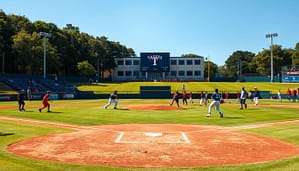
Texas baseball families see Five Tool Texas weekends as more than bracket games. From San Antonio tournament reps to Houston travel weekends, the best lessons are not only about who wins on Sunday. They are about how coaches manage arms, train complete players, and bring tournament feedback back to the practice field on Tuesday.
The research points to a clear training theme: competition should teach, not just test. Five Tool Youth Baseball says it limits teams to a maximum of six games per weekend and uses strict pitch counts as part of its player health approach Five Tool Youth about page. For Texas youth coaches, that is a useful starting point. A weekend schedule can create pressure, but player development still has to fit inside health limits, warmup routines, recovery time, and honest coach judgment.
What Five Tool Texas Teaches Coaches
Five Tool Texas Skill Notes
The name itself points coaches toward a balanced player model. Five Tool Players describes work around the fundamentals of baseball, including hitting for average and power, speed, arm strength, and fielding ability Five Tool Players program page. That gives youth coaches a simple way to review a tournament weekend. Do not only grade the box score. Grade whether a player showed a better first step, a calmer two-strike approach, cleaner footwork on a ground ball, or a stronger throw with his body under control.
A practical coach can build a post-tournament card with five columns: hit, run, throw, field, compete. After each game, write one short note per player. Keep it plain. “Late on fastballs.” “Rounded first base too wide.” “Rushed the backhand.” “Held posture on the mound.” These notes are more useful than a long speech in the parking lot, especially after a hot Texas afternoon when players are tired and parents are loading coolers.
Turning Tournament Pressure Into Teaching
Structured competition matters because every inning gives a coach a real read on habits. Practice can hide flaws. Tournament baseball brings them out. A hitter may crush front toss but chase breaking balls off the plate. An infielder may field cleanly in drills but freeze when a runner breaks from third. A pitcher may throw strikes in a bullpen but lose tempo with traffic on the bases.
The lesson for Texas coaches is to avoid treating tournament mistakes as character flaws. They are training clues. If a San Antonio weekend shows that outfielders are late to back up bases, Monday practice should include live baserunning reads. If a Houston event exposes weak cutoff communication, the next practice should open with relay alignment before anyone takes batting practice. Tournament play should shape the drill menu.
Health First In Tournament Skill Development
Pitch Counts Are Part Of The Plan
Player health sits at the center of good tournament coaching. The research notes that Five Tool Youth Baseball uses strict pitch counts and a six-game weekend cap. Coaches should see that as a reminder that development does not mean squeezing every possible inning out of the same arm. A young pitcher’s future is worth more than one pool-play escape.
Good arm management starts before the first pitch. Coaches need to know who threw during the week, who caught heavy innings, who has been sore, and who is available only for limited work. A simple paper chart in the dugout can prevent confusion. Track game pitches, bullpen pitches, and warmup intensity. If a player throws in relief, do not act surprised when he needs lighter work at the next practice.
Recovery Should Be Coached Too
Young players often think recovery means doing nothing until the next game. Coaches can teach better habits without making medical claims or overcomplicating the routine. After a pitching appearance, players can cool down, hydrate, and report how the arm feels. The next day, the coach can keep that player away from max-effort throwing and build skill work around footwork, defense, bunting, baserunning, or tee work.
Catchers need the same care. They squat, throw, block, and take foul tips. If a catcher also pitches, the coach must treat that player as a high-use athlete. The safest tournament staffs plan depth before the weekend. That means giving backup catchers and secondary pitchers real practice reps, not emergency work only when the bracket gets tight.
Building Five Tool Texas Habits At Practice
Hitting For Average And Power
For a Texas youth staff, Five Tool Texas becomes useful when it changes practice design. If hitters are being judged on both average and power, practice should train both contact quality and decision-making. Start with tee work for barrel direction. Move to front toss for timing. Then finish with live or machine work that forces hitters to take borderline pitches and attack strikes they can drive.
A good hitting block does not need to be fancy. One station can focus on staying through the middle. Another can train pull-side damage without rolling over. A third can use counts: 0-0, 1-2, 2-0, and runner on third with less than two outs. Tournament hitters improve when practice connects swing mechanics to game situations.
Speed, Arm Strength, And Fielding Ability
Speed is not just a stopwatch number. In youth baseball, it shows up in the first three steps, the turn around first base, the read on a dirt ball, and the jump back to a bag. Coaches can train speed with short bursts that look like baseball: home-to-first, first-to-third reads, secondary leads, and drop-step routes in the outfield.
Arm strength should be trained with sound throwing patterns. Youth players need rhythm, direction, and lower-half help. A strong arm with poor footwork can still sail throws. Fielding ability works the same way. Clean gloves matter, but feet usually decide the play. Coaches should train approach angles, glove presentation, and throwing lanes in the same drill instead of separating them every time.
- After San Antonio or Houston games: pick three repeat mistakes, not fifteen.
- At the next practice: build one drill block for each mistake.
- Before the next tournament: review the same points during warmups.
- After the next weekend: compare whether the habit improved under pressure.
For coaches wanting a similar player-development angle, this local breakdown of Five Tool lessons for Texas Youth Baseball connects tournament reps with better practice planning.
Team Culture From San Antonio To Houston

Learning To Compete Without Chasing Panic
Texas tournament travel can test a team’s routines. Early report times, long drives, heat, hotel meals, and bracket pressure can make young players rush. Coaches set the tone. If the staff panics after an error, players tighten up. If the staff teaches the next pitch, players learn that mistakes are part of the game.
The research also points to long-term growth, including preparation for high school baseball and life off the field. That matters for 10U through 14U players who are still learning how to handle failure, roles, and team standards. A player who sits for one game can still learn charts, baserunning reads, and dugout communication. A pitcher who is unavailable because of pitch counts can still lead by helping the next arm get ready.
Community And Team Roles
Community and team building are not side benefits. They help players accept coaching. A team that trusts each other is more likely to communicate on popups, back up throws, and respond well when roles change. Parents are part of that environment too. Clear expectations before a weekend reduce sideline confusion during tight games.
Coaches can hold a short parent and player talk before travel weekends. Cover arrival times, hydration expectations, pitching availability, and how feedback will be handled. Keep it direct. Players need to know that development will not be judged by one at-bat. Parents need to know that arm safety and long-term growth are part of the plan.
Why San Antonio To Houston Reps Matter
Using Exposure The Right Way
The research notes that Five Tool Youth events can provide chances for players to show ability to college recruiters and professional scouts. For youth coaches, that should not turn every weekend into a showcase speech. Younger players still need fundamentals first. Exposure is most valuable when the player has a repeatable swing, a playable defensive position, a healthy arm, and the composure to compete when the game speeds up.
The real lesson from Five Tool Texas is that tournaments should feed development instead of replacing it. San Antonio to Houston weekends can reveal what a player is ready for, what still breaks down, and what the next practice must address. Coaches who protect arms, train all five tools, and teach through pressure give Texas youth players a better chance to grow into steady high school athletes and better teammates.