Welcome! Let’s explore something bigger than a game. Imagine a community partnership as building a new field together. It’s about creating a lasting platform for growth, connection, and impact.
Take the Cy-Hope project in Texas, for example. They didn’t just measure success in square footage. They measured it in lives changed. By working together, they turned dirt and grass into three vibrant fields. These spaces are now platforms for mentorship, teamwork, and real opportunity for young athletes.
This is the core idea we want to share with you. Winning on the field starts with winning relationships off the field. The right alliances provide more than just funding. They build your program’s credibility, expand your resources, and deeply root your team in the community.
These strong connections create a stable foundation for launching vital programs. Like a structured mentorship program. It’s all connected! Let’s explore how you can start building these transformative partnerships for your own program.
Why Community Support Matters for Youth Baseball
When local businesses and schools support your baseball program, they do more than just give money. They help build a stronger community together. This partnership creates a cycle of investment and return that benefits everyone.
So, why should a local business or school care about your team? The answer is shared impact. Community support is not just charity. It’s a smart investment in shared values and a brighter future for the neighborhood. For example, Daikin and the Astros Foundation have a partnership. Emelda Douglas of Daikin said, “We’re proud to invest in students who will shape Houston’s future… This program gives young people the confidence to explore their full potentials.” Their scholarship program shows that supporting youth is an investment in community well-being and future talent.
For your baseball program, this support is key for growth and making things accessible. It leads to real improvements that families and coaches see every day.
Let’s break down the direct benefits:
- Lower Costs for Families: Sponsorship dollars can help cover registration fees, equipment, and uniforms. This removes financial barriers to playing.
- Improved Facilities: Funds can be used to maintain fields, upgrade batting cages, and ensure safe playing environments.
- Funded Travel: Teams can go to tournaments and play against wider competition. This is important for player development.
- Richer Experience: With enough funding, you can hire skilled trainers, run specialized clinics, and focus on athlete development.
This support creates a ripple effect. It leads to more player registration, better-trained athletes, and a more respected organization. Your program becomes a community pillar, not just a seasonal activity.
The difference between a program alone and one with community support is clear. The table below shows the power of a local business sponsorship and community partnerships.
| Program Aspect | Without Community Support | With Strategic Partnerships |
|---|---|---|
| Financial Health | Reliant on volatile family fees; budget constraints limit growth. | Diverse revenue from sponsorships stabilizes budgets and funds improvements. |
| Player Development | Basic training; limited access to competitive play or expert coaching. | Funds advanced clinics, tournament travel, and specialized coaching staff. |
| Community Integration | Operates in isolation; limited visibility and local relevance. | Businesses and schools become advocates, boosting visibility and creating a shared identity. |
| Long-Term Sustainability | Year-to-year uncertainty; vulnerable to economic downturns. | Builds a network of reliable partners invested in the program’s multi-year success. |
Securing a local business sponsorship is more than just getting money. It’s about building alliances that believe in your mission. These partners get meaningful local marketing, employee engagement, and the pride of nurturing hometown talent. Your program gets the resources to thrive. This mutual benefit is why community support is essential for any youth baseball team aiming for lasting success and impact.
Types of Strategic Partnerships (Schools, Businesses, Nonprofits)
Just like a winning baseball team needs a strong lineup, a successful youth sports program needs diverse community partners. Each partner brings unique skills and resources. This diversity is key to success.
Understanding these differences is the first step in building strong youth sports collaboration. Let’s explore the three main types of partners you should consider.
| Partner Type | Primary Motivation | Key Resources They Provide | Ideal Program Fit |
|---|---|---|---|
| Schools & School Districts | Student development, community engagement, fulfilling educational mandates. | Access to fields and facilities, built-in audience of student-athletes and families, integration with PE or after-school programs. | Leagues needing reliable practice spaces, programs aiming for school-wide recruitment, initiatives aligning with health/wellness curricula. |
| Local Businesses | Local marketing, brand visibility, employee engagement, community goodwill. | Financial sponsorship, in-kind donations (equipment, uniforms), volunteer support, promotional reach to customers. | Programs seeking funding for tournaments or equipment, events needing volunteer staffing, any league looking for sustained local backing. |
| Nonprofits & Foundations | Mission-driven goals like youth development, education, and community revitalization. | Grant funding, programmatic expertise, connections to other community resources, long-term strategic support. | New or expanding programs, youth sports collaboration focused on underserved areas, initiatives with an educational or character-building component. |
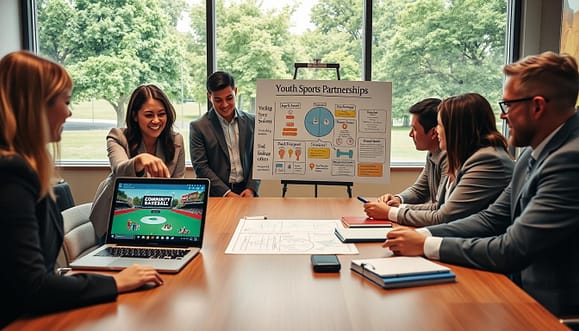
Schools and school districts are your gateway to young athletes. Their main goal is student success. A partnership here can mean access to fields and cross-promotion with school teams.
Local businesses seek local visibility. They want to connect with families. In return for sponsorship, they offer funding or donate items like jerseys.
Lastly, nonprofits and foundations focus on big-picture goals. Organizations like the Astros Foundation aim to support youth sports and education. They offer more than just money, providing expertise and vision.
So, which partner is the best fit for your team right now? Do you need a field (schools), funding (businesses), or a foundational mission ally (nonprofits)? Identifying your current need is how you build a championship-caliber support network.
Approaching Local Businesses for Sponsorship
It’s time to make the call or send that email. This is the moment to build community partnerships baseball programs. It might feel scary, but it’s not just about asking for money. You’re starting a relationship.
Think of it this way: you are not asking for a handout. You’re giving a local business a chance to help their community and meet families. With a solid plan, you’ll feel more confident and likely to get a positive response.
First, find the right person to contact. Don’t send your email to “info@” or a general form. Look for the decision-maker. Use LinkedIn or the company website to find titles like Community Relations Manager, Marketing Director, or Owner. Getting in touch with the right person is a big win.
Next, write a clear and compelling message. Whether by email or phone, your message should be short and to the point. We’ll guide you through what to include.
- The Subject Line & Greeting: Be specific and friendly. “Community Partnership Inquiry for [Your League Name]” is a good start. Always use the contact’s name: “Hello Ms. Johnson,”
- Who You Are & What You Do: Briefly introduce your league. Mention how many kids you serve and your mission. Show your impact.
- The Specific Ask: Be clear about what you’re asking for. “We are looking for a $500 sponsorship for our 2024 season to cover new team jerseys.” Avoid vagueness.
- The Value for Them (The WIIFT): This is key. Explain how the sponsorship benefits them. Mention things like logo placement, social media recognition, or a booth at your opening day. This shows it’s a marketing opportunity, not charity.
- The Clear Next Step: End with a call to action. “Would you be available for a brief 10-minute call next week to discuss this opportunity?” Make it easy for them to agree.
Your outreach email is a proposal for partnership. The business gets benefits like local visibility and positive brand association. Your youth baseball program gets the support it needs to succeed.
Being professional and prepared is key. A well-researched, personalized, and focused approach makes a difference. You’re not just hoping for support; you’re building your community partnerships baseball foundation.
Creating Mutually Beneficial Relationships
Your goal is more than just getting funds. It’s about building a partnership where everyone wins. A deal that only benefits one side won’t last long. But a partnership that benefits both grows stronger with each passing season.
Imagine a double-play in baseball. Both players must work together, each knowing their role. Your local business sponsorship should be the same. You offer value, they support you, and you both succeed.
To create this teamwork, start by matching your program’s mission with your partner’s goals. For example, a hardware store might want to be seen as a community center. A restaurant might aim to feed families. Your league offers real, positive exposure to those families.
Look for creative ways to exchange value without money. Say a local painting company values team-building. Invite them to help with your field clean-up. This gives them a chance to bond while you get a cleaner facility. That’s a win-win.
Changing from “sponsor” to “partner” comes from real, ongoing communication. Share updates, not just requests. Send photos of kids using donated gear. Tell them about the winning hit made possible by their support.
Public thanks are powerful. Acknowledge them on social media, in newsletters, and over the PA system. This boosts their community image, which is often more valuable than any ad.
Focus on building the relationship, not just the deal. Treating a business as a long-term partner sets the stage for a lasting partnership. That first-year sponsor becomes a key part of your program for years.
Partnership Agreement Essentials
Going from verbal promises to written agreements changes everything. It makes support reliable and shows you’re serious. For your youth baseball program, this is a big deal. It builds trust and proves your commitment.
Your agreement is like the team’s playbook for success off the field. It doesn’t have to be a long, scary contract. A simple one-page letter works great!
Look at big league partnerships for ideas. The deal between Daikin and the Astros Foundation is a great example. They named their facility Daikin Park for 15 years. Their agreement is clear about the term, benefits, and community giving. You can do the same, but on a smaller scale.
Why write it down? A handshake is good, but it fades. A document keeps promises clear. It stops “he said, she said” problems and protects your youth sports collaboration from confusion.
Here are the key parts of a simple partnership agreement:
- Partnership Term: How long will it last? Be specific with start and end dates.
- Commitments: What each party is providing? List exact amounts or descriptions.
- Benefits & Recognition: What the partner gets? Specify everything!
- Responsibilities: Who does what? Outline tasks clearly.
- Termination Clause: How to end the agreement if needed. This is a safety net.
This framework makes your idea professional. It shows you’re organized and value their help. It also makes your youth sports collaboration more appealing to local businesses.
Let’s look at two important areas. First, benefits must be clear. Don’t just say “social media recognition.” Write: “One feature post on the league’s Facebook page (1,200+ followers) within the first month of the season.”
Second, the term provides stability. A long-term agreement, like Daikin Park, allows for planning. It shows you’re building something lasting.
Keep the language friendly and easy to understand. You’re not writing legal jargon. Use “we” and “our partner” to build a team spirit.
Once you have a draft, review it with your team. Then, discuss it with your partner. This builds a stronger relationship!
Putting your agreement on paper is the final step in a winning youth sports collaboration. It turns a good idea into a lasting impact for your players.
Sponsorship Package Development
Creating a sponsorship package is like making a menu for your community partnerships baseball program. It shows what you offer and invites investment. This document is your sales brochure, making your offer hard to ignore.
We aim to make it easy for local businesses to say “yes.” A well-organized package presents clear, appealing options.
Offering tiered sponsorship levels is the best strategy. It welcomes partners with various budgets. Here are common tiers:
- MVP Partner: Top-level support with premier benefits.
- All-Star Partner: Mid-level engagement with significant visibility.
- Team Player Partner: Entry-level support that offers recognition.
Each tier should have unique benefits for a specific investment. Think outside the box about what you can offer. Your benefits are the heart of the deal.
Take inspiration from real-world examples. For instance, Daikin’s “Most Valuable STEAM” program awards named scholarships to ten Houston-area seniors. Each receives $10,000 for their achievements and dedication.
You can create similar ideas. Your menu might include:
- Logo placement on team uniforms and website.
- Recognition announcements during games and events.
- Named awards or scholarships for players.
- Volunteer days where the business team helps at the field.
- Social media highlights and newsletter features.
When pricing, consider your community size and program reach. A small-town league’s “MVP” package will be different from a big city’s. Look at what similar organizations charge.
Be clear about what each dollar supports. For example, a $500 “Team Player” sponsorship might cover baseballs for a season. A $5,000 “MVP” sponsorship could fund a full scholarship for a player.
The goal is clarity. A business owner should quickly see the fit. Your well-defined community partnerships baseball proposal turns interest into action.
It simplifies a complex ask into a simple choice. This is how you build lasting support for your youth athletes.
Recognition & Appreciation Strategies
Your local business sponsorship partners are more than just money. They are like teammates in your dugout. They’ve supported your youth baseball program. Now, it’s your turn to make them feel celebrated.
Showing appreciation is key to keeping these partnerships strong. It’s not just a “thank you” at the end. It’s ongoing, genuine thanks. When sponsors feel valued, they become vocal supporters. They are much more likely to stay with you year after year.
Let’s think of creative, low-cost ways to say thank you. These ideas cost little but bring big rewards in goodwill and loyalty.
Creative & Consistent Recognition Tactics
Social Media Shout-Outs: Use social media to thank your sponsors. Tag them in posts about wins, player highlights, or great days at the field. Share how their support is making a difference. A public “thank you” boosts their community image.
Featured Partner in Newsletters: Highlight a sponsor in your newsletter. Share their story, why they support youth sports, and a special offer. It gives them direct access to families.
Ceremonial Recognition: Give them something tangible. Present a custom plaque or certificate at a banquet. Invite them to throw the first pitch at a game. These moments create lasting memories and great photos.
Exclusive Access & Experiences: Make them feel special. Offer VIP seats at tournaments, a mention in the pre-game announcements, or their logo on a banner. Access builds emotional investment.
To help plan, here’s a comparison of appreciation methods. This table shows cost, effort, and impact on sponsors.
| Recognition Method | Estimated Cost | Effort Level | Impact on Sponsor |
|---|---|---|---|
| Social Media Feature Post (Tagged) | $0 | Low | High (Public visibility & brand association) |
| Sponsor Spotlight in Team Newsletter | $0 (Time for writing) | Medium | Medium-High (Targeted audience engagement) |
| Custom Plaque or Trophy Presentation | $25 – $75 | Medium | Very High (Tangible, prestigious keepsake) |
| Invitation to Throw First Pitch | $0 | Low | Very High (Memorable experience & honor) |
| Logo on “Community Partner” Field Banner | $100 – $300 (One-time banner cost) | Low (After setup) | High (Continuous season-long visibility) |
Consistency and authenticity are key. Don’t just reach out when you need something. Share a quick photo from the field with a caption like, “Games today made possible by [Sponsor Name]!” This keeps their valued role in mind.
Remember, treat every local business sponsorship like a true partnership. When you make sponsors feel honored, you build a strong relationship. They become part of your story.
This genuine approach turns a simple financial deal into a community alliance. Your sponsors will not only write a check next year—they’ll tell others about the great experience of supporting your team. That’s how you build a winning network, one heartfelt thank you at a time.
Case Studies: Successful Texas Programs
Texas is home to many groundbreaking partnerships in youth baseball. These partnerships show the power of community support. Let’s look at two examples where youth sports collaboration led to great results.
Cy-Hope teamed up with local groups to build three new baseball fields. The project’s message was clear: “We’re proud to have partnered with Cy-Hope to bring three new baseball fields to life.” It wasn’t just about putting up fences and bases.
It was about creating a lasting hub for youth development. These fields host leagues, tournaments, and skill clinics all year. The lesson here is about long-term thinking.
By investing in quality infrastructure, this youth sports collaboration ensured benefits for generations. It shows how partnerships can create lasting assets for kids.
Case Study 2: Daikin & The Astros Foundation
This partnership takes community support to a new level. It started with a naming-rights deal for Daikin Park at the Astros’ complex. But it didn’t stop there.
Together, they launched a major scholarship program. The announcement said it all: “Daikin and the Astros Foundation Open Applications for $100,000 STEAM Scholarship…” This initiative blends corporate social responsibility with a mission for youth development.
Daikin focuses on future workforce skills, while the Foundation promotes sports and education. It’s a deep, multi-faceted approach that creates real opportunities. This case proves partnerships can scale to include educational components.
It makes the business side of baseball academies more meaningful by addressing broader needs. Scholarships help young athletes pursue both sports and academics.
These Texas programs show that with the right strategy, youth sports collaboration can achieve incredible scale and depth. Whether building fields or funding education, the focus on mutual benefit drives success. Let these stories inspire your own partnership efforts!
Measuring Partnership ROI
ROI is like your partnership’s report card. It shows everyone how well you did. It turns a hopeful experiment into a celebrated success. For your youth baseball program, measuring this return is about telling a powerful story of impact.
ROI looks different for everyone. For your local business partner, it might be more brand visibility or happier employees. For your league, it could be a new pitching machine or more players who can join. It’s important to capture both sides.
| For Your Partner (The Investor) | For Your Program (The Beneficiary) |
|---|---|
| Logo placements on uniforms & fields | Dollars raised for operations |
| Positive social media mentions & engagement | Number of equipment items purchased |
| Employee volunteer participation rates | Scholarships or registrations funded |
| Local media coverage featuring their support | Increase in total player enrollment |
Tracking these things is simpler than you think. Decide what to measure before the season starts. This ensures you and your partner are on the same page from the start.
You don’t need fancy software. A simple spreadsheet or notebook can do wonders. Here are some easy metrics to track:
- Social Media Buzz: Count likes, shares, and comments on posts that thank or feature your sponsor.
- The “Kid Count”: Track how many players use sponsor-funded equipment and how many families got scholarships.
- The Photo Log: Document every time their logo appears—on banners, uniforms, your website.
- The Thank-You Note Tally: Collect handwritten notes from players or parents to share with the sponsor.
Tracking is only half the battle. Reporting is where you make the data sing. Don’t just send a spreadsheet at the end of the year. Share a story! Did a post about them get amazing engagement? Send a screenshot with a thank you. Did the new batting cage help a shy player gain confidence? Share that anecdote.
Just as Daikin measures a scholarship’s success by the students’ achievements, you measure your community partnerships baseball success by the smiles on the field and the growth of your program. This tangible proof lets your partners truly see their impact.
This collected data is your most powerful tool. When it’s time to talk about renewing the partnership for next season, you won’t be asking for another favor. You’ll be presenting a portfolio of proven results, making “yes” the easiest answer they can give.
Long-term Relationship Management
Building a strong local business sponsorship is about long-term thinking, not just one-time deals. It’s like maintaining a ballfield for years, supporting player growth season after season.
This approach is key. Treating a sponsor as a one-time donor is like neglecting a field. True value comes from consistent, attentive care aimed at long-term growth.
Why does this work? Sponsors who feel valued are more likely to stay on board year after year. They become part of your program’s story and success. Your job is to make them feel essential.
The best tool is a simple “Partner Care Calendar.” It keeps the relationship alive, even when there are no big events.
Here’s how to build your calendar for the season:
- Season Start Check-in: Before the first game, meet or call your sponsor. Share the season’s plans and goals. It’s about showing how their investment supports your program.
- Mid-Season Update: Send a positive update halfway through. Share a success, a player highlight, or a fun photo. It keeps the partnership warm and shows their support’s impact.
- Season-End Formal Review: After the last game, have a detailed review. This is key for securing renewal.
At the final review, ask: “What did you think?” Listen to their feedback. What did they enjoy? What could be better next year?
This feedback is invaluable. It turns the partnership into a true collaboration. You show their opinion matters, making them a true partner.
To help in these conversations, here are some simple scripts:
For the Season Start: “Hi [Sponsor Name], we’re excited to have you this season! I wanted to share our schedule and introduce our team captains. Your support helps us achieve [specific goal].”
For the Mid-Season Update: “Hope you’re doing well! We’re halfway through an amazing season. I wanted to share this photo of [player]—they’ve mastered a new skill! Thanks for supporting their journey.”
For the Season-End Review: “Thank you for an incredible season. We’d love to hear your thoughts on our partnership. What was most valuable for you? We’re planning for next year based on your feedback.”
Notice how the final script moves from “thank you” to “let’s plan for next year.” This proactive approach is key to keeping sponsors.
Managing a local business sponsorship with care builds something valuable. It creates a community ally, a lasting advocate, and a solid foundation for your program’s future. Start thinking in seasons, and watch your partnerships grow stronger each year.
Building Your Partnership Network
Don’t just look for one sponsor. You’re creating a whole ecosystem for your league. This network links schools, businesses, and nonprofits together. It makes your program stronger.
Begin by mapping your community. Find a list of possible partners. Start with your current network. Parents’ employers and local alumni groups are great places to begin. They already support your mission.
Success will draw in more partners. When local businesses see you handling partnerships well, they’ll want to join. A good partnership with a local restaurant or a store like Home Depot shows your dedication. It proves you’re serious about quality partnerships.
Many brands want to help youth sports. They just need a clear way to do it. Your task is to show them how your program fits their goals. As one expert says, “Once you start talking, you’ll find many brands eager to help, they just need to see how your program matches their goals,” much like the timeless lessons found in classic baseball literature, which illustrate how guidance and mentorship shape young athletes.
Your mission to help young athletes is compelling. Start talking to brands today. Grow your network one connection at a time.